

Celera Is Nicco Santos and Quenee Vilar's New Playground for "Mixed Marriage" Cuisine
The chefs expand their flavor horizons and go a more mature direction at their new restaurant in Makati.

Celera
3/F Comuna, 238 Pablo Ocampo Sr. Extension, Makati City
Instagram: www.instagram.com/restaurantcelera
Open from 6 to 11 p.m., Tuesday to Saturday
(SPOT.ph) It’s said that good things come to those who wait, and this well applies to the opening of Celera. One would recall how, in August last year, chefs Nicco Santos and Quenee Vilar formally announced leaving Restaurant Aurora to focus on their soon-to-open dining spot; upon their departure, the two stayed relatively quiet apart from doing the occasional pop-ups (e.g. the Purveyr Fair with their pastry venture) and collaborations (with the likes of Taqueria Franco, Peach Blossom in Singapore, and Chef Miko Calo).

Now Celera has finally opened its doors, and it seems that for Santos and Vilar it is as much an act of getting back into the dine-in scene as it is a mark of a new stage in their careers—and, well, in their lives. In a 2024 interview with SPOT.ph, Santos shared their goal of making a “super duper fresh start,” and keep that goal in mind, he did. But with that also came a lot of pressure to surpass their past pursuits. “Creatively, [at the time]... I was in a space where I always wanna do something better than the last,” Santos tells me on my visit to his new restaurant. “I went through a lot of reflection. And a lot of, just trying to get clear on who I really am… in this next part of my career. So, I needed to get to that place, in that space, where it's clear to me what my purpose is.”
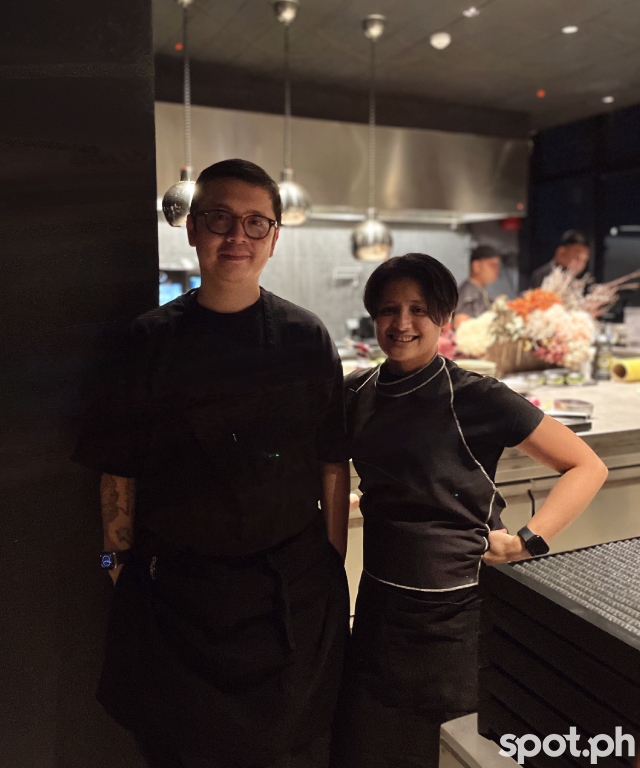
He’s since shifted his focus less on exceeding previous ventures for exceeding’s sake, and more on “doing something different”—something they haven’t quite done before. “And I just wanna have fun doing it. It's less pressure to have fun,” he says with a laugh.
Also read:
Soon at Celera: a "Fresh Start" for Chefs Nicco Santos and Quenee Vilar
This Secluded New Hub in Makati is Home to a Growing Community of Creative Spaces
Here's Why Café Aurora's Chef Quenee Vilar Is Culinary Royalty
Celera at Comuna, Makati
Celera is on the third floor of the zillennial-frequented hub Comuna, and the chefs enlisted the design prowess of JJ Acuña for their interiors (JJ also designed the pizzeria Carlo’s in BGC). The place is dim and sleek and, admittedly, ever so slightly intimidating—but it's made cozy by hardwood tables, touches of rattan (among them the bold-colored lamps by Rita Nazareno is hard to ignore), and low pitched roofing similar to what one usually sees in bungalows.

Santos lets me in on Acuña’s vision: “[He] said, ‘Nicco, I want the design to medyo disappear once the guests are seated… basta, you’ll see.’ So ako naman, sobrang na-intriga. Sabi ko, ‘paano magdi-disappear ‘yung design?’ Tapos ‘yun pala, all black.” By no means is this to say it’s a bore—but in many ways the less-is-more approach to visuals allows Celera to keep the spotlight on the food.

This food part comes to life from the sizable open kitchen toward the back—a buzzing, busy site where you'll find the Celera team working their magic on local and foreign ingredients.

Santos and Vilar are best known for their great hand at delivering bold Asian flavors, as we’ve seen at their previous ventures (Your Local, Hey Handsome, Restaurant Aurora). At Celera, they take what seems to be a freer hand in coming up with their menu—a “mixed marriage” approach, in Santos’ words, still largely grounded on Asian flavors but drawing from a wider range of cuisines and genres.
This isn’t so much a forced fusion as it is a natural product of Santos’ diverse cooking background, having worked with French and Spanish trained chefs (particularly Marc Licaros and Ed Quimson) and an Indian-Malay cook (who taught him the art of laksa). And then there’s his love for Singapore cuisine and our local dining scene.
The chefs also raise the point of them having “matured” further. In practice, we see this in their more focused compositions, which have a clearer subject (usually the protein), with just enough supporting elements to further make clear who’s the star of the show. Both ala-carte offerings and multicourse set menus will be available; dishes cost around P400 to P6,000 per dish, on average, so you can expect to pay P2,800 to P3,000 per person for a dinner for two.

The resulting plates are nothing short of phenomenal, and distinctly Celera in that they blur cultural boundaries and take on a distinct (and delicious) identity all of their own. Compared to their former restaurants, the flavors here are a tad muted in intensity but far from vanilla. They make an impact through other means—be it the way they pair together unexpected elements, their out-of-the-box cooking techniques, or how they use ingredients outside of the way they are typically used.
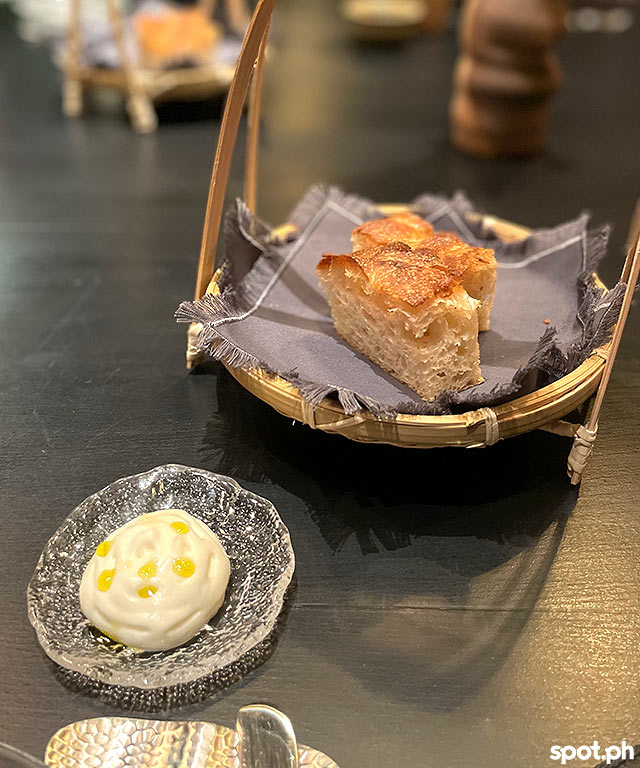
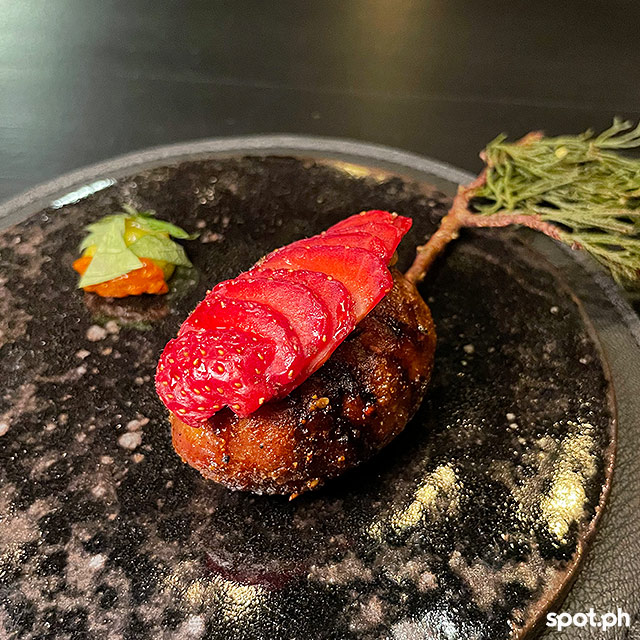
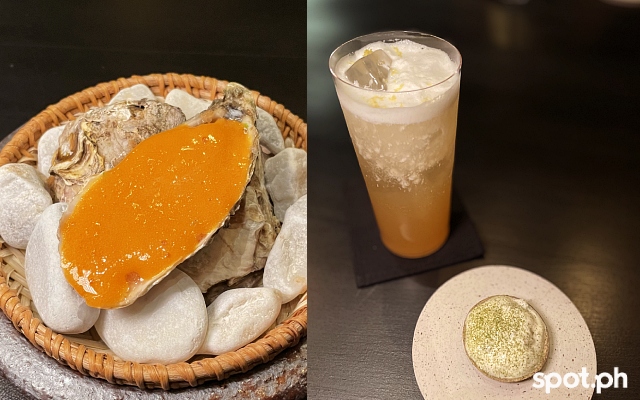
There’s beef tartare enriched with bone marrow, scooped into tempura-fried ohba leaves; there's duck liver and mango in between subtly sweet toasted-rice tuiles. Both excellent with any of their cocktails (try the one with whiskey-infused curry leaves, yuzu sake, apple, milk foam, salt, and lemon). A surprise hit is their dish of deeply savory skewers of duck and chicken tsukune, which get a dose of juicy-tangy contrast with slivers of fresh strawberries from Baguio; there's also added umami action from dots of egg miso gel and citrus kosho.
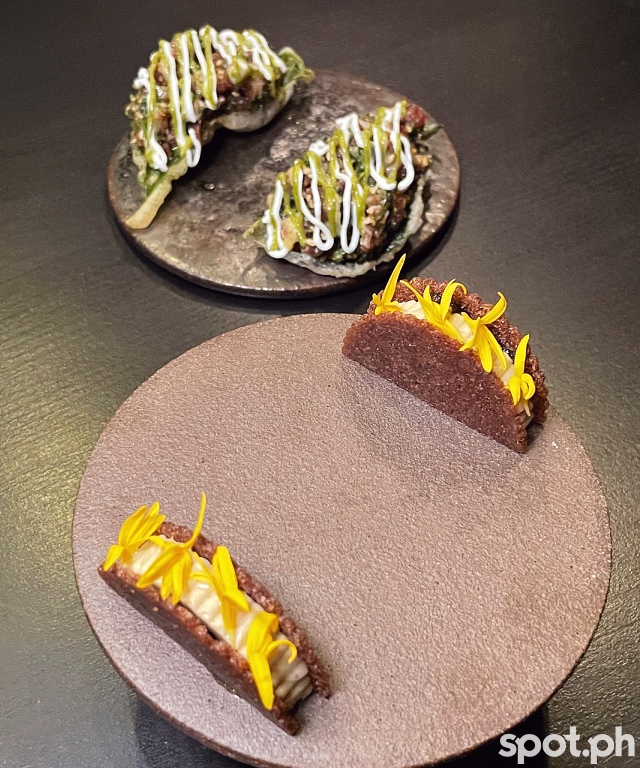
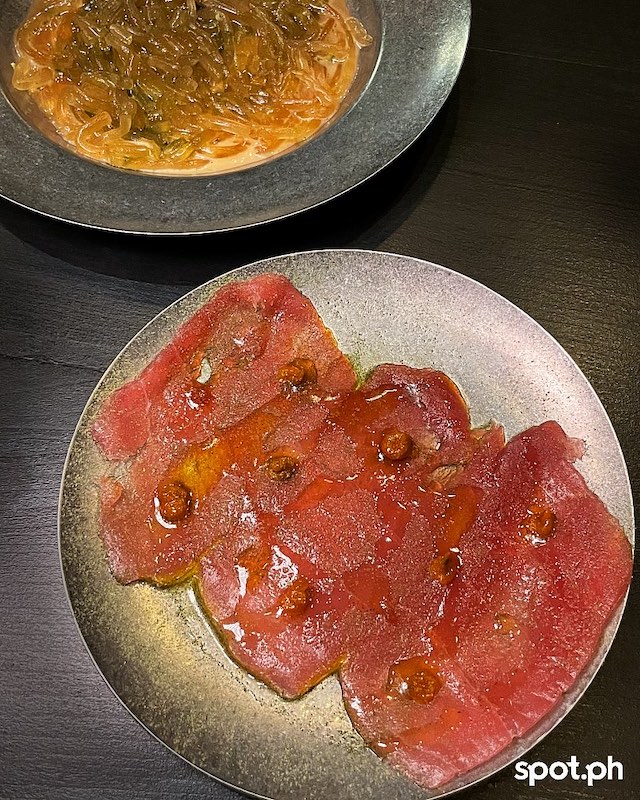
Szechuan flavors are given a more sprightly, refreshing execution in their dish of Fine de Claire oysters over icy-tangy berry granita, blanketed by Mala Szechuan foam; and we see a bit of a Northern/Eastern European influence in the tarts of scallop with dill over a buckwheat shell, lent subtle zip by horseradish cream. Celera also treats us to a different interpretation of cold noodles, this time with translucent glass noodles in the stock of fish heads and punchy laksa leaf pesto, paired with tuna carpaccio lent zip by citrus kosho.
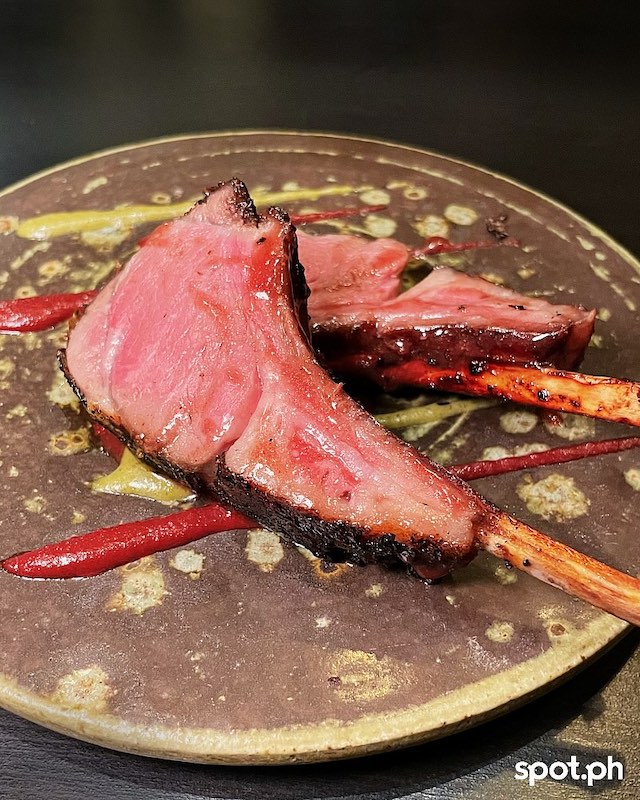
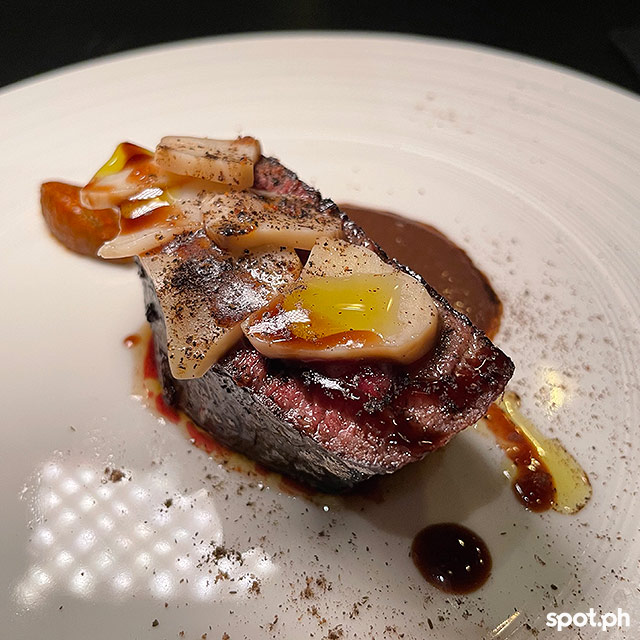
Santos and Vilar take a page from the Japanese trick of marinating meat in sakekasu, the pressed lees left from the production of sake. Premium proteins like Frenched rack of lamb and Double Gold beef tenderloin are aged in different varieties of the sake byproduct, their natural umami helping intensify the taste of the meat, before the Celera team takes them along on different flavor routes: with earthy beetroot mole, zingy gremolata, and a beetroot-miso sauce for the lamb; with an umami-rich black garlic sauce; hibiscus vinegar; and deeply savory mushroom trimmings for the tenderloin.
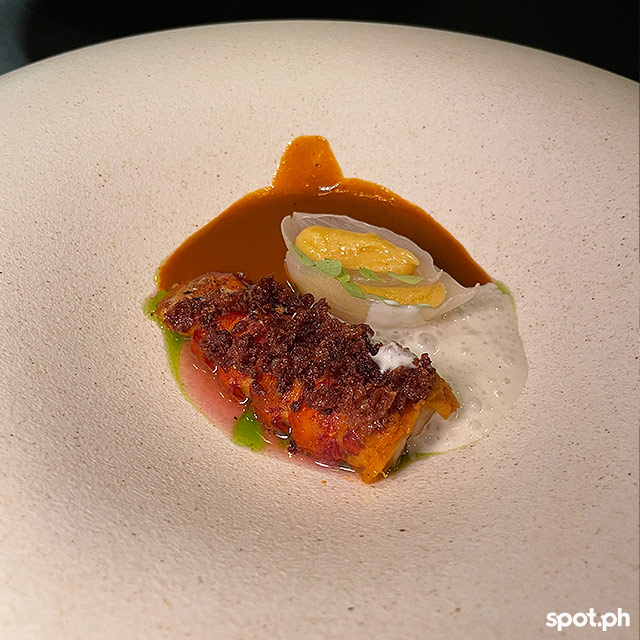
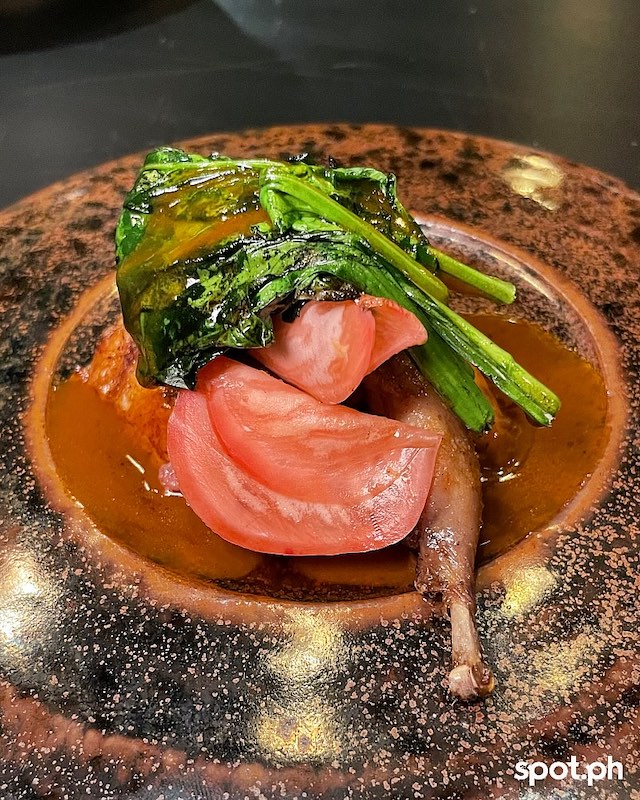
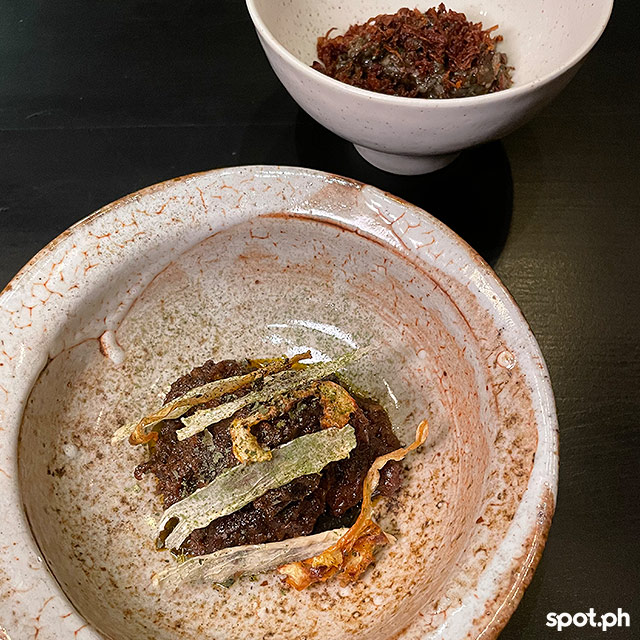
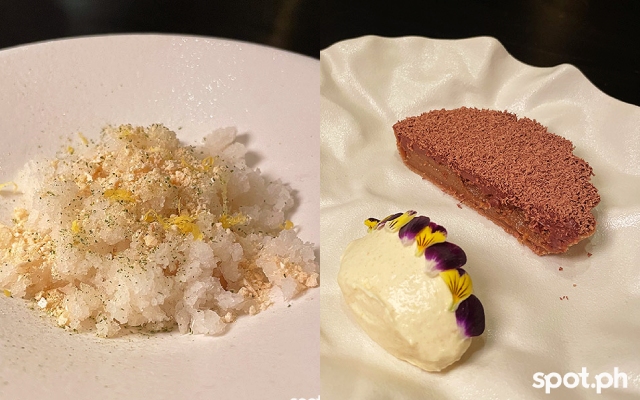
We see an element of restraint—more so here than in other Santos-Vilar projects—in dishes like the lobster tail, paired with subtly sweet corn puree in a pickled onion half and umami-rich lobster jus; and the butter-basted quail whose natural poultry taste shines with partners of pickled radish, grilled spinach, and smoked quail bone sauce. In other parts, they go all out, the way we’ve known them to do: in the rendang, which is mellow on the spice front but is no less hearty, being imbued with red wine and pork blood (!) then served over squid-ink kabocha sauce; and in the black rice—an unconventional but no less comforting bowl of two kinds of heritage white rice, squid ink, and longganisa from Baguio. For dessert, the Celera team had us noshing on a vessel of amazake granita with a caramel-custard center, and a chocolate tart with a lush layer of latik (!) plus banana cue-inspired fermented saba cream.
Celera is at once simple and complex. Santos and Vilar are dauntless for sure, but not reckless in their pursuits. There’s a wide breadth of global influences present, but it doesn’t feel like an arbitrary mishmash of everything everywhere all at once. It’s strategic, but not rigid or convoluted. We can take a cue from the restaurant’s name, which takes after the Malay word selera (or “taste”): that is, what Celera presents is a union of different parts not bound by their place of origin, thus granting them the freedom to mingle with other parts on the pure basis of flavor—in a way that reflects the chefs’ personhoods as well.