

After Purple Yam NYC's Closure, Amy Besa and Romy Dorotan Continue to Champion Filipino Food
The two have left a legacy putting our cuisine on the global map; to this day they advocate for eating local.

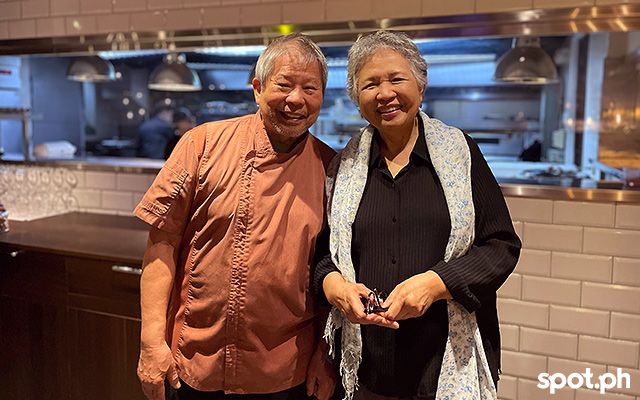
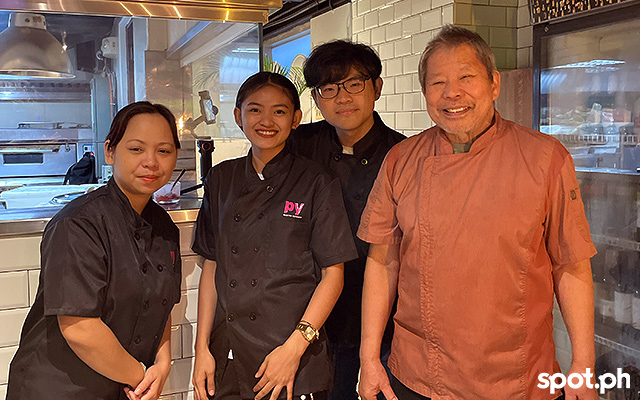
(SPOT.ph) One would think that, after 29 years of serving Filipino fare their way at Cendrillon in SoHo and its successor restaurant Purple Yam in Brooklyn, Amy Besa and Romy Dorotan would be looking to take a breather from the frenzy of the kitchen and the dining industry at large. But there they were at Torch restaurant along Connecticut street that day, with Besa shuffling between talking to guests and answering my interview questions, while Dorotan was going in and out of the kitchen and giving instructions to his team.
The authors of Memories of Philippine Kitchens are back in the Philippines for the first time since 2018, and for the first time since the closure of Purple Yam in August last year. Since then, said Besa, they hadn't been doing any commercial kind of cooking outside their home. But the past couple of weeks they’ve been holding dinners in Manila and beyond, as part of the Salu-salo, Tulong-Tulungan at Pasasalamat dinner series held in partnership with Dok Eddie Dorotan—former Mayor of Irosin, Sorsogon and consultant on public health and good governance (also Chef Romy’s brother!). Its first run was about to take place at Torch where I was that night, with the goal of celebrating Filipino cuisine and preservation of the environment—through food. In particular, food using ingredients from the local landscape, and/or by local artisans.
Also read:
Purple Yam, Cherished Filipino Restaurant in Brooklyn, Is Closing
Inside Good Food Sundays, the Weekend Market That Unites Sustainability, Great Vegan Eats, and the Fight for Farmers' Rights
Purple Yam's Romy Dorotan and Amy Besa on loving local, the Brooklyn restaurant's closure, and cooking again in Manila:
Amy and Romy have long made it a point to source from local farmers, to help support Filipino farmers’ lives and livelihoods in the process. “Whenever we develop a product, like a pie or whatever, it has to use a specific ingredient that helps a farmer or helps a supplier or a community,” Besa explained while they were making preparations at Torch. “It needs to be a Philippine ingredient.”
Admittedly I never got to dine at Besa and Dorotan’s restaurants abroad, but I used to frequent their dessert nook in Estancia in college and ordered their baked goods a couple of times when the Estancia shop had closed. My very first face-to-face encounter with Besa was as an awkward fresh grad at the said shop in 2016, too—I recall nervously approaching her for a photo, raving about their stuff, and talking about a duhat cheesecake and other baked goods I’d made with local fruit. That turned into a near-hour long chat about all these Filipino fruits, veg, and other plants I wasn’t too familiar with or didn’t even know existed. (Fuzzy memory aside, I specifically remember her mentioning nipa and buri—both kinds of palm, along with coconut and kaong, whose starch they make use of to thicken pie fillings and the like.)
Being both fascinated by Filipino delicacies and produce—particularly the ones rare for us in Manila—and a kid with a sweet tooth, I was always particularly drawn to their ice creams, made with dairy from Farm to Table and Badaco Farms in Batangas. This came in flavors like champoy and nipa-pandan, as well as the occasional seasonal special like sampinit (local raspberries), served with scratch-made squash tikoy. They also made a fantastic buko pie with malakanin and lukadon variants of the young coconut, embedded in cream and thickened just a touch using nipa starch and cornstarch. And oh, don’t get me started about their bibingka using two kinds of rice—Nishiki from Japan, and Ominio rice from the Mountain Province, which contribute moisture and a nutty, earthy note, respectively.
In the U.S., they partnered with Eighth Wonder, described as a “socially responsible company” that imported heirloom rice from Cordillera to North America. And from their restaurants in Manila—Purple Yam Malate, the full-on dining spot that opened in 2014, and its casual sibling at Estancia mentioned earlier—you might also remember their dish of seafood paella using Tinawon rice, and their Buko Ube Pie with fresh ube from Benguet.
Salu-Salo, Tulong-Tulungan at Pasasalamat
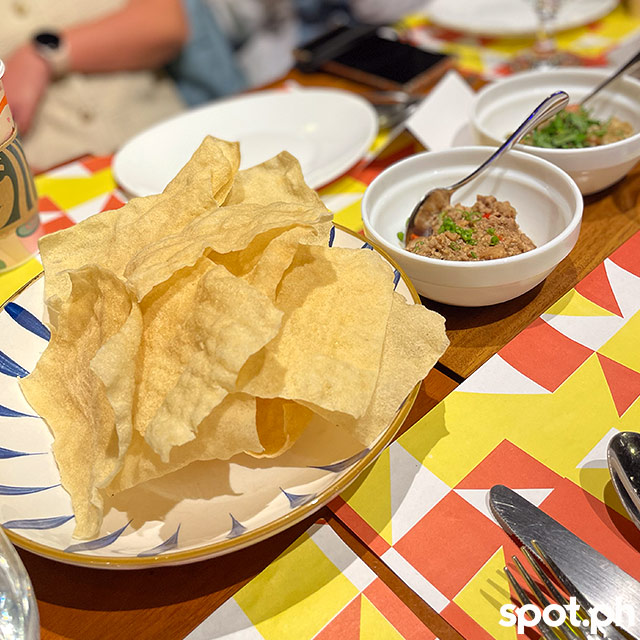
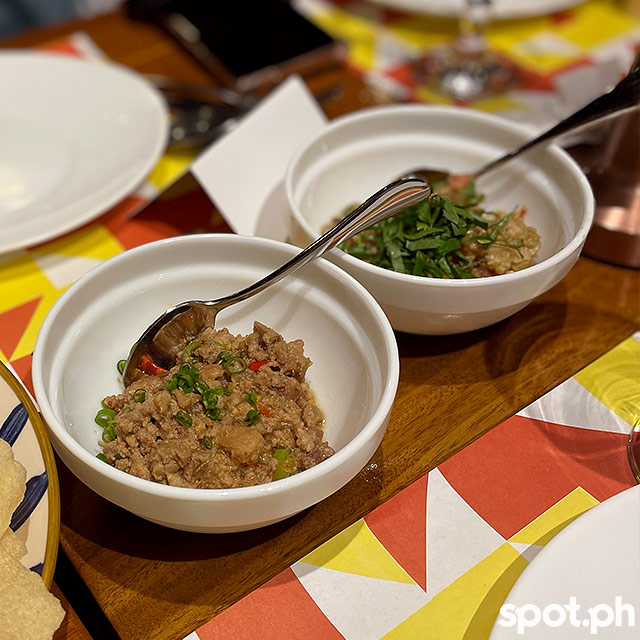
The two went by the same Filipino-forward ethos they've long espoused for the dinner at Torch Greenhills, with Dorotan creating a lineup of old and new dishes highlighting ingredients from local farmers and suppliers. On our tables upon being seated were Cabcab or cassava wafers, care of Bohol Bee Farm, to be nibbled on plain or used as an edible vessel for Bicol Express cooked with fermented alamang; and Kulawo, a punchy ensalada of eggplant in burnt coconut cream.
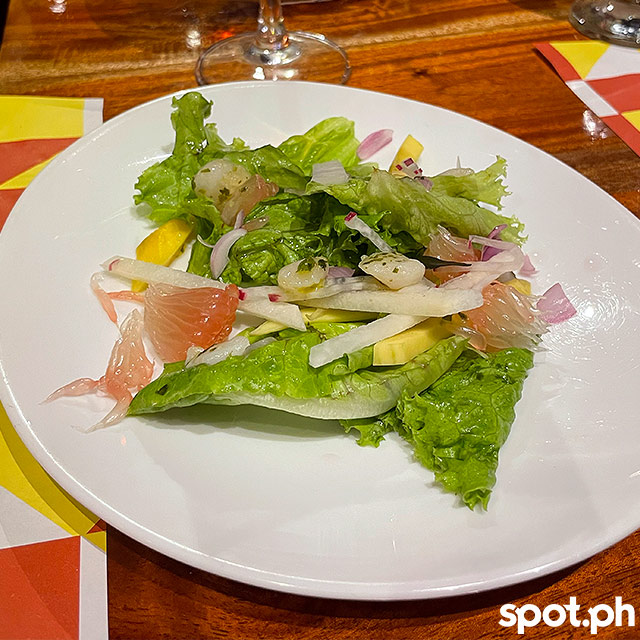
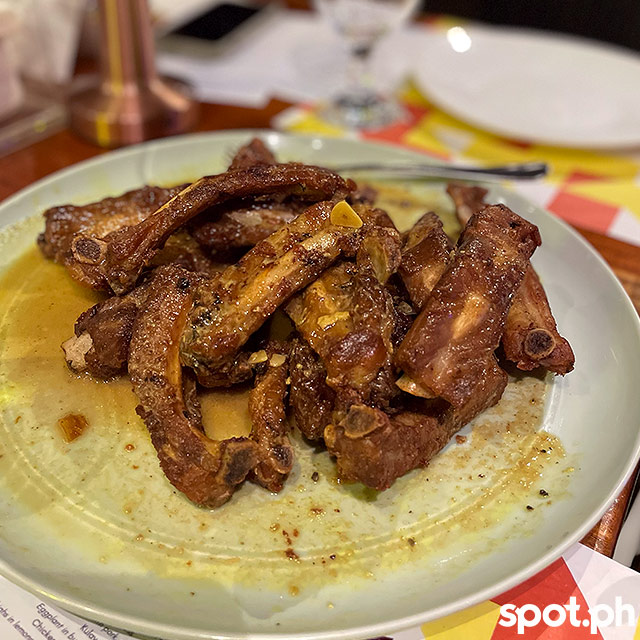
Skewers of Chicken Sugba sated our longing for smokiness, each stick holding juicy native chicken thighs marinated in lemongrass, shallots, ginger, atsuete oil, and calamansi juice. There, too, were plates of the Poached Scallops Salad with pako, kale, pomelo, green mango, and singkamas for a medley of tangy, savory, crisp, crunchy, and sweet. Eating with our fingers was mandatory upon the arrival of the Baby Back Ribs Adobo—an adobo dish of tender pork ribs cooked in coconut sap vinegar from Sorsogon, and turmeric for a touch of warmth.

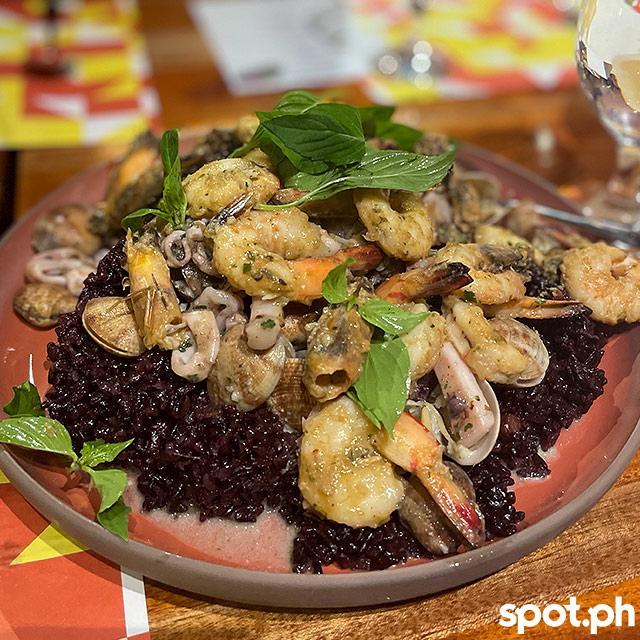
Oohs and aahs were aplenty as we were served a hefty bowl of Heirloom Black Rice Paella—a fan favorite from the Cendrillon days, with squid, shrimp, and clams over a base of Balitanao rice brimming with the flavor essence of seafood. Following this was the Masbate Fish in Buding Banana Leaf Box, a playful number of talakitok and tanigue fillets layered with pickled beets, sayote, and radish in a banana-leaf “buding” (similar to what’s used to make buding de pili), served with sauteed puropagulong (a.k.a. sigarilyas) and shimeji mushrooms.

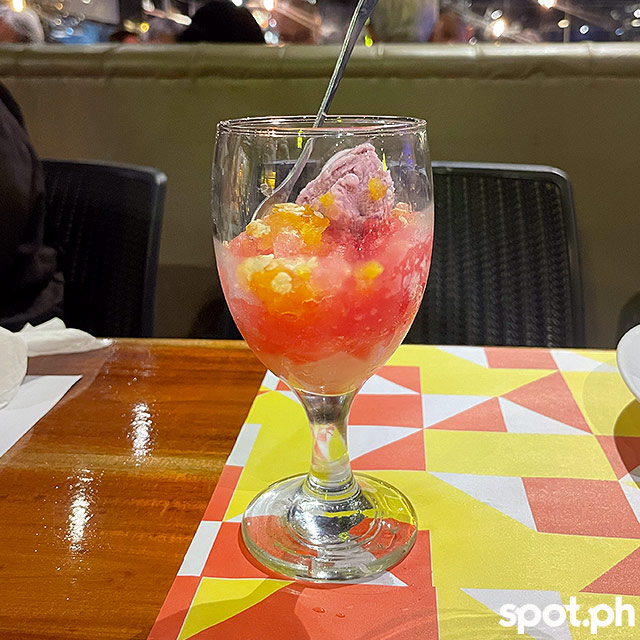
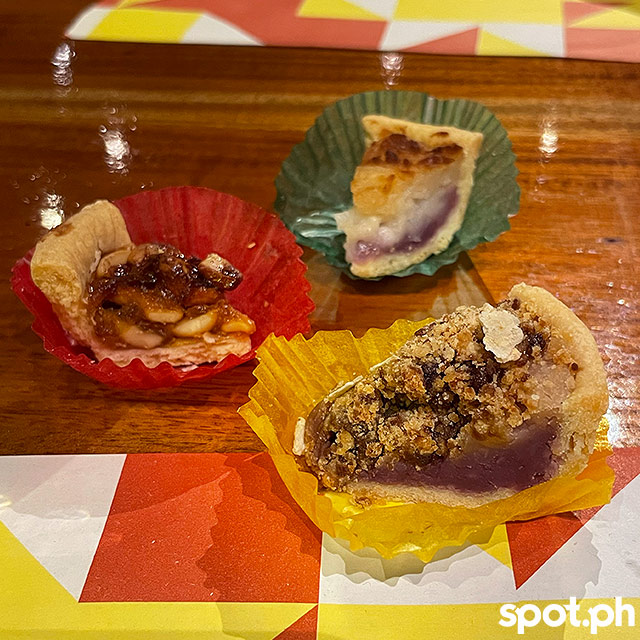
We were more than happy to tuck into sweet treats afterwards: there was an Iced Dessert that layered together watermelon ice, passionfruit sorbet, ube ice cream, kaong, nata de coco, pinipig; a trio of pies (the fan-favorite Buko Ube, nutty Ube Taro w/ Pinipig Crumble, and rich Cashew Panutsa); and Kalsada coffee by Escolta Coffee Co. to go with them.
Purple Yam continues to make and sell pies through the Purple Yam Pastry Kitchen, which holds popups at the Salcedo Market in Makati every Saturday.
The Impact of What We Eat
“They're better,” Besa responded, her tone firm but not demanding, when I ask why they prioritize cooking with local ingredients. “And they capture the palate of Filipinos. As I tell people, I would love to use ingredients that grow from our earth, water, and soil… everything that grows out or comes from our sea will have that flavor that is Filipino.”
She laments the modern tendency to prioritize convenience using products with added chemicals—which benefits giant corporations, but at the expense of local farmers. “The farmers that grow the ube and the sampalok and the bayabas—all those that are being replicated chemically into those packages, they are going to die, because they are no longer going to get your money.”
Consider the case of their restaurant’s namesake: purple yam a.k.a. ube. For all of its trendiness, especially abroad, the real purple yam doesn’t get as much screen time as other bright purple treats with ube flavoring. “The fact that all these generations, all these centuries that ube’s been growing—it's because the ube farmers have been growing it and digging it out of the soil. You know, some of those ube tubers have been growing for decades,” Besa shared, describing one time they received a particularly large tuber that was a couple of years old. “Can you just imagine how many years that it took [farmers] to grow that?” It’s especially ironic how farmers growing these produce don’t seem to be benefiting monetarily from ube’s popularity. “They are not rich. Those people are poor. But the reason we have ube, real ube, is because of those farmers.”
“I also tell people, look, when you spend money for food, just think about every peso that you spend. Where does it go?,” said Besa. “When I spend money, I would like at least most of it to go back to a Filipino business, to Filipinos selling, to a farmer. That's why, you know, I've developed a small network of suppliers and farmers that—at least I know that they are honest and who they are. I've been to the farms. And I've seen photos… I will pay what they ask for.” This isn’t to say she’s advocating buying expensive food per se; to clarify, Besa advocates for recognizing one’s “values.” “And when you see that value being met by your source, you pay for it.”
Closing the Chapter of Purple Yam NYC, and Putting Filipino Food on the Global Map
In an Eater feature published August 2024, just a few days before the restaurant’s last day open, Besa acknowledged the changing times and its many (particularly, physical and financial) implications. “Especially in these economic times, it’s very hard to do what we were doing. That’s why we think our era is at an end,” she told senior reporter Bettina Makalintal.
Still, it can’t be understated how much their restaurants in the U.S.—Cendrillon in SoHo, which opened in 1995 and closed in 2009; and Purple Yam in Brooklyn, which opened later in 2009 before closing last year—have propelled Filipino cuisine forward in America, and consequently, on a global scale.
Both Cendrillon and Purple Yam have received praise from esteemed food writers and journalists in major publications—among them the MICHELIN Guide, which awarded them Bib Gourmand awards many times in the years they were open. They’ve also been the subject of many a feature on the New York Times, with high praise; In 1996, Ruth Reichl pointed out Cendrillon’s “extraordinary” take on Filipino that’s simultaneously “looking backward and half a world away while leaping forward”; in 2005, Frank Bruni highlighted the way Cendrillon “makes choices that fly against the grain and leans on effects that are more intriguing than they are instantly appealing” (and gives a special shoutout to the “bold” chicken adobo); and in 2009, Sam Sifton called Purple Yam the “perfect neighborhood restaurant” that’s “more than the sum of its parts,” given the way it keeps its Filipino backbone intact while being open to other influences, particularly other Asian cuisines.
Some have pointed out Purple Yam’s authenticity (or supposed lack thereof), at least as far as their food not quite being purely Filipino. But as Besa told the MICHELIN Guide in 2023: “You are only authentic to yourself at a particular time, particular family, and particular region. We all have commonalities in history and ingredients, but we all have our own version of what that food is.” Thus, what one would see—and taste—at the restaurant is what they want to share with diners, drawing from the things that they love. More fundamentally, Besa explained then, they remain Filipino at their core. What makes Purple Yam Filipino is “hospitality and generosity," she told the Guide.
The name Cendrillon is a reference to a ballet about Cinderella, with Besa telling Food & Wine in 2022 they thought Filipino cuisine to be the “Cinderella of Asian food” that’s “one of the last to be recognized.”
Whereas Filipino cuisine was largely misunderstood or unknown to outsiders previously, thirty years after Cendrillon first opened, things have changed. In America, ube can be now found everywhere from pastry shops to makeup counters, and there are numerous Filipino restaurants (including one-Michelin starred Kasama in Chicago) serving their own takes on the cuisine, be it traditional or adapted to the times. As Makalintal noted in the Eater piece, in the U.S., many attribute a large part of this development to Besa and Dorotan and their restaurants.
I ask Romy what the Filipino food movement currently looks like in the States. “I think there's a new generation of Filipino-American chefs and cooks... a lot of them are actually working in different kinds of cuisines, different kitchens. Some have developed their own style. And some [others] have developed to started doing Filipino food, you know?," he explained. "And I think there are some notable changes from what they do and what we have been doing. There's still… what I would call classic Filipino menus that they do, like lumpia, pancit, adobo, kare-kare… then there's another group that are changing it little by little [such as doing kinilaw and adding caviar]. I think it's still rooted in Filipino.”
It's worth recognizing Filipino cuisine's prominence today, as Filipinos ourselves. Dorotan shared this piece of insight: Within the Philippines, there remains this dominant narrative that Filipino cuisine is unknown to outsiders. And one of the repercussions of that mindset is the (over)glorification of foreign chefs when they do get to try our food, going by the assumption that these chefs had supposedly "discovered" this under-the-radar cuisine—which in a sense, points to the reliance on foreign validation as a source of national (in this case, gastronomic) pride. On the contrary: "[Filipino cuisine] is getting good press [abroad].... It’s well-known everywhere. It’s appreciated, loved, criticized… and that is in almost any other cuisine.” And we ought to embrace it the best way possible: from within.
Also read:
Roberto Villarcabral Is Teaching Us the History of Filipino Culinary Delights, One Video at A Time