Follow us!
© 2026 Spot.PH

NPC Seal of Registration

Spot.ph has been granted the NPC Seal of Registration in recognition of the successful registration of its DPO and DPS

The Story of Buko Pie: How an Experimental Dessert Became a Laguna Pasalubong Icon


Published May 18, 2025

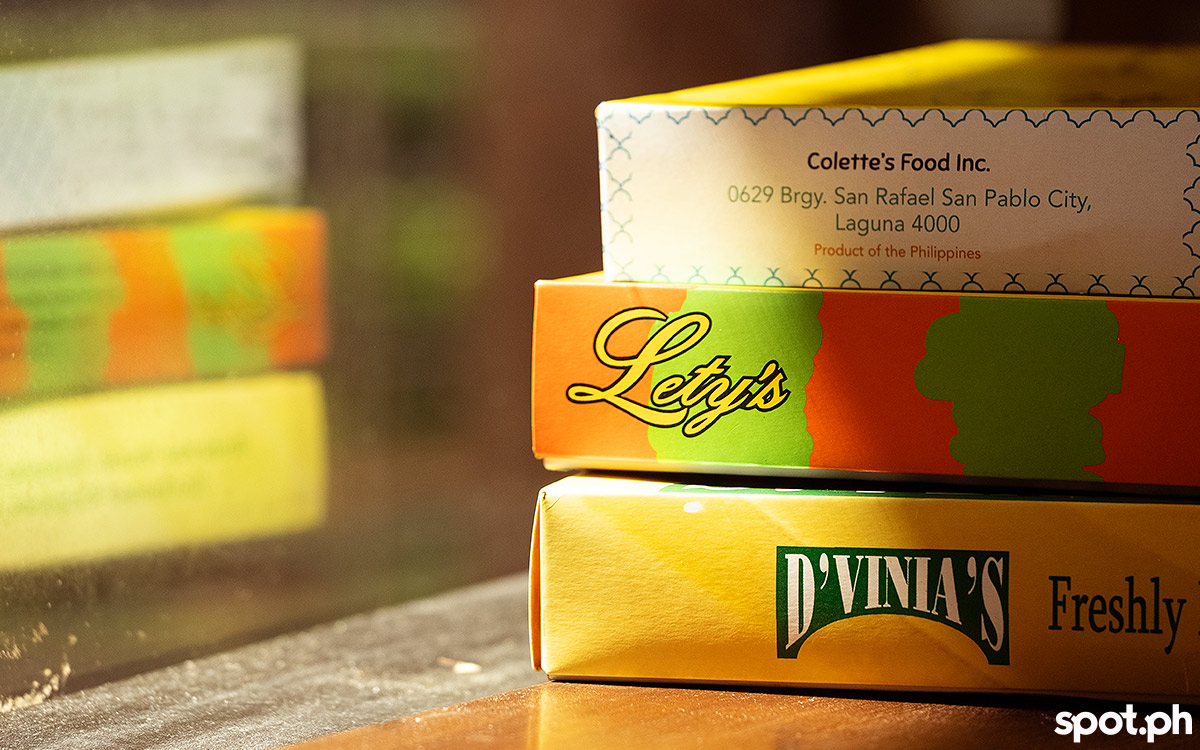
(SPOT.ph)Ā There are seven boxes of buko pie lumped together on the backĀ seat of our chilly van, grouped by brand and held together by twine. As the gust from the AC pierce at my cheeks, the warmth from the pies tempt me to open a box and nibble at its content—just like I used to many moons ago, back in the day when my dad and I would make the trip to Los BaƱos, Laguna.Ā Excursions to these parts have always sparked nostalgia. Los BaƱos, after all, is not only my father's hometown; it's where I was born.

For as long as I can remember, trips here meant feasting on two local staples: for my dad, it'sĀ pansit luglogĀ whose noodles he would slurp in between bites of hotĀ pan de sal; and for me, buko pie.Ā If we arrived before 8 a.m., we could enjoy the pieĀ piping hot and (almost) fresh out of the oven. We'd cut our slices with a plastic knife, hold them with our fingers like we would a slice of pizza, and nosh away while we catch up on life with aunts, uncles, and cousins—the same people who would buy us boxes of the delicacy to bring home back toĀ Metro Manila. If we were feeling peckish, by the time we make it to our house in QC, only half the pie would remain.Ā Ā 

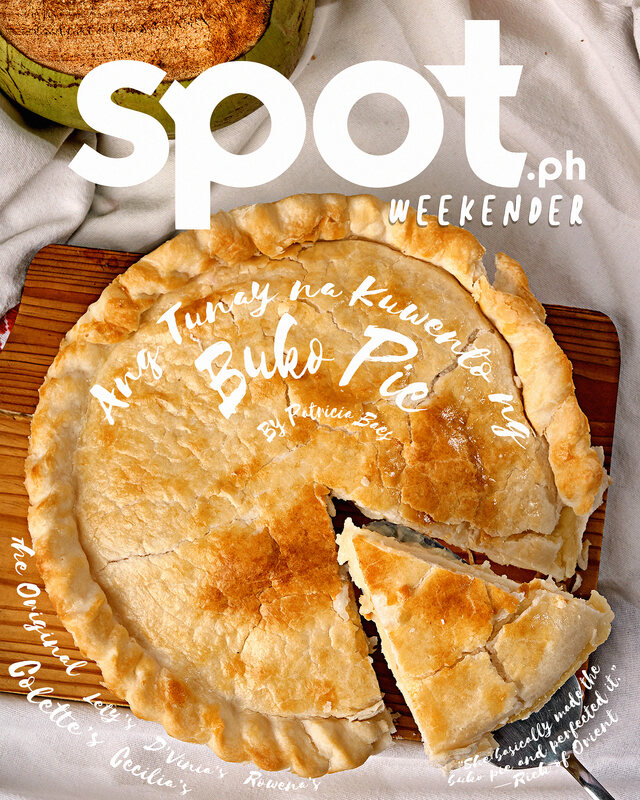
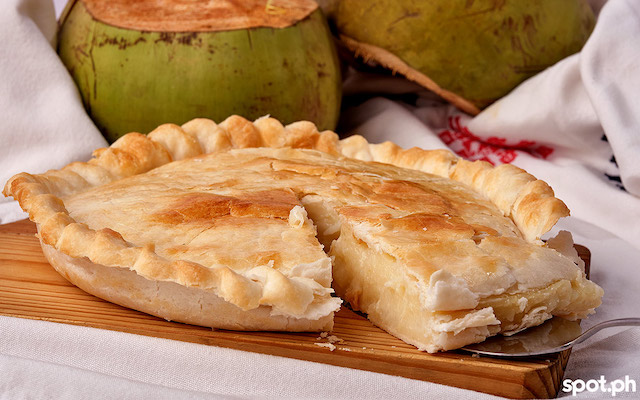
Spot weekender cover - buko pie
PHOTO BY Hans FaustoĀ cover designĀ Warren Espejo
Article continues after this ad.
ADVERTISEMENT - CONTINUE READING BELOW

"It was part of the excitement of road travel at that time. To have that nice, hotĀ bukoĀ pie you can enjoy, even just in the vehicleĀ pa lang, whether you're in a bus or you're in your car," shares the writer and innkeeperĀ An Mercado Alcantara,Ā proprietor ofĀ Casa San Pablo in San Pablo, Laguna, throwing it back to some unidentified point in the distant past.Ā 

"We would stop at aĀ bukoĀ pie stall... it was like an early drive-through at the time. You didn't even have to get off the car. Sometimes theĀ bukoĀ pie would be handed to you and it would be hot in the box. And when you open it, it's already cut. You bite into that yummy, hot crust, and then inside its gooey, creamy coconut. [To have that] While you are in a long trip—ay!Ā It was delicious. I remember it was a little bit messy, but not too bad," shares the former editor ofĀ Good Housekeeping Philippines.

I meet (virtually) An in the process of completing this story, which is an exploration into the beginnings and the art of making one of the country's most iconic delicacies. Hence the boxes of still-warm buko pie at the backseat of the van, which I restrain myself from opening because they need to be in their best form for the photographs that will accompany this feature. There seems to be very little written about the history of buko pies out there, and I thought it would be great to find out how it started—this beautiful snack that connects me to my father's roots and which never fails to take me back to simpler times.Ā 

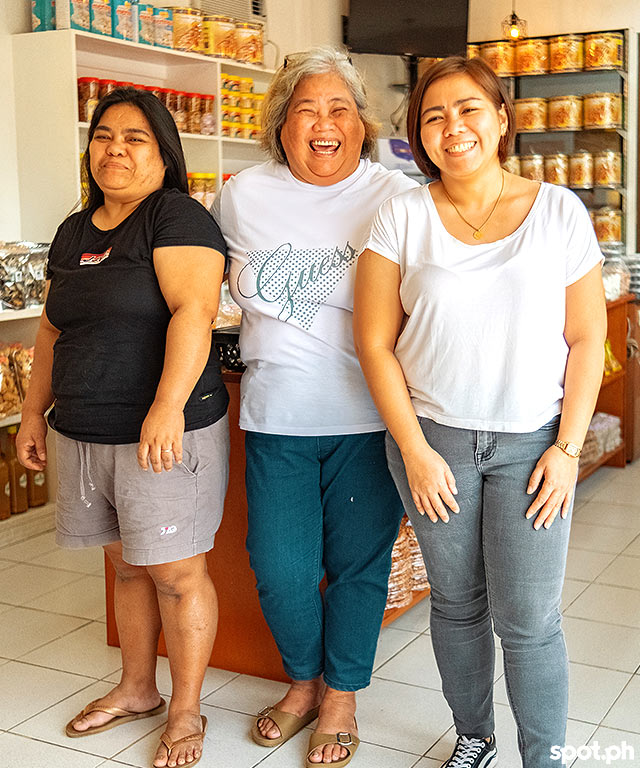
buko pie, d'vinia's buko pie, divinia baclig
Divinia Baclig (center) welcomes us to her store before taking us around the baking area—more on that later.Ā 
PHOTO BY Majoy Siason
Article continues after this video.
ADVERTISEMENT
watch now

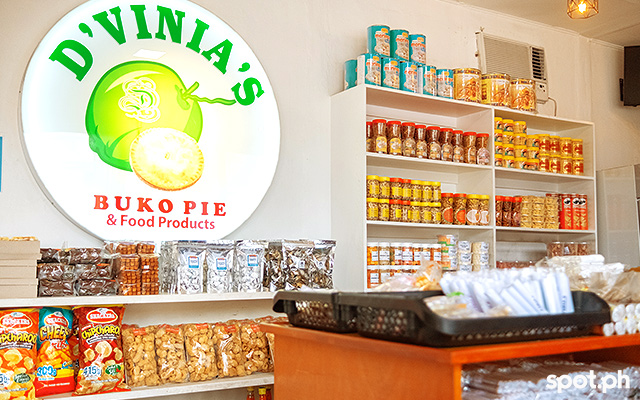
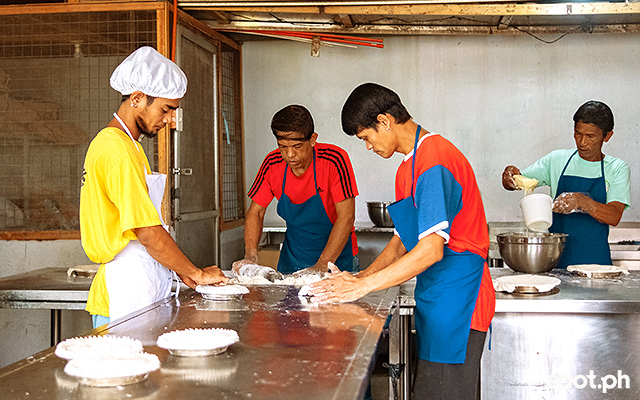
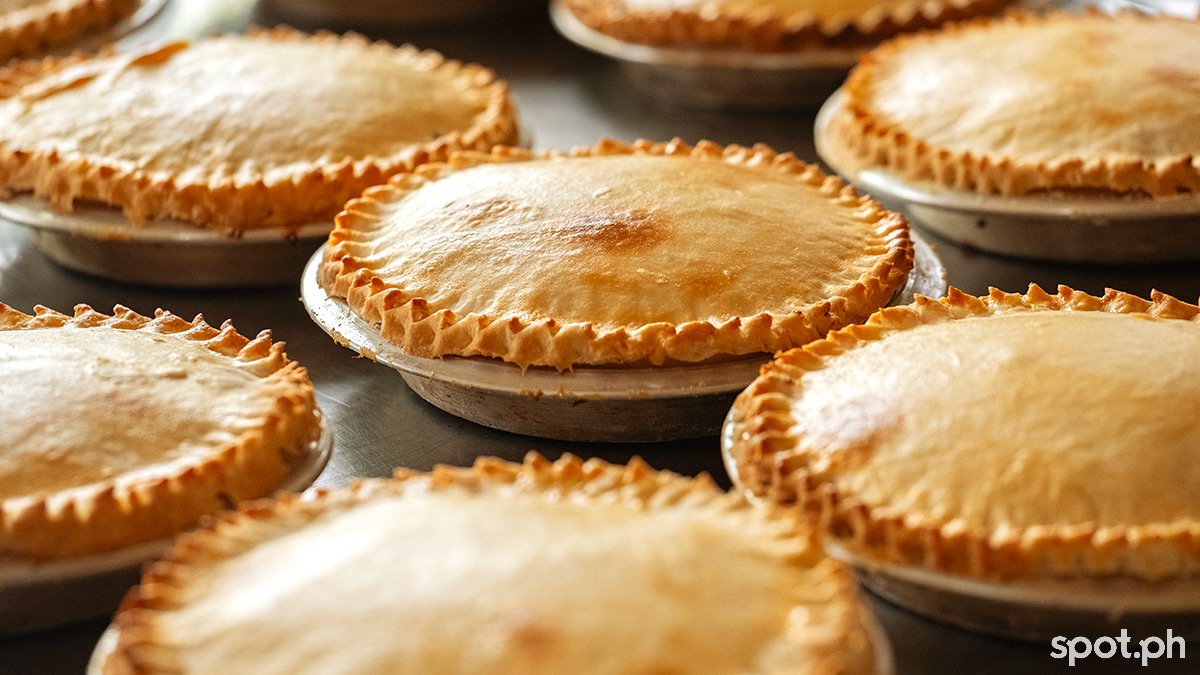
It had been a while since I was last in Laguna, and today's visit has given me the pleasure ofĀ meetingĀ Divinia Baclig, a classmate of my dad at the University of the Philippines Los BaƱos Rural High School in the 1970s. A jolly persona with a lovely crown of white hair, Baclig ownsĀ D’Vinia’s Buko Pie, one of theĀ classic brands hereabouts and whose main shop on National Highway, PansolĀ welcomes our team. This particular branchĀ housesĀ a baking area, where we watch the staff mixing, rolling, cutting, filling, and putting pie tins in and out of the industrial oven. The sight of smoke may spark alarm to some, but the rhythmic motion of people working, of pies being made offer a sense of calm. We see a baker pull out pie after pie from the oven using a large metal tool. The man is swift but precise, pointing to his long experience at the job.
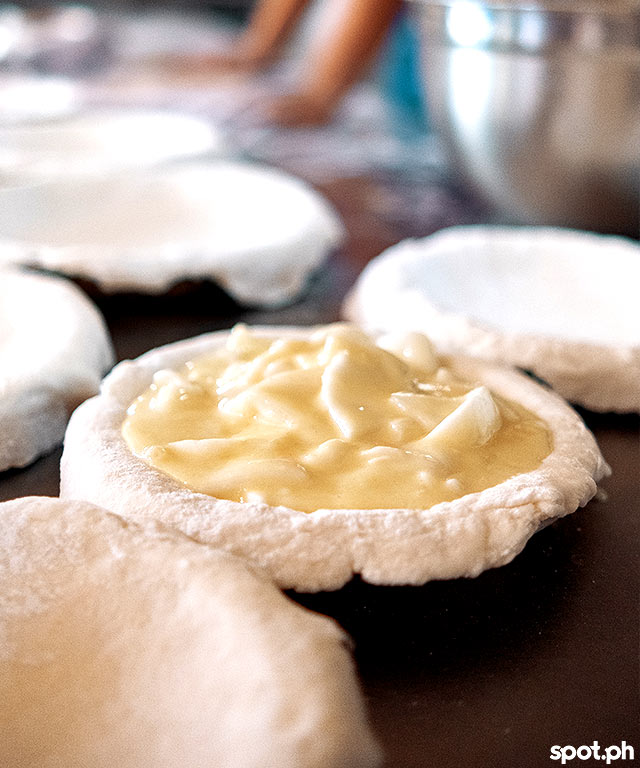
buko pie d'vinia's
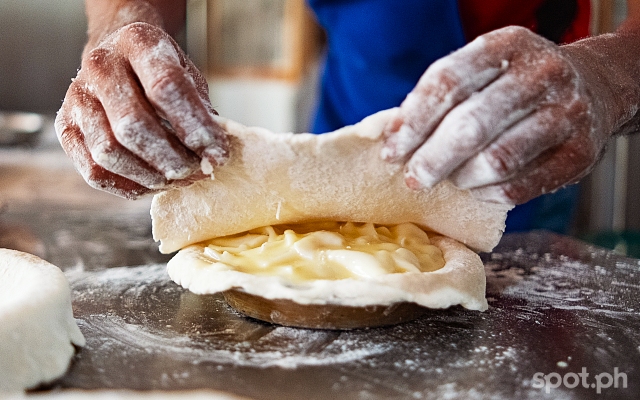
A filled pie at D'Vinia's, waiting to be covered with its top crust and baked.Ā 
PHOTO BY Majoy Siason

Pie is about as American as it gets, but buko pieĀ is distinctly FilipinoĀ in that it highlights freshĀ young coconut, typically embedded in some sort of cream or custard which holds things together. BukoĀ has that supple texture and delicate taste that when used with the Filipino palate in mind lends the resulting dish—a pie in this case—a completely different personality. One that’s lighter, more ethereal, perfect for being nibbled on any time of the day.
Article continues after this ad.
ADVERTISEMENT - CONTINUE READING BELOW

PHOTO: Majoy Siason

Also read:Ā 
A Toast to Pan de Sal: The Story Behind This Well-Loved Filipino BreadĀ 
Roberto Villarcabral Is Teaching Us the History of Filipino Culinary Delights, One Video at A TimeĀ 

The story of buko pie—how it came to be and why it's a favoriteĀ pasalubong

Planting the Tree of Life in the Philippines

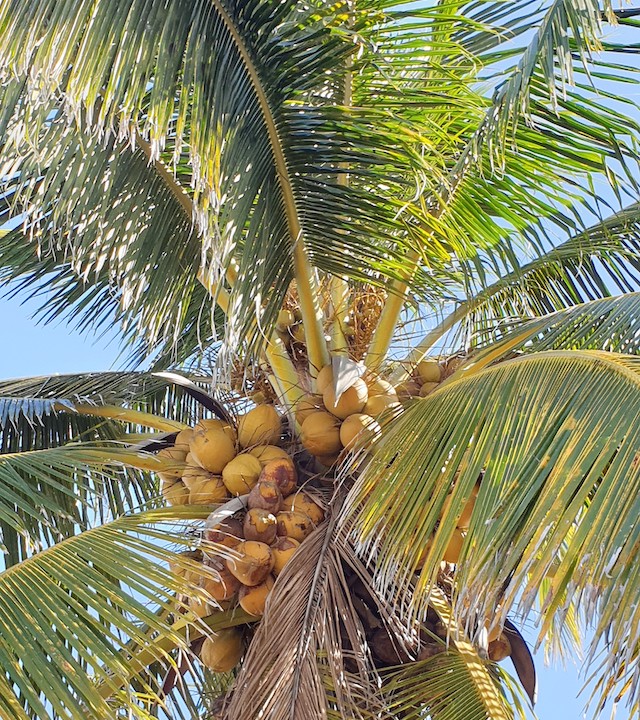
It would only be proper to start from the very source. Coconut in the Philippines goes way back to 1642, with an edict by SpanishĀ Governor General Sebastian Hurtado de CorcueraĀ ordering the planting of coconuts for the galleons. Food writer and historian Felice Prudente Sta. MariaĀ is careful to note that the Spanish only ordered the tree planting,Ā versus actually bringingĀ in the coconut here as some sources may suggest. "Coconut was likely born in Southeast Asia and Melanesia," she explains.

Philippine coconut productsĀ have been traded with Chinese and Malay merchants since 1840, with the SpaniardsĀ using coconut fibers and oil for the Galleon and for the food of sailors. By 1898, copra (dried coconut kernels) and coconut oilĀ were being exported to Europe to make soap and margarine.

coconut tree
Coconut trees areĀ also called the tree of life,Ā as all of its parts can be used to support human life.Ā 
PHOTO BY Wikimedia Commons/Em?ke DƩnes
Article continues after this ad.
ADVERTISEMENT - CONTINUE READING BELOW

The American market entered the coconut industry as the Spanish ceded the Philippines to the U.S., with the Philippines supplying desiccated coconut to the latter by 1926. Things would only get bigger from there, with the American preference for coconut export, coupled with duty-free entry for coconut in Europe. By 1920, the Philippines was already providing one-thirdĀ of the world's demand for copra, with the U.S. serving as its biggest market.

Also read:Ā Gallery by Chele's New Tasting Menu Honors the Great Versatility of Coconut

American Coconut Desserts as BukoĀ Pie's (Possible) Founding Fathers

There are endless uses for coconut as an ingredient. Numerous coconut desserts and confectionsĀ exist in Asia alone—with the Philippines for sure consuming a lot of the produce, what with our many kakaninĀ and other delicacies. As far asĀ WesternĀ dessertsĀ go, the food writerĀ Genevieve Yam lists a couple ofĀ early baked goodsĀ with coconut, or "cocoa-nut," on Serious Eats—including those for Cocoa Nut Cream in Mary Randolph’s The Virginia Housewife cookbookĀ from 1824; andĀ Cocoa-Nut Pudding inĀ Eliza Leslie’s Seventy-Five Receipts for Pastry, Cakes, and SweetmeatsĀ from 1828. And then you've got the Cocoa-Nut Pie in Mrs. Ellis’s Housekeeping Made EasyĀ inĀ 1843, which has a "puff paste" crust filled with a mix ofĀ gratedĀ coconut cooked in milk, eggs, sugar, wine, pounded crackers, melted butter, and nutmeg. These recipes allĀ call for grating the coconut fresh—which is not exactly convenient.

Sta. Maria makes a similar note. ā€œIf you look up American pies especially in the southern states, you will see they used fresh coconut meat,ā€ she tells SPOT.ph, noting that this fresh coconut is of the more mature sort distinct from buko. ā€œFranklin Baker invented canned shredded coconut that tasted fresh because it had some coconut liquid, strained off to use in a pie. They got the fresh coconuts from Cuba and other Caribbean places near the U.S.ā€

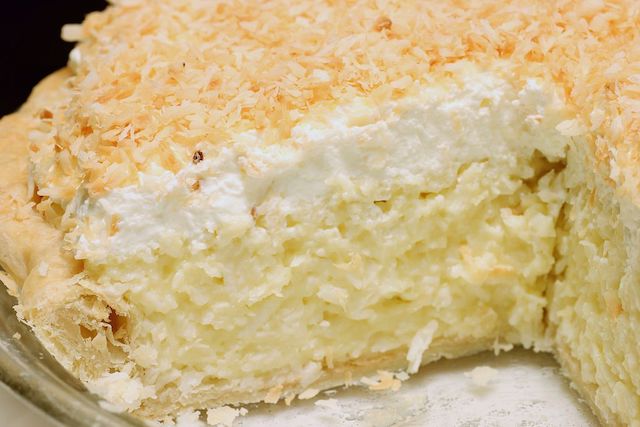
What's likely, Yam writes on Serious Eats,Ā is that coconut desserts weren't soĀ popular in the U.S. untilĀ desiccated coconut became widely available in the country. Essentially, desiccated coconut—coconut flesh that's been shredded or flaked and then dried—is shelf-stable, which made it easier for cooks to use them in recipes. What might be the backbone of today's American coconut cream pie is the version published by Baker’s in the 1920s, which used their brand of packagedĀ coconut in a mix of egg yolks, corn starch, andĀ cow's or coconut milk,Ā topped with meringue (which was soon replaced with whipped cream).

coconut cream pie
American coconut cream pie—possibly the inspiration forĀ bukoĀ pie.Ā 
PHOTO BY Stacy Spensley/Wikimedia Commons

Over in the Philippines, Sta. Maria says no coconut pie recipes were shared by expats during the U.S. colonial period, but she clues us in on other sweet coconut recipes that came up at the time. The year 1919'sĀ The Manila CookbookĀ includes recipes for Cocoanut Drop Cookies and Cocoanut Macaroons, both calling for dried shredded coconut. The American Guardian Association'sĀ Good Cooking and Health in the TropicsĀ (1922) also has recipes forĀ Coconut Pudding, Coconut Taffy, and Coconut Ice Cream, using freshly grated coconut meat—as well as a separate Coconut Ice recipe that specifically calls for "tender coconuts" a.k.a.Ā buko.

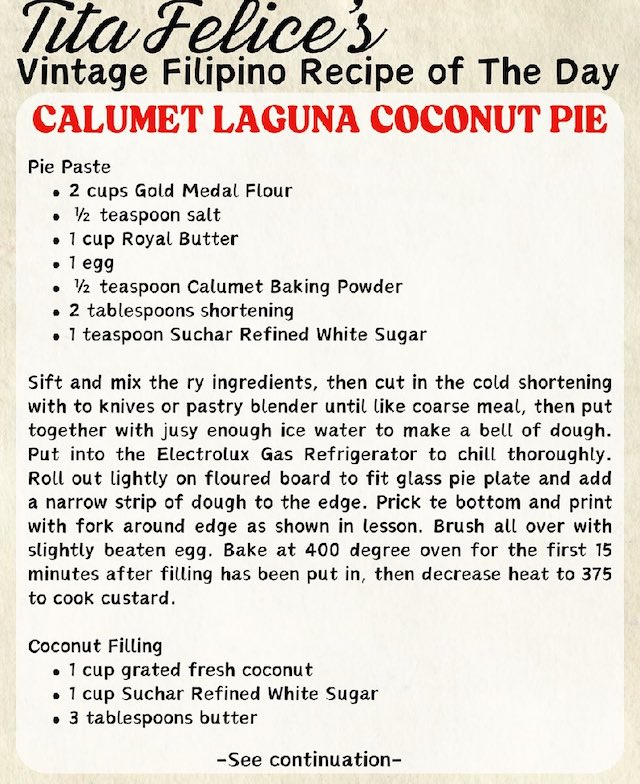
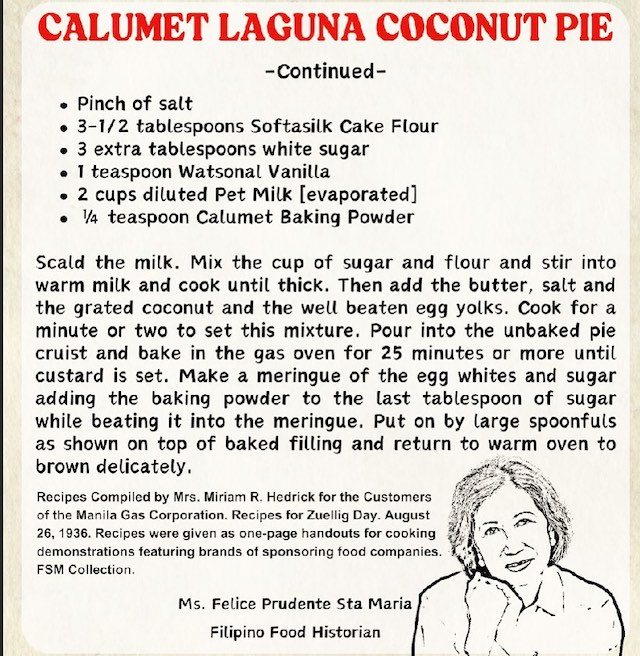
buko pie, calumet laguna coconut pie
A recipe for Calumet Laguna Coconut Pie posted by Prudente Sta. Maria on Facebook (continued below).
PHOTO BY Facebook/Felice Prudente Sta. Maria

On her Facebook page, Sta. Maria shares a 1936 recipe forĀ Calumet Laguna Coconut Pie, originallyĀ fromĀ a compilation for customers of the Manila Gas Corporation. This uses a filling of grated coconut that’s cooked into a mixture of cake flour, sugar, Watsonal vanilla, evaporated milk, and baking powder; it’s then poured into a pie crust, topped with meringue (like the Baker's version), and baked.Ā 

buko pie, calumet laguna coconut pie
Part two.Ā 
PHOTO BY Facebook/Felice Prudente Sta. Maria

Seemingly, it was only in the 1960s that the idea of pie using moreĀ bukoĀ fully started to take form. Sta. Maria also shares with Spot a recipe for Coconut Pie, published in the Manila Chronicle Recipe Book (1960), which specifically calls forĀ meat scraped from medium young coconuts, cooked with sugar. It was also in the 1960s that the first buko pie business was birthed.

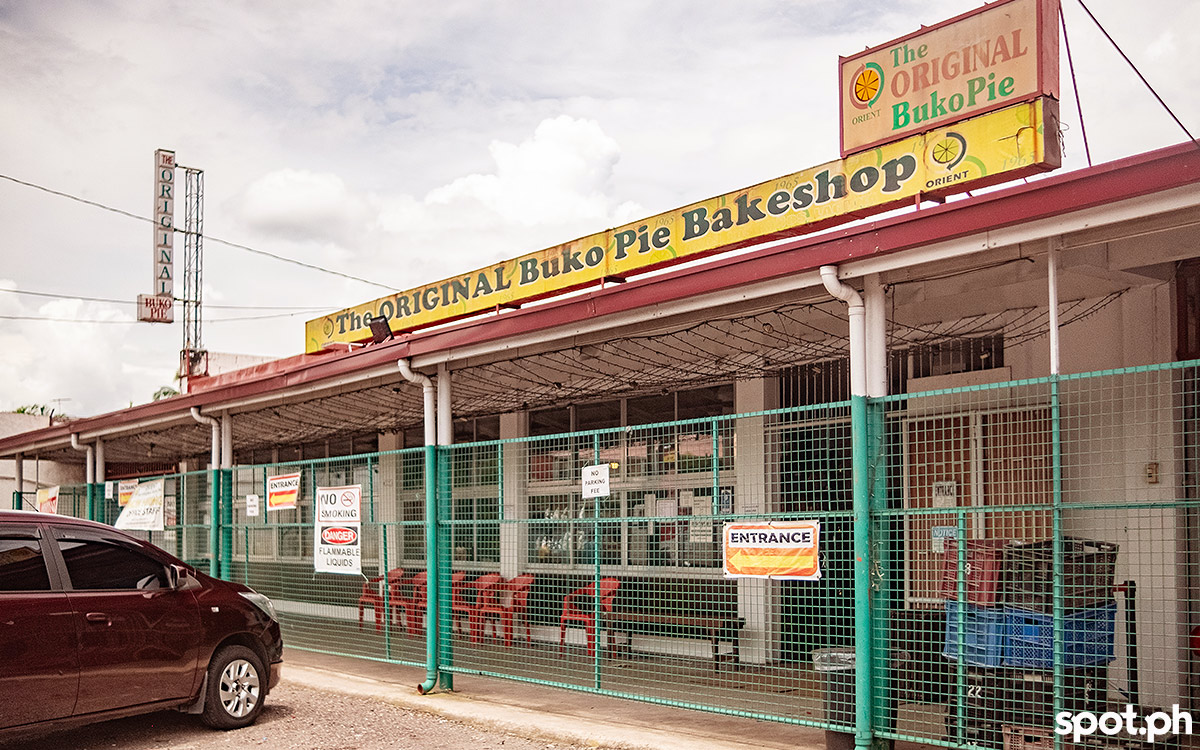
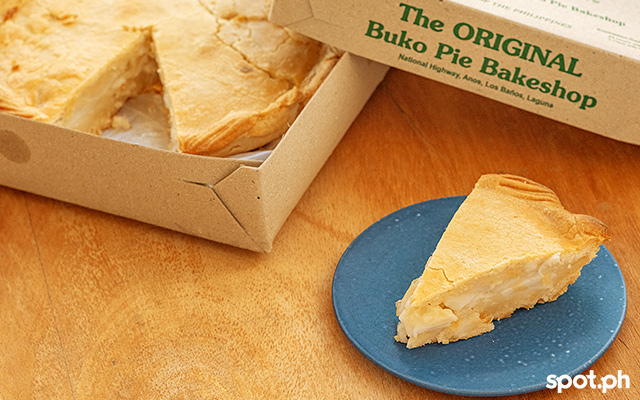
The Original Buko Pie, an icon to this day. PHOTO: Majoy Siason

The Young Coconut Difference: TheĀ Beginnings of The Original Buko Pie

"Laguna, including Los BaƱos and San Pablo, was coconut country," says An Alcantara when asked about the buko pie's history. "We had thousands and thousands of hectares of land devoted to coconut. And this is true of Laguna all the way to Quezon up to Bicol. Coconut was the most abundant resource at that time."

It only makes sense, then, that those living in the area would take advantage of this widely availableĀ crop. WhichĀ leads us to the beginnings ofĀ The Original Buko Pie, also called ORIENT: The Original Buko Pie Bakeshop.Ā The name alone pretty much already gives us a gist of the story: they were the first to sell buko pie in the early 1960s, and they would go on to inspire legions of other enterprising individuals to start their own buko pie business. But there’s much more to this brand born andĀ based in Los BaƱos, Laguna than being mere pioneers of the dessert.

The Original Buko Pie is owned by the Pahud family, with theĀ buko pie’s creation being credited to Nanette Pahud, orĀ Apolonia Pahud Risano, daughter of a laundrywoman. Known to her relatives in the Philippines as Nene, Nanette had four siblings: Virginia, Damaso, Soledad and Francisco. I learn about ORIENT's backstory through exchanges with Nanette’s son Rick Risano and nephew Ian Castilla,Ā son of Nanette's sister Virginia. Note, of course, that Rick and Ian were both still very young during the bukoĀ pie brand's early days, andĀ are only recalling stories about their Tita Nene from family members.

In 1960, Nanette got the opportunity to work for Dr. Halsey Knapp, an American exchange professor from Cornell University who was at the U.P. Los BaƱos’ Department of Agriculture.Ā Though formally called in as a cook, Nanette also did other tasks in the household Knapp shared with wife Grace and her family, putting her role as an overall helper.

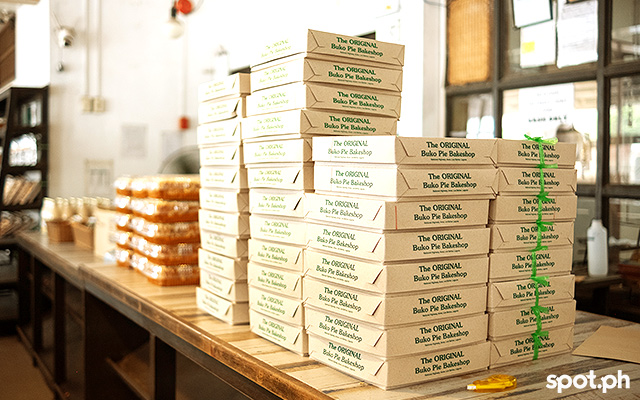
buko pie, the original buko pie, orient
Boxes of different pies at the Original Buko Pie shop.Ā 
PHOTO BY Majoy Siason

Nanette was mostly self-taught in the area of cooking, learning through cookbooks and lessons from her mother—yet she impressed the Knapps with her prowess in cooking. She was given free rein within the Knapps' kitchen where she got to do plenty of experimentation, Ian shares. And Mrs. Knapp gave her a few cookbooks to pore over, Rick tells me, among which is a Betty Crocker cookbook that he might still have in his care.Ā 

Nanette would eventually marry, get pregnant, and leave her job in 1962. ā€œThen she just started baking and cooking a lot of different things,"Ā says Rick. The likes of cakes, pastries, and cinnamon rolls would come out of her oven; she would make these to order, and sell them at UPLB’s College Cooperative. ā€œAs far as when she really started making pies, [it started when] she wanted to create something other than [the ones found] on the cookbooks,ā€ Nanette started experimenting with using Filipino ingredients: squash, sweet potato, lemon, even pineapple.

It was Lourdes Rellio, a co-worker of Nanette's brother Damaso at the Forest Products Research Institute, who suggested to Nanette to try putting buko in a pie. Young coconut was abundant in the area after all.Ā ā€œI think, through trial and error, she basically made the buko pie and perfected it,ā€ says Rick. This became the unanimous favorite of her mother, her siblings, and her husband Salvador. ā€œThen I think she just started selling it to people… [and] people liked it.ā€ It was just a one-woman operation in the beginning, and she sold without a physical store or boutique. Thanks to friends, Nanette's pies became popular through word of mouth. Rick remembers—albeit admittedly vaguely—a family friend, possibly the Knapps, lending his mother a stove for cooking the pie.

Seeing how the pastry won over the locals, Nanette and her family borrowed P2,500 from a bank to open a small storefront space in March of 1965. Located on Lopez Avenue, within walking distance of UPLB, it was here where she sold fruits, drinks and other pastries—but the star wasĀ her buko pie, baked in an oven that could take in four pies in one go, and then priced at P4.50 a pop.Ā 

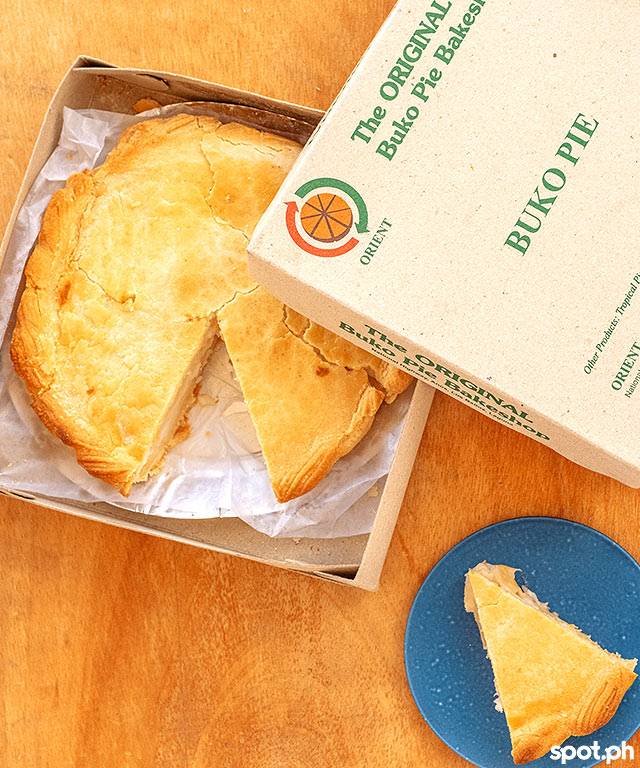
buko pie, the original buko pie, orient
At first glance, ORIENT'sĀ bukoĀ pie—and the box it's cased in—are as simple as you can get.Ā 
PHOTO BY Majoy Siason

Nanette's business would only become bigger, and the buko pie became a hit not only with locals but visitors to the province. ā€œIt became popular as a necessary stop—when you're going through Los BaƱos, you must buy buko pie as well as espasol and kesong puti,ā€ says Alcantara. The store even caught the attention of hometown celebrities which would feature the buko pie in their shows, and foreignĀ visitors from theĀ United Nations and Food and Agriculture OrganizationĀ in UPLB.

Nanette, along with Rick and Salvador, immigrated to the United States in 1969. The buko pie business was taken over by siblings Soledad and Damaso, as well as Virginia who returned to Los BaƱos from Negros Occidental in 1972. Come 1975, they relocated the store to Barangay Anos along National Highway, which allowed them to reach a wider audience.

As more buko pie brands opened in the years that followed, the Pahuds realized they needed to distinguish their product—hence the name The Original Buko Pie (also called ORIENT, short for Original Enterprises). It was Virginia’s husband who made the signboard with the business’ new moniker, says Ian.

Now about 60 years in the business, The Original Buko Pie remains extremely popular among Los BaƱos locals. Heck, it’s so popular it’s advised you be at their shop—either the original in Anos, Los BaƱos, or its second outpost at Santa Rosa in Tagaytay Road—as early as 7 a.m. if you want to make sure you get hold of their buko pies. That's how fast they sell out.Ā 

buko pie, the original buko pie, orient
What ORIENT's pie lacks in frills, it makes up for in taste and rustic charm, what with itsĀ crisp-tender crust and good amount ofĀ bukoĀ in a lightly sweet custard.Ā 
PHOTO BY Majoy Siason

But oh, is it worth making that very early Laguna trip for. The Original Buko Pie's crust is more of a thin, lean pastry—not exactly theĀ high-fat,Ā flaky sort American pies typically use—with sturdy twisted edges and a tender center. It has aĀ hint ofĀ cracker-y saltiness that makes it quite tasty on its own. The lightness makes it a great foil to the filling: jiggly custard that’s just a touch rich, holding strips of soft, lush buko meat.Ā Though Ian advises eating their pies hot, I also take joy having them at room temperature, when it developsĀ enough structural integrity you can hold a slice with your fingers; or chilled, as the crust stays surprisingly tender.

Ian admits their recipe sounds ā€œsimple,ā€ especially compared to the more modern buko pie recipes that have circulated online. They’ve also gotten criticized for their rather plain box, he says with a laugh: ā€œNapakaluma nung itsura.ā€ But he takes pride in their generous use of young coconut. ā€œNapaka-basic na ingredients [ang gamit namin], hindi lang kami matipid sa buko,ā€ he explains.

The Original Buko Pie has since opened branches in Tagaytay and Bicol. They now also have other items on their menu: the Pineapple Pie with a tangy fruit filling; the Tropical Pie which combines buko and pineapple; the Buko Apple Pie; and Cassava Cake. As far as sales go, Ian won’t disclose exact figures but gives us this: ā€œEverything that we [in the family] are now, may mga PhD na, may mga doktor, may medicine, mga nag-abroad, we got into triathlon, we're into golf ngayon—it's all funded by Original Buko Pie.ā€

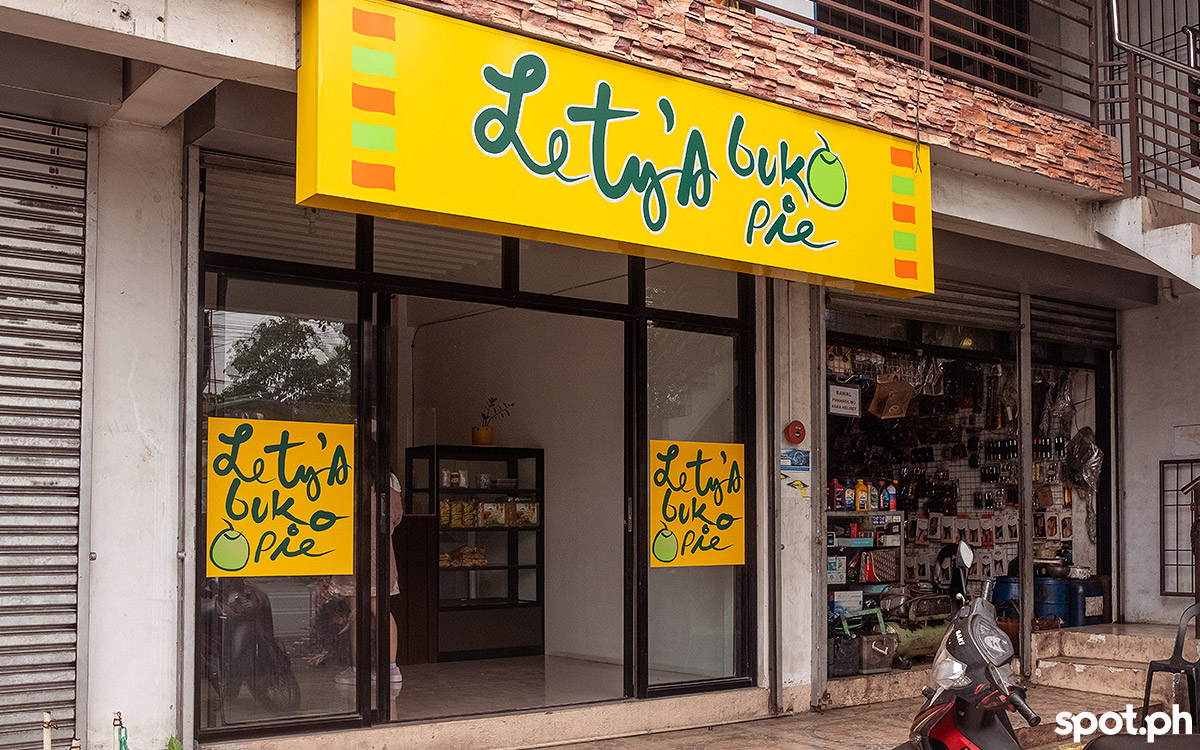
A branch of Lety's on National Highway. PHOTO: Majoy Siason

Another Player Enters the Buko Pie Scene: Lety’s

Since The Original Buko Pie,Ā many others have established their own brands of the young-coconut pie, some with more success than others. A few names, like Lety's, are now icons in their own right.

Lety’s is named after Leticia Ocampo Belarmino, a Los BaƱos native and housewife who studied home economics. Being stationed at home most of the time, she got into baking and started experimenting in the kitchen, with the idea to turn her hobby into a business.

buko pie, lety's
Ā 
PHOTO BY Majoy Siason

ā€œThe Original Buko Pie was already there during that time. Malapit lang sa amin yun eh,ā€ says Gemma Belarmino, Leticia’s daughter who now manages the business. ā€œSo na-encourage siya na makagawa ng buko pie, with her experience sa baking. Doon siya kumuha ng recipe on how to make the crust and all these things.ā€ The family, as well as their neighbors, became the taste-testers for her experiments. After a few trial and error, she was able to develop a recipe, and with P200 as initial capital, Leticia was able to start the business in 1976.

There wasn’t much competition then. The young coconut was in abundant supply given the many buko plantations in Los BaƱos at the time. But the brand Lety's didn't exactly start strong. Leticia was just selling through a kiosk then. Sometimes her stocks would sell out and sometimes they wouldn’t. It took for their pies to hit it off with the public. ā€œHanggang tuloy-tuloy na na may nagkakagusto na. So, doon na, dumadami na ā€˜yung sales niya.ā€Ā 

lety's buko pie
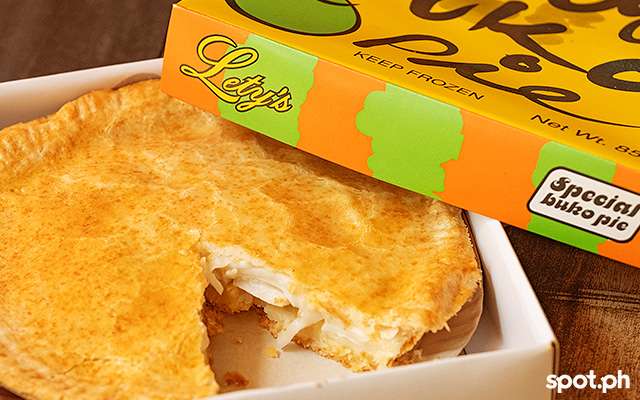
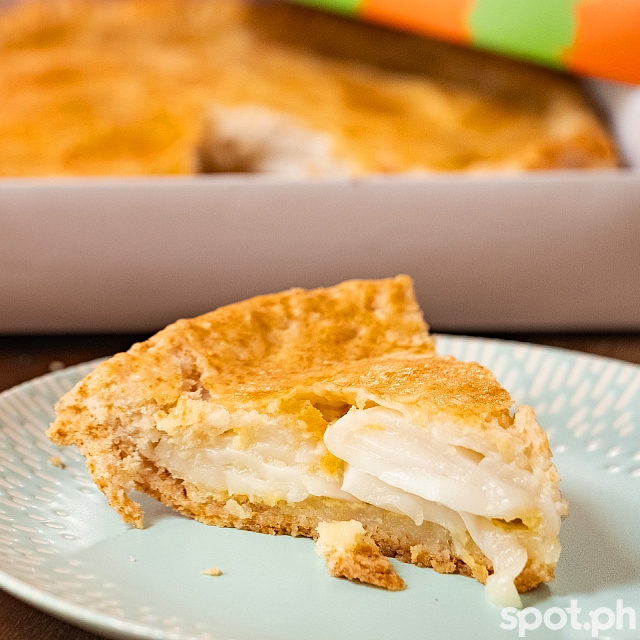
Peep the generous amount ofĀ bukoĀ and puffy-flaky crust on Lety's version.Ā 
PHOTO BY Majoy Siason

Lety’s now has four stores in Laguna: one near the UP Los BaƱos campus; two on National Road; and one in Pansol. There are peak seasons—they’re particularly popular during the summer, with locals buying pasalubong for their out-of-town travels and visitors flocking to the province for vacation.Ā Apart from freshly baked pies and other Laguna delicacies like espasol, theyĀ also sell frozen buko pie that’s ideal for export, as it can keep for six months and always reheating-ready.

Lety's pies has been my family's go-to for years, and not just because Gemma is a family friend (as I'd learn during the interview). The Lety's crust is distinct, in that it’s a tad puffy but flaky—comparable to flatĀ American biscuits, probably due to the use of baking powder. Think crisp on the surface and airy within, such that itĀ shatters as your fork hits it. Inside, there’s a generous amount of fresh, succulent strips of young coconut—seemingly the most amount out of the brands we tried, and in that perfect mala-kaninĀ stage that's overall succulent withĀ just a bit of a bite. There's a good amount ofĀ their lush, creamy, barely sweet custard, too—and not too much that it overpowers; just enoughĀ that it holds the buko together.

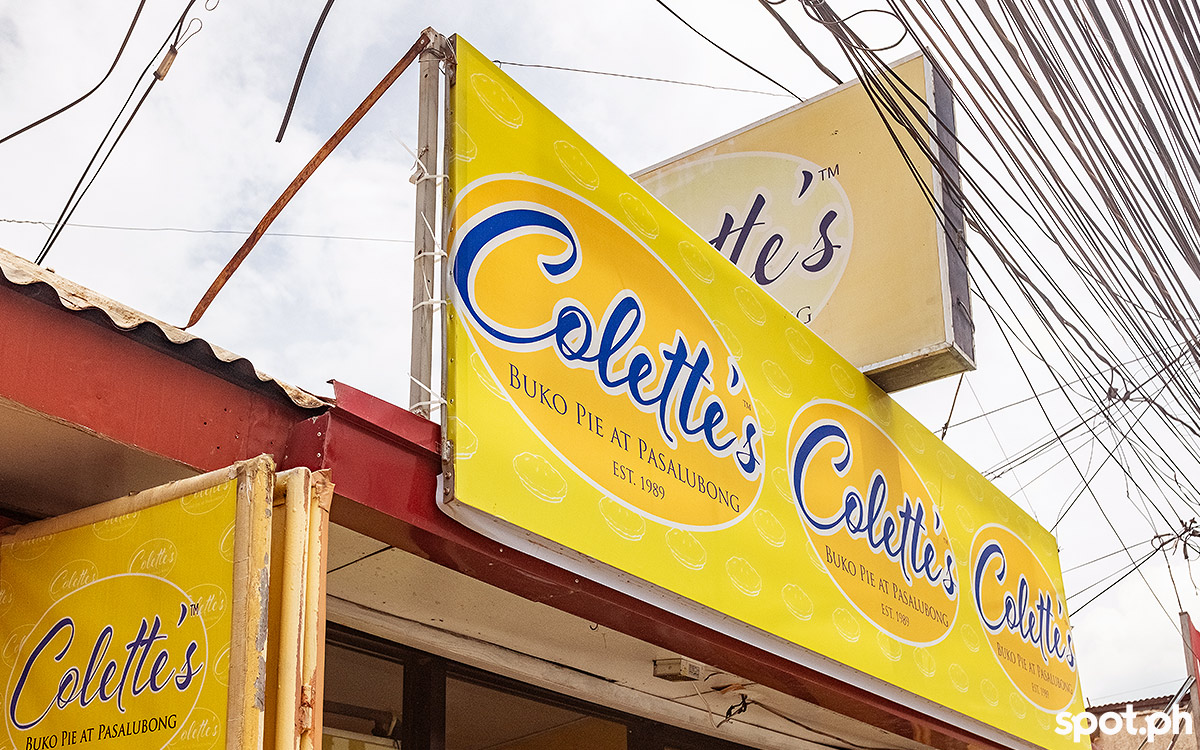
A Colette's store on National Highway. PHOTO: Majoy Siason

How Colette’s of San Pablo Further PropelledĀ BukoĀ Pie toĀ PasalubongĀ Stardom

From its birthplace of Los BaƱos, the allure of theĀ buko pie would go on to spread to other parts of Laguna. San Pablo, in particular, is home to another buko pie icon that’s especially popular if only forĀ the numberĀ of branches they have open: Colette’s. Behind the brand is Plaridel and Regina de la Cruz,Ā a couple from San Pablo City. The two named the business after their daughter, Ruby Nicole a.k.a. Colette, who was around 14 at the time the business was established.

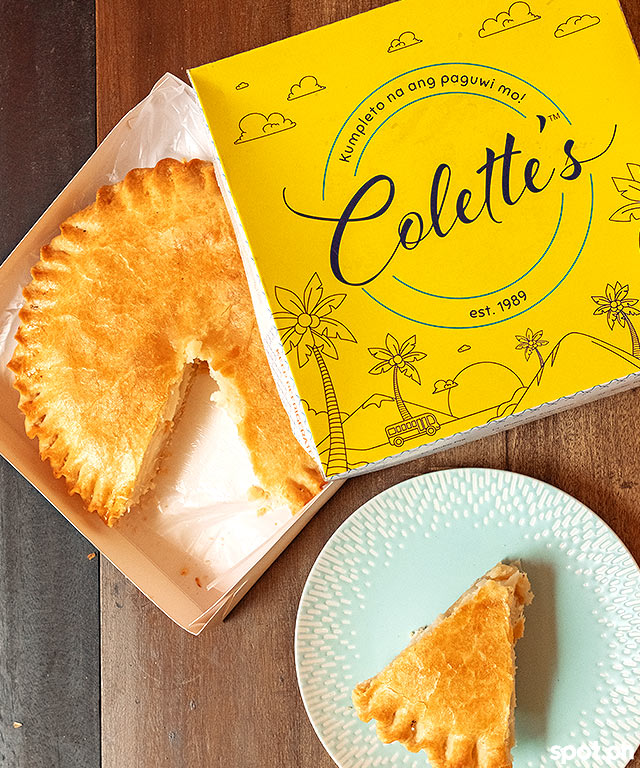
The idea to open the bukoĀ pie business came about after seeing the dessert’s success in San Pablo, Ruby Nicole's son Stefano Lean relays to SPOT.ph. ā€œHigh school student ā€˜yung nanay ko at the time. And then, nakita ng lola at lola ko [Reggie and Plaridel] na may mga buko pie na binibenta sa Los BaƱos, atĀ wala pa sa San Pablo. Very abundant ang supply ng buko sa San Pablo—’yung great-grandfather ko ay magbubuko at maraming supply dito. [Pero] wala pang buko pie.ā€ The Dela Cruzes studied how to make the pies and opened Colette’s in 1989.Ā 

From their beginnings as a store in a kubo, word about them spread organically. Being the pioneer buko pie sellers in San Pablo helped, as did the good location, Stefano tells us. ā€œNaging successful and nag-expand sila. The first expansion was in 1994, and then tuloy-tuloy na ever since."

buko pie, colette's
You're bound to stumble upon multiple Colette's shops on your way to Laguna.Ā 
PHOTO BY Majoy Siason

The expansion set them apart from other bukoĀ pie playersĀ and solidified the brand as a pasalubongĀ staple, says An Alcantara.Ā ā€œI think the breakthrough that theĀ Dela Cruzes brought to the pasalubong idea is that they created a network of branches. They created themselves as a large must stop for buses. The second point is that they built a network of branches and even opened it to franchising," she explains. "So the Dela Cruzes were not only great at creating their own kind of buko pie but they were also great entrepreneurs... They replicated [their stalls] and offered it as a franchise.ā€

Today, Colette’s stores and franchises can be found around Laguna, as well as Antipolo, Rizal, Tagaytay, Metro Manila, even Cebu. They have five company-owned branches, with the main branch in San Pablo selling some 150 to 200 buko pies a day. Folks continue to flock to their stores especially on the weekends.

ā€œI think they partnered with or created shops where it became strategically the ideal bus stop,ā€ Alcantara hypothesizes, citing how they provided ā€œeasement space and parking… for large buses.ā€ They opened outlets along highways and expanded the offerings in their shopā€”ā€so you're not just buying buko pie, but you're buying other pasalubong. I imagine that they had put up a bathroom stop as well… and that they had also good relationships with the bus drivers, which as many people know, is key to becoming a successful pasalubong stop.ā€ Additionally, Alcantara brings up the clever way they would encourage vendors to resell on their behalf.

ā€œMaybe they'd sell to the vendors at a wholesale price, so a vendor could now carry several boxes of buko pie and get on the bus… and sell to each and every person on the aisle," adds Alcantara. "It was wonderful to eat it on the bus because it's piping hot… in a convenient box. So it’s quite a treat when you're on the bus." To hear the writer and Casa San Pablo proprietor say it, the Dela Cruzes really gave the business a lot of thought. "Whether by creating branches along the highway and also getting vendors to actually get on the bus and sell the buko pie, you can imagine how deep that entrepreneurial relationship was. And that's how it spread, the idea of it as pasalubong. It's the convenience [of] being right at the doorstep of the commuter or traveler, making it easy for them to buy. I think we should credit the Dela Cruzes of Colette's Buko Pie for doing that.ā€

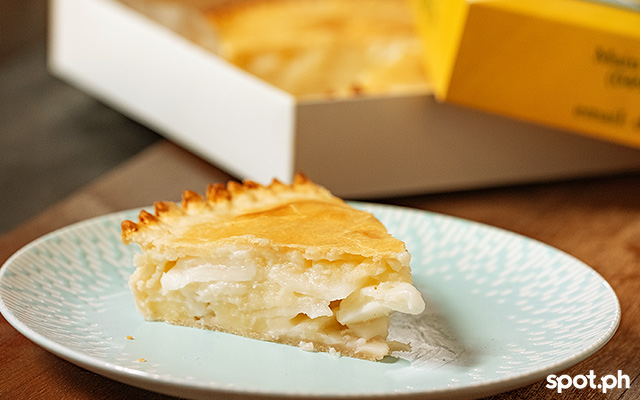
buko pie, colette's
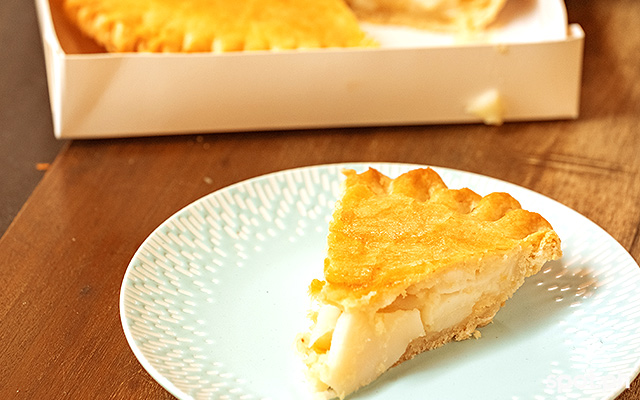
A slice of Colette'sĀ bukoĀ pie, which hasĀ heavily defined, crimped edgesĀ and a sweeter filling with ample buko.Ā 
PHOTO BY Majoy Siason

Colette Dela Cruz herself would go on to study food technology at UPLB. She was able to use this knowledge in helping develop new products for the buko pie venture. ā€œBy the time that my mom [Colette] had graduated from school, nagkaroon siya ng mas malaking influence,ā€ Stefano tells us. She helped in R&D and in developing new flavors for the pie to help distinguish them from other brands. Her contributions then were more on the food side of things, Stefano shares, but in 2021 she took on a more managerial role in the business.

ā€œI think ang pinaka-priority namin is ā€˜yung pagiging fresh ng product. So dapat ā€˜yung buko pie ma-sell siya within 24 hours,ā€ shares Stefano when asked about the secret to their success. ā€A main priority since I've taken up the business has been prioritizing quality assurance.ā€ Specifically, he’s particular about the buko being soft and it being stored well. He's as exacting with the crust—which is his favorite part of the pie.Ā 

Colette also had a great culinary career as a pastry chef in her own right, working for the likes of The Maya Kitchen and Sofitel Hotel. She also had stints at notable restaurants in Boston—L’Espalier, No. 9 Park, Sel de la Terre, Bistro du Midi—and was struck by the locavore movement prevalent in the city at the time. In 2016, she brought those experiences to the Philippines in the form of Hiraya Bakery, her own venture of pastries and baked goods highlighting local ingredients. She sadly passed away in 2021.

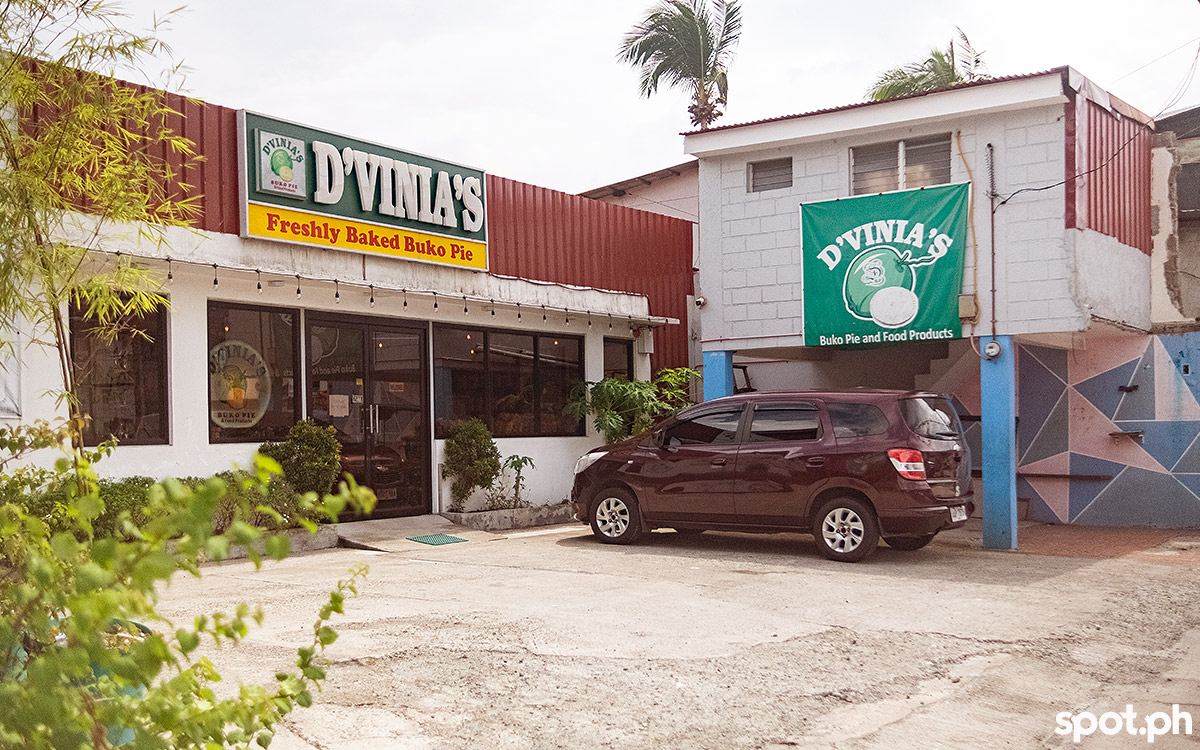
D'Vinia's in Pansol, Calamba. PHOTO: Majoy Siason

Making Buko Pie + the Secret to a Good Pie With D’Vinia’sĀ 

Let's circle back to D’Vinia’s, which is named after owner Divinia Baclig. She was taught the art of buko pie at the UP Rural High School,Ā at a Home Economics class led by her professorĀ Mrs. Novero. Divinia passed on the knowledge to her sister Emma, who went on to run a brand called Elvie’s Buko Pie. During Divinia’s high school days, she would help her sister out during the summer. But Emma eventually ended up leaving Elvie’s. The two sisters would then put up D’Vinia’s, their very own buko pie venture, in 1991. Initially they were stationed at Bucal in Calamba, but later they were able to get their own spot in Pansol, near several resorts in the area.

buko pie, d'vinia's
Ā 
PHOTO BY Majoy Siason
buko pie, d'vinia's
Ā 
PHOTO BY Majoy Siason

The secret to good buko pie, Baclig shares, is good buko—which is to say fresh buko. They keep supplies of young coconut surrounded by ice, as opposed to just chucking them in the freezer. They do this to maintain the texture—freezing, Divina explains, changes the buko’s texture when thawed. Supplies of buko stay in their inventory for up to three days maximum, to ensure freshness.

buko pie, d'vinia's, rolling dough
The staff of D'Vinia's tirelessly work on theirĀ bukoĀ pies.Ā 
PHOTO BY Majoy Siason

Just for our shoot, D’Vinia’s prepared a batch of pies at 10 that morning—but baking typically starts at around 4 a.m., before the shop opens an hour later. Swing by that early and you can expect to be handed out pies piping-hot and freshly baked.Ā 

buko pie d'vinia's
ustard and buko slivers fill a handmade D'Vinia's pie crust
PHOTO BY Majoy Siason

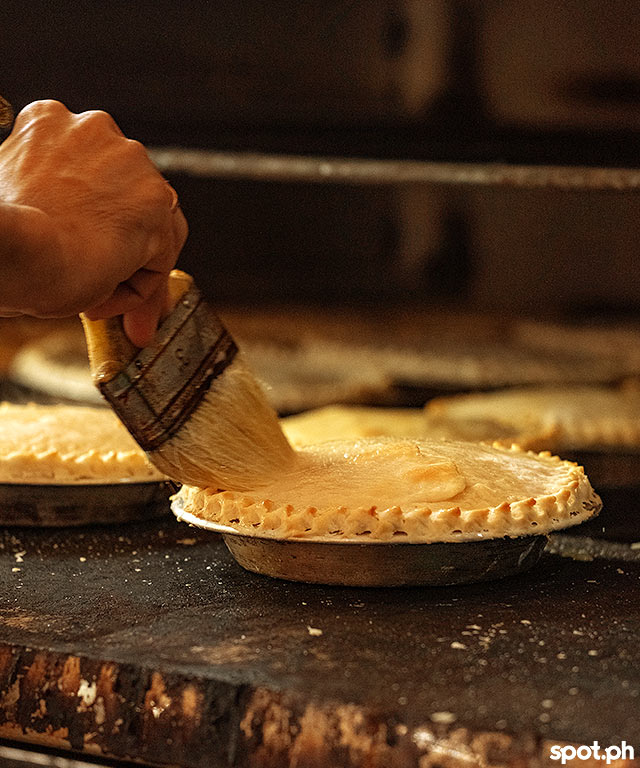
Every pie begins with the crust, which D’Vinia’s bakers mix by hand. They first prepare a dry mixture of flour, salt, and sugar, then cut in lard (ā€œhindi margarine,ā€ Baclig emphasizes) followed by water to form a dough. This is cut, rolled, and fit into pie molds. Meanwhile, a custard mixture of eggs and buttermilk from New Zealand cloaks wide strips of buko to form the pie filling. After filling the crust-lined pie molds, another disc of pie dough is placed on top and the bakers crimp the edges to seal. After a quick brush of an egg wash, the pies go into the oven. Each of their ovens had narrow racks that allow multiple pieces to go in—and bake—at once.

buko pie, d'vinia's buko pie, brushing egg wash
These are brushed with an egg wash, then allowed to bake.Ā 
PHOTO BY Majoy Siason
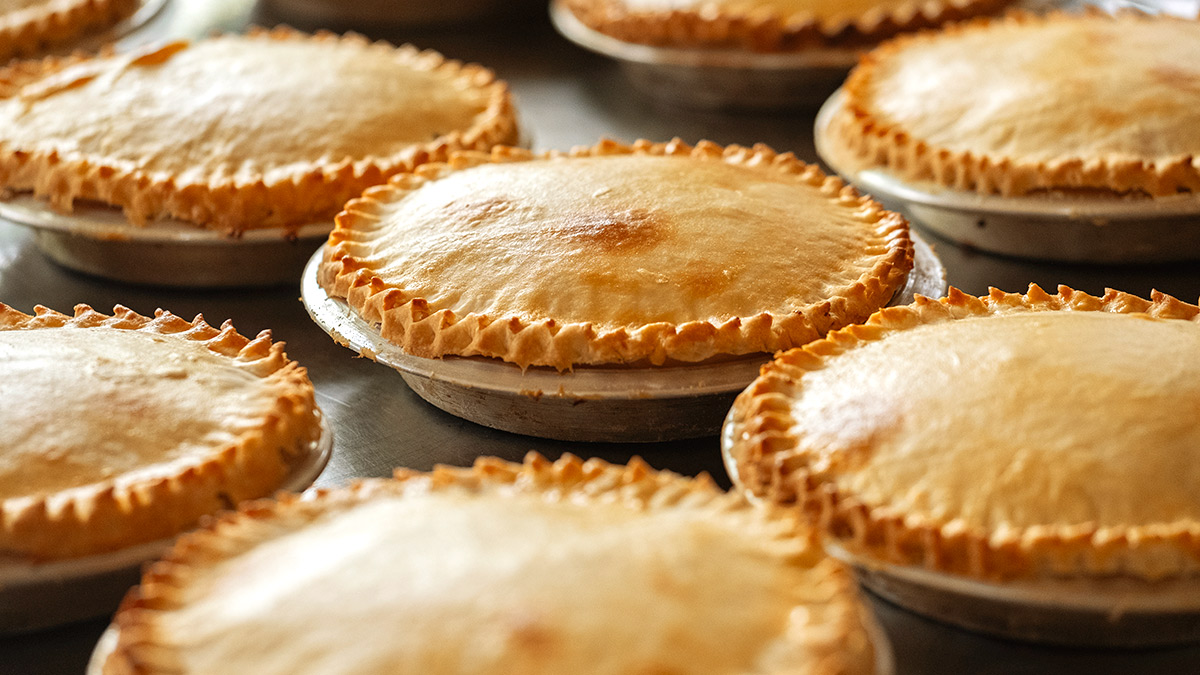
buko pie,
The aroma ofĀ bukoĀ pie fresh out of the oven cannot be beat.Ā 
PHOTO BY Majoy Siason

ā€œHindi namin binabago [ā€˜yung] recipe namin… ever sinceĀ yun ā€˜yung kung ano ā€˜yung natutunan ko sa Rural High,ā€ Baclig tells SPOT.ph. But they have scaled the recipe up to account for the bigger production; they aim to make 45 pies per salang or round of baking.

buko pie, d'vinia's
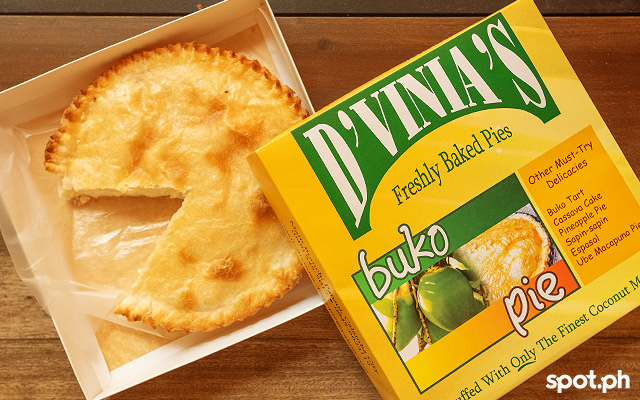
D'Vinia's use of lardĀ produces a more delicate, crisp-tender crust with a distinct rich taste.Ā 
PHOTO BY Majoy Siason

Notably, D’Vinia’s use of lard makes for a crust with a distinct richness—think that of the crust inĀ hopiang baboy. Texture-wise, it's the kind that's crisp at the onset but crumbles easily as you poke in your fork, and just about melts in your mouth. The custard filling firms up as it cools down, and makes for a sweet, creamy, egg yolk-y base that’s great with the buko. There’s ample amounts of that buko, too—silky, smooth strips that indeed taste fresh.

PHOTO: Majoy Siason

Also read: This Local Pie Maker Wants to Spread the "Pie Obsession"

Buko Pie, the Distinctly Filipino Treat

While buko pie will always be best associated with its birthplace of Laguna—Los BaƱos, in particular—many more buko pie purveyors have popped up inĀ other parts of the Philippines.

cecilia's buko pie
The buko pie from Tagaytay darling Cecilia's is generous on the custard
PHOTO BY Hans Fausto

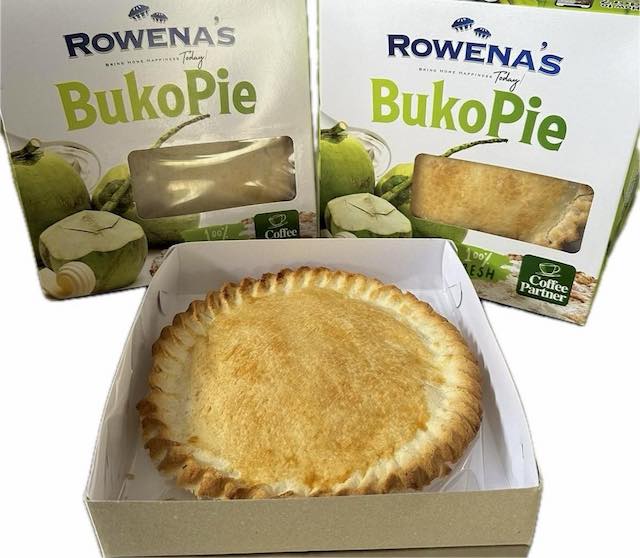
Laguna’s neighboring cities of Cavite and Tagaytay, both popular vacation venues, have got strong bukoĀ pie game in their own right. For one, there’s Cecilia’s Buco Pie from Tagaytay—a favorite of folks from the South for its delicate, custard-forward filling (we find it best consumed chilled for this reason) and tender, flaky pastry.Ā Rowena's, known for their range ofĀ pasalubong,Ā is another go-to for the dessert with what seems to be a sturdier crust than most.

rowena's buko pie
When in Tagaytay, picking up a box of Rowena's Buko Pie is a must for many.Ā 
PHOTO BY Facebook/Rowena's Pasalubong Tagaytay

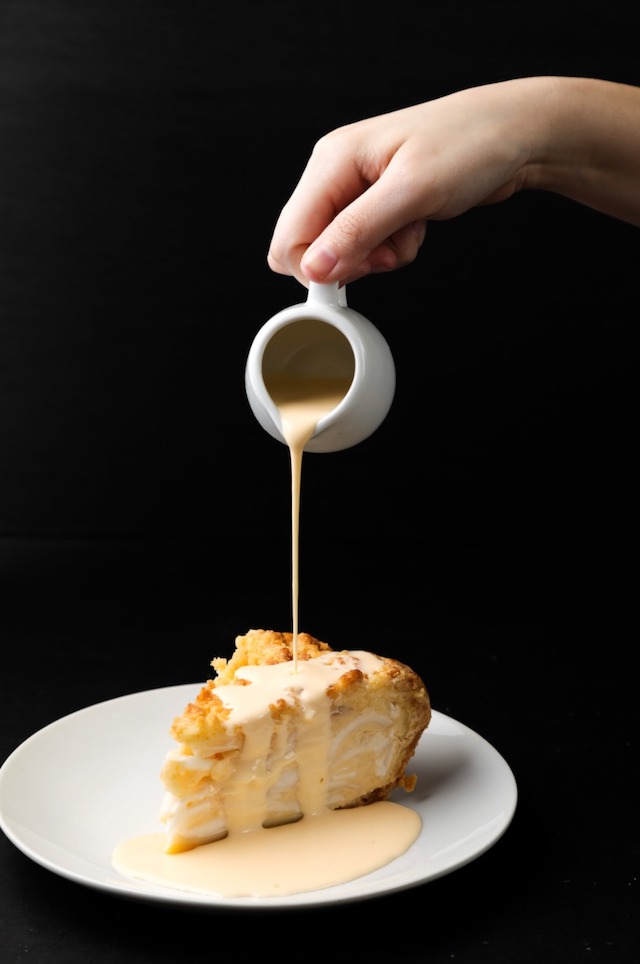
We have our own share of places for buko pie in Manila. Particularly well-loved is theĀ Young Coconut Pie of Wildflour—a more Western-leaning rendition with an American-style pie crust (essentially pĆ¢te brisĆ©e that’s right parts tender and flaky), a buttery crumble topping (for textural contrast), and a sidekick of crĆØme Anglaise that upsĀ the decadence in each forkfull.Ā It was introduced to their menu inĀ 2015 "asĀ a way ofĀ putting our own stamp on a bonafide Filipino classic," Wildflour's Ana LorenzanaĀ de OcampoĀ tells SPOT.ph.

wildflour young coconut pie buko pie
Wildflour's Young Coconut Pie givesĀ bukoĀ pie a welcome Western-style rendition.Ā 
PHOTO BY Wildflour

"Buko pie has always been a personal favorite of mine among local desserts, so the recipe that I made for Wildflour is the version of buko pie that I myself prefer. It continues to be one of our most sought after creations by customers,"Ā Lorenzana de Ocampo continues.Ā This rendition, says the Wildflour founder, even caught the attention of an international food icon. "I was very honored when the late, great Anthony Bourdain included Wildflour's buko pie on his list of six must-try dishes for Manila visitors in a CNN Travel article in 2017."

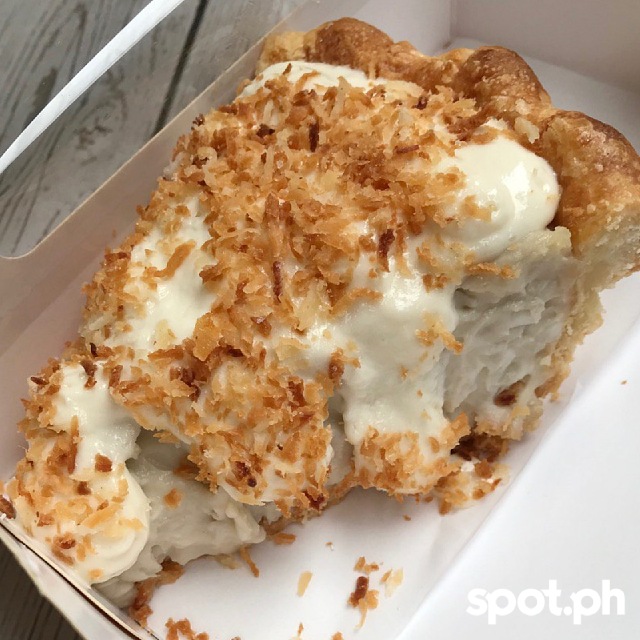
old boy bakery
Old Boy Bakery'sĀ bukoĀ pie-coconut cream pie crossover.Ā 
PHOTO BY Patricia Baes

Meanwhile in BataanĀ (they also sell in Manila), there’s Old Boy Bakery.Ā This purveyor makes a standout, seasonally availableĀ buko pieĀ that marries theĀ old-schoolĀ versionsĀ withĀ Western coconut cream pie. In itĀ is a pĆ¢te brisĆ©e crust holding young coconut strips, aĀ silky coconut custard, a billowy layer of coconut whipped cream, and a sprinkling of toasted butter coconut.

Jollibee buko pie
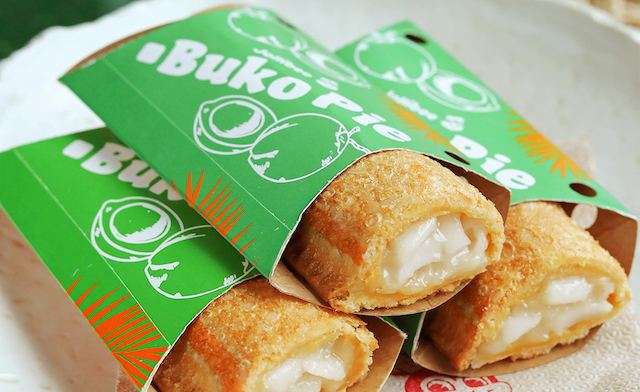
Fast-food giantĀ Jollibee has also taken onĀ bukoĀ pie—deep-fried, handheld style.Ā 
PHOTO BY Jollibee

Even Jollibee joined in the fun with their own handheld, deep-fried buko pies, which were introduced in 2019 and would make seasonal comebacks from time to timeĀ (as of writing this isn’t available). Here, the ā€˜Bee’s crackly, deep-fried shell holds inĀ a filling of buko chunks embedded in a thick, sweet, lightlyĀ gelled liquid.

The Husband's Craving buko pie sliced
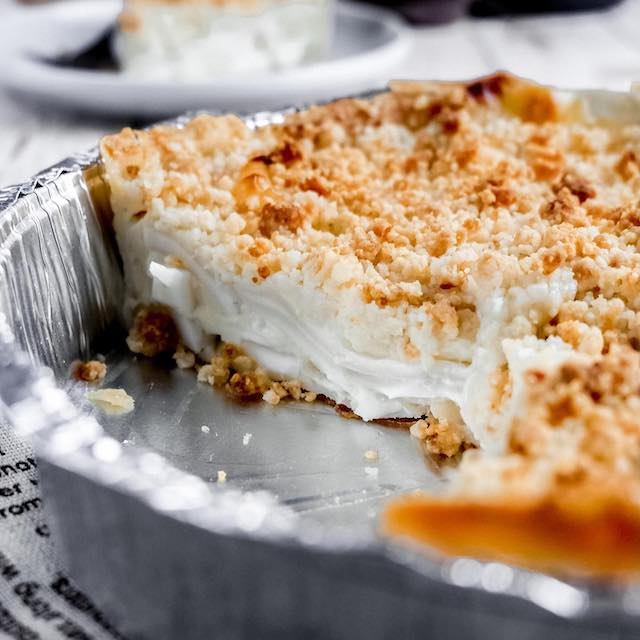
The Husband's Craving is Tarlac's drool-worthy entry to theĀ bukoĀ pie scene.Ā 
PHOTO BY Facebook/The Husband's Craving

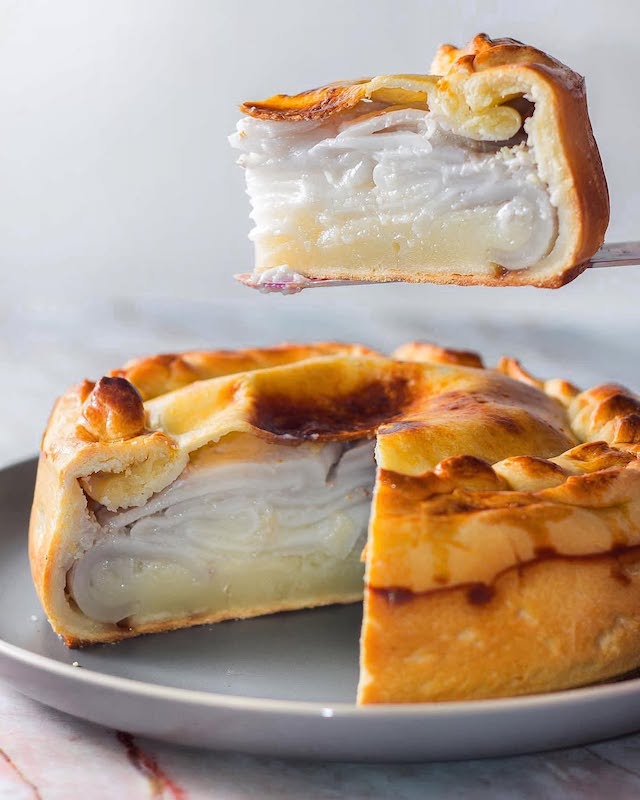
Elsewhere,Ā I've heard great things about The Husband's Craving, which is based in Tarlac but has pickup locations in Manila including oneĀ in Greenhills; theirs is another custard-centric variation with a lush crumble topping. In Pampanga, there'sĀ 25 SeedsĀ by Chef Sau del Rosario, which serves a cheekily named Vuco Fye—a decidedly loaded pie that's the deep-dish pizza of theĀ bukoĀ pie world, I suppose. Custard goes on the bottomĀ before it's topped with a thick layer ofĀ buko,Ā and everything is packed into a tall crust with a shiny, golden-brown surface.

chef sau vuco fye buko pie
Chef Sau'sĀ cheekily named, decidedly loaded Vuco Fye.Ā 
PHOTO BY Ching Dee, via Instagram/chef sau

Cultural adaptation has, historically, bred countless crossover dishes that have since become more than the product of their sum. In the case of buko pie, the resulting dessert is one that’s distinctly Filipino—in the locations it’s purchased, in the manner it’s given as souvenirs to friends and family, in flavor profile, and even in the way it’s shared and consumed.

It's late in the day and we're back in Manila from our trip; the skies are hazier, the air smells of smoke, the roads congested. TheĀ bukoĀ pies are now chilling in the fridge and preparing for their close-up. When I open them the following day, they as per usual take me back to the splendor of Laguna and all the memories attached to it.

Photos by Majoy Siason andĀ Hans Fausto
Cover photo by Hans Fausto, art by Warren Espejo
Special thanks to Ms. Gel Salonga and Uncle Jerome Baes

Comments

Latest Stories

Load More Stories
Close