
Kyoto, Japan: The Best Things to See and Do for Two Days
Discover Kyoto's ancient charm and modern delights.
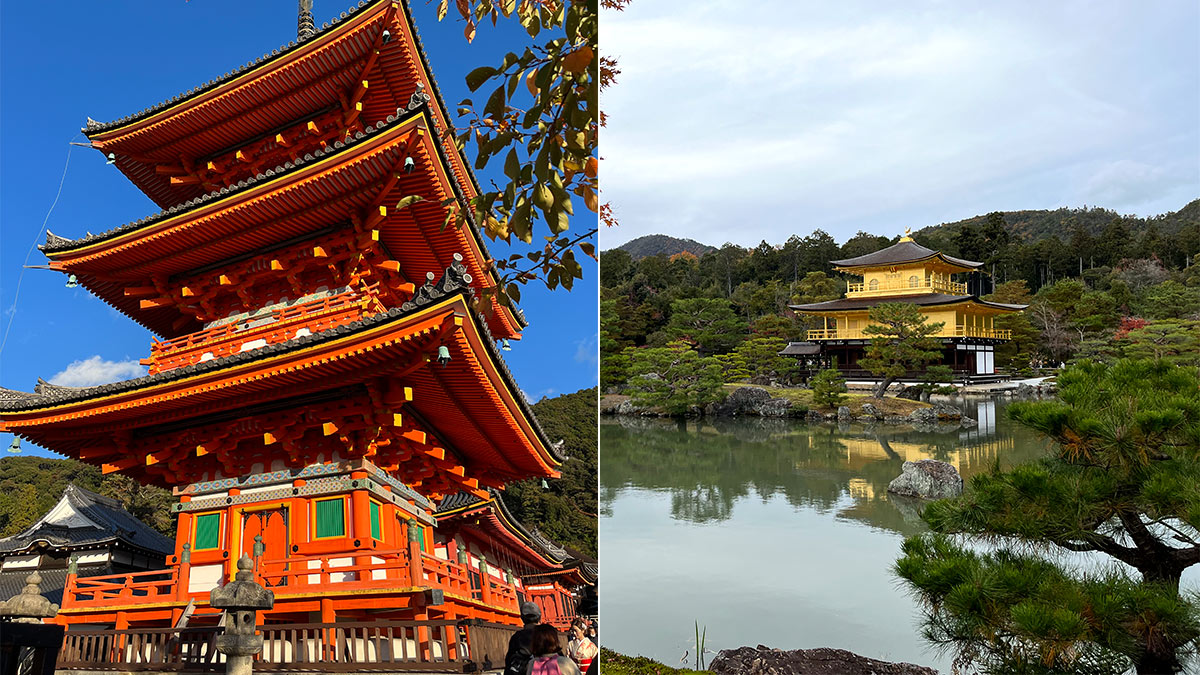
(SPOT.ph) Cities from different parts of Japan give off different vibes based on influences from history and nature. As the country’s capital, Tokyo exudes contemporary vibrance and innovation. Osaka is known as the nation’s kitchen. Sapporo in Hokkaido is the go-to destination for travelers seeking a memorable winter experience in Asia. Finally, Kyoto is the city that has retained much of Japan’s traditional culture woven into nature because it served as the old imperial capital.
What to Know about Kyoto, Japan
Kyoto, which is written in Han as the symbol for "capital city," was the capital of Japan for more than a thousand years, from 794 to 1868. When the Meiji Restoration occurred in 1868, a political revolution ended the Tokugawa shogunate, and control of the country was returned to direct imperial rule under the young Emperor Meiji. It was also an era of major political, economic, and social change that brought about modernization in Japan. During this time, the emperor decided to reside in the new capital, Tokyo.
Even with the move to modernity, Kyoto was able to preserve the Japanese heritage. This practice was espoused when the city was still the capital and residence of the imperial family. This is why national treasures such as temples, shrines, architecture, and traditional ceremonies remain intact today. Because Kyoto is brimming with history and heritage, it’s nice to take a trip down memory lane and revisit how ancient Japan feels. With significant temples, shrines, and the surrounding nature well-preserved, there’s no place more apt to experience Japanese traditions such as staying in a traditional ryokan, taking a dip in an onsen, or being dressed in a kimono than in Kyoto.
Since the foliage here is stunning, we recommend that you visit during fall from October to November or during spring from March to May. Here’s a two-day itinerary that will make your trip to Kyoto as easy and enjoyable as possible:
Day 1 in Eastern Kyoto
Fushimi Inari Taisha
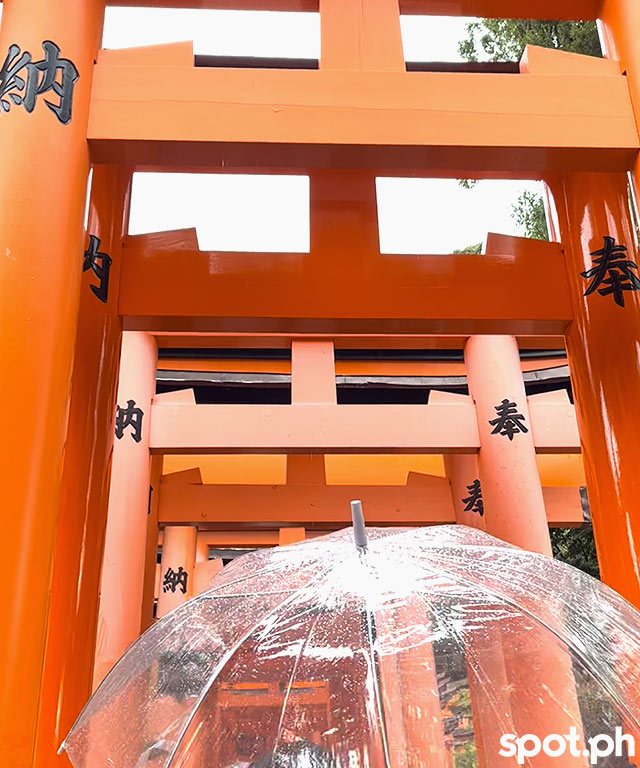
Located in southern Kyoto, Fushimi Inari Taisha showcases the iconic Japanese orange gates. Inari shrines, also known as “O-nari-san,” are the most familiar shrines to the Japanese, with almost 30,000 scattered across the country. Fushimi Inari Taisha serves as the head shrine of these holy places where worshippers gather for bountiful harvests, business prosperity, and safety.
“Inari” means reaping of rice, the main food sustaining the Japanese, and symbolizes the miracles of heaven and earth. Fushimi Inari Taisha’s deity is known as a deity who feeds, clothes, houses, and protects so that everyone may live with abundance and pleasure.
There are five great virtues of the deity: business prosperity, the prosperity of industries, the safety of households, safety in traffic, and improvement in the performing arts—symbolized by the five shrines in the main shrine building.
The Senbon Torii, the thousands of Shinto shrine orange gates at the back of the main building, serves as the path to the sacred Mount Inari summit at 233 meters above the ground. The hike to the peak and back takes about two to three hours. The gates along the entire trail are donated by individuals and companies, with costs starting at 400,000 yen each. You will find the names of the donors inscribed at the back of each gate.
The shrine is located at 68 Fukakusa Yabunouchicho, Fushimi Ward, Kyoto, 612-0882, and admission is free. To avoid crowds, we recommend visiting the place early in the morning or at night.
Kiyomizu-dera
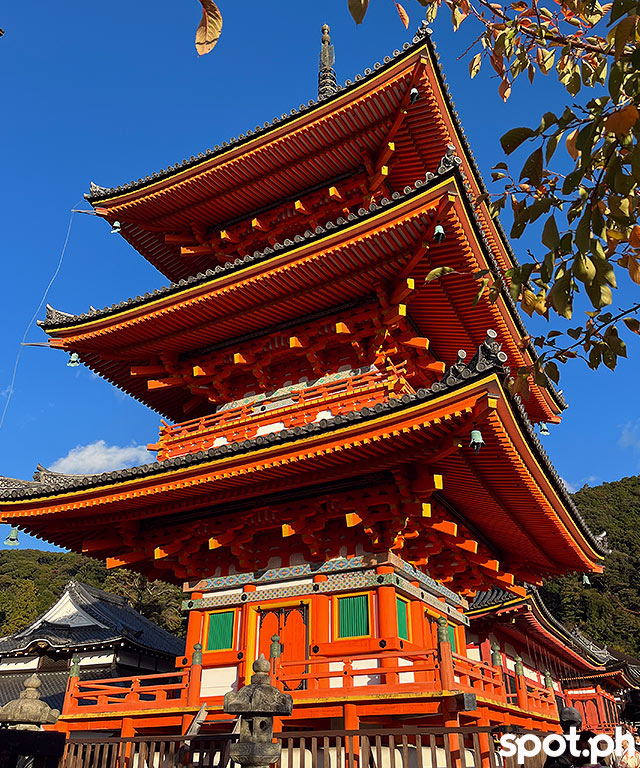
With over 1250 years of history, Kiyomizu-dera Temple was established at the peak of Mt. Ottawa so that worshippers could pay their respects to Kannon. Kannon, a deity with eleven faces and forty-two arms, embodied great mercy and compassion. Thus, the temple is considered as a Kannon Reijo (Reijo is a Japanese term for holy place).
The temple grounds hold thirty Buddhist temple buildings, which include the national treasure Main Hall. Most of the buildings were hit by fire but were fully reconstructed in 1633. In 1944, the temple became part of the UNESCO World Cultural Heritage List as one of the country's most historic monuments. The Kiyomizu stage, which hangs in front of the Main Hall, gives you a stunning view of the whole of Kyoto. The stage, with the floor replaced by hinoki boards and the structure supported by over 13-meter high pillars from its foundation, was purposefully built to signify “stepping into the limelight”. The stage is used to offer performances to the Kannon. With this spectacular vantage point, there are special night viewings during the spring, summer, and autumn seasons.
The temple is found at 1 Chome-294 Kiyomizu, Higashiyama Ward, Kyoto, 605-0862, and is open daily from 6 a.m. to 6 p.m. The admission fee is 400 yen per person.
Gion
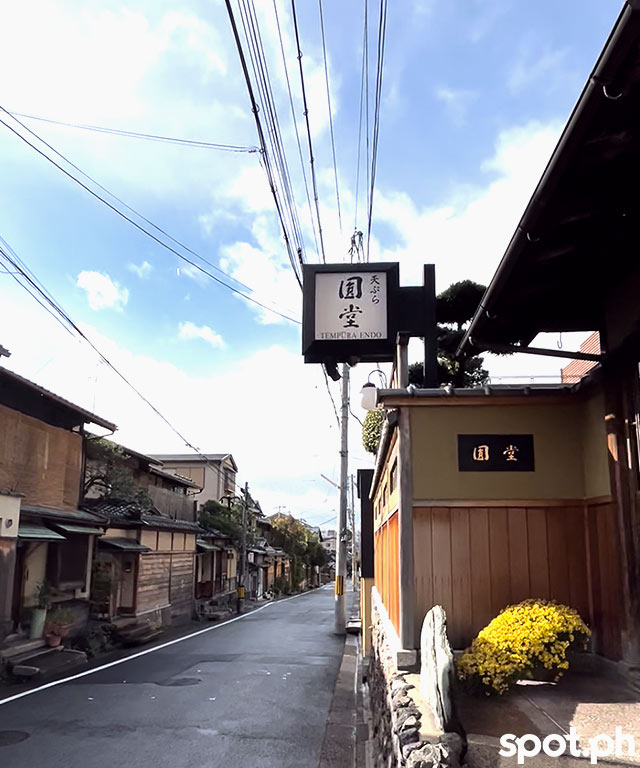
Gion is Kyoto’s most well-known geisha district. The place is bounded by geishas, who are Japanese female performance artists, and is also filled with shops, restaurants, and teahouses. The most popular area here is the Hanami-koji from Shijo Avenue to Kenninji Temple. What makes this area very interesting is the huge concentration of traditional wooden machiya merchant houses. These are compact houses with narrow facades that extend deep into the street because property taxes were formerly based on street frontage.
The best experience is to be entertained by these geishas while dining in a teahouse. They engage in conversation, serve drinks, and perform traditional dances. There is also a cultural show held daily in the Gion Center to introduce tourists to traditional Japanese art and performances.
Gion is located to the north and south of Shijo Street, Kyoto.
Nijo Castle
Nijo Castle became the Kyoto residence of Tokugawa Ieyasu, the first shogun (a military ruler) in the Edo period in 1603. After the shogunate fell in 1867, the castle was utilized as an imperial palace before it was donated to the city to become a historic site. The castle palace architecture represents Japan’s feudal era, which led to the attraction becoming recognized as a UNESCO World Heritage Site in 1994.
The castle can be divided into three areas: the Honmaru (the main circle of defense), the Ninomaru (the secondary circle of defense), and the gardens. The Ninomaru Palace is the main attraction in this place because this served as the residence and office of the shogun whenever he stayed in the city. Before you enter the palace, you will be greeted by a Chinese-style gate, a popular photo spot for tourists. The Honmaru was the site of a second palace complex, and a five-story castle keep. Unfortunately, these were destroyed by fires and were not rebuilt any more. The complex is surrounded by nearly 400 cherry trees, which makes it a perfect place to witness the cherry blossom season from late March through April.
The castle is at 541 Nijojocho, Nakagyo Ward, Kyoto, 604-8301, and is open to tourists from 8:45 a.m. to 5 p.m. Admission costs 1,300 yen per adult.
Nishiki Market
Dubbed Kyoto’s Kitchen, Nishiki Market is a five-block-long shopping street that specializes in food such as fresh seafood, produce, and Kyoto specialties. Some of the shops give out free samples and serve small portions of dishes for tourists to try. The recommended souvenirs here include pickles, tea, sake, rice crackers, and dried fish snacks. Other interesting foods to order are yuba (a thin layer of film that forms on the surface of soy milk), tofu, mackerel sushi, dashimaki tamago, and green tea from Uji. They also sell high-quality cookware, ceramics, and utensils.
The market started as a fish wholesale district with its first shop opening in 1310. Now, it has around 130 stores that have been mostly operated by the same families for generations.
The market is found in Nakagyo Ward, Kyoto, 604-8055. The best time to visit is at 11 a.m. when it is not yet too crowded.
Kyoto Tower
In the ancient city of Kyoto, where you’d expect all of the sites to have traditional architecture, one towering attraction stands out. We're talking about Kyoto Tower, the tallest structure in the entire city, which stands at 131 meters. This was built to serve as the center of modern culture and industry for Kyoto. The tower was completed in 1964, the same year the Shinkansen was completed, and Tokyo was the host for the 1964 Summer Olympics. The land on which it stands was formerly the site of Kyoto Central Post Office.
Today, the Kyoto Tower Building has nine stories that house the observation deck, some restaurants, shops, and a hotel. The Observation Deck stands 100 meters high and gives you a panoramic view of Kyoto. It also has telescopes so that you can conveniently zoom in on key sites in the city that you’d like to see.
The tower is at 721-1 Higashishiokōjichō, Shimogyo Ward, Kyoto, 600-8216, and is available for visitors from 10:30 a.m. to 9 p.m. every day. Entrance fees cost 800 yen per person.
Day 2 in Northern and Western Kyoto
Arashiyama Bamboo Forest
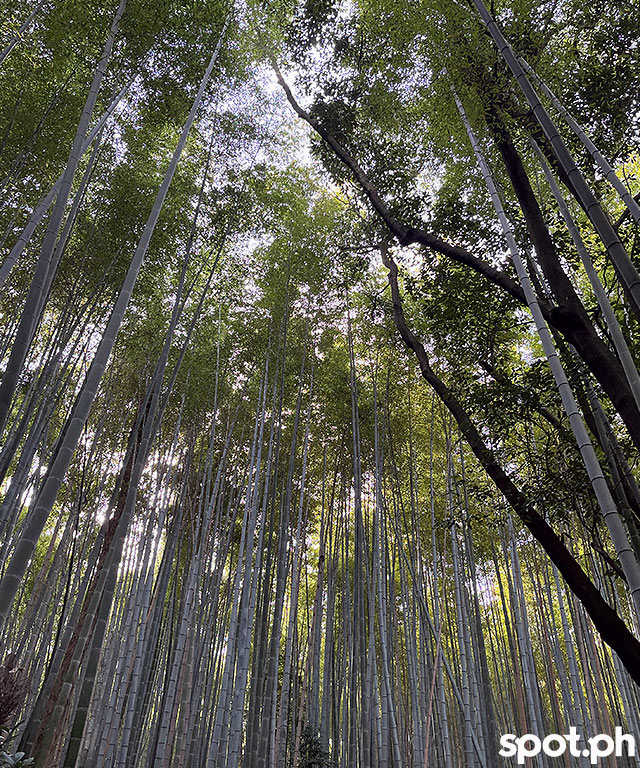
If you want to have an all-things-nature experience, then visiting the Arashiyama district is a must. Arashiyama is on the western outskirts of Kyoto and is found at the base of the Arashiyama Mountains. This district is such a vibe because the picturesque scenery feels straight off a postcard. The area has many of the sought-after attractions in Kyoto, including the Arashiyama Bamboo Grove, the Tenryuji Temple, the Togetsukyo Bridge, and the station for the Sagano Romantic Train. It has been a popular destination since the Heian Period, when nobles would go here to enjoy nature, particularly during the cherry blossom and fall seasons.
At the heart of the Arashiyama district is the Arashiyama Bamboo Grove. Do you remember the emerald green bamboo forest you see as your desktop screen wallpaper? This is it! The towering bamboo plants that perfectly meet at the center are one of Kyoto’s most photographed sights. The temperature drops as you enter the grove because the tall bamboo stalks hide you from the sun but still give you those elusive streaks of sunlight. This is what makes the place absolutely gorgeous. The bamboo forest consists of two groves with a combined length of 500 meters. You can choose to do the full hike, or you can take wonderful shots near the entrance.
The grove is located at Sagaogurayama Tabuchiyamacho, Ukyo Ward, Kyoto, 616-8394.
Tenryuji Temple
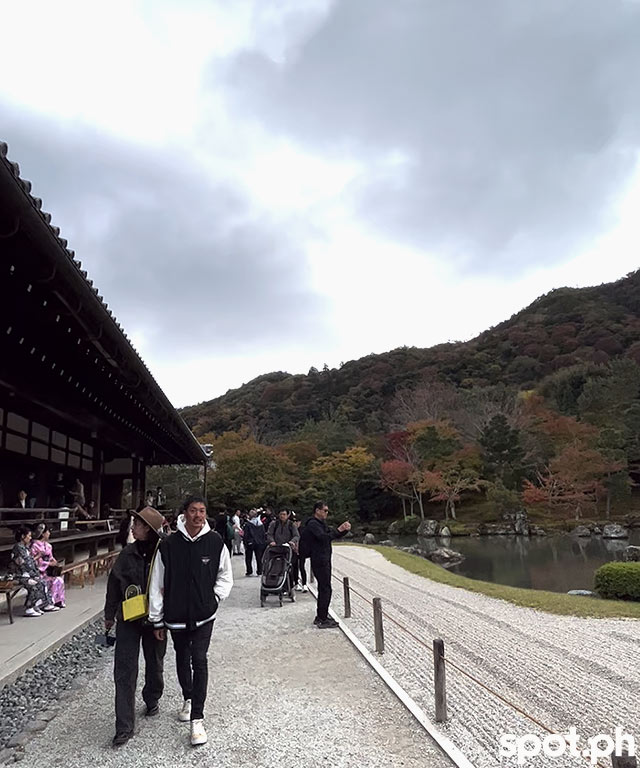
Just beside the Arashiyama Bamboo Grove is another famous landmark called the Tenryuji Temple. The shogun Ashikaga Takauji founded the temple in 1339 in memory of Emperor Go-Daigo. It was consecrated in 1345 and is designated the first among the city’s five major Zen temples. Throughout the years, the grounds were ravaged by eight major fires but were rebuilt again and again to form the temple we see today. The only part of the historic area that survived those fires is the garden.
Tenryuji is a registered World Heritage Site and serves as the headquarters of the Rinzai School of Zen Buddhism. The complex is divided into three main parts: the Teien (the Gardens), the Shodo (the Temples), and the Hatto. Hatto is the symbolic temple of Tenryuji, where you can see the iconic Cloud Dragon painted on the temple’s ceiling. The gardens were a masterpiece of the renowned designer Muso Soseki, and have a beautiful landscape with a pond, pine trees, and Arashiyama mountains as the backdrop.
The temple is at 68 Susukinobaba-cho, Saga-Tenryuji, Ukyo-ku. Opening hours are from 8:30 a.m. to 5 p.m. Access to the complex costs 500 yen per adult. If you want to access the buildings, that will be an additional 300 yen. The special admission to the Cloud Painting in the Hatto will cost another 500 yen.
Togetsukyo Bridge
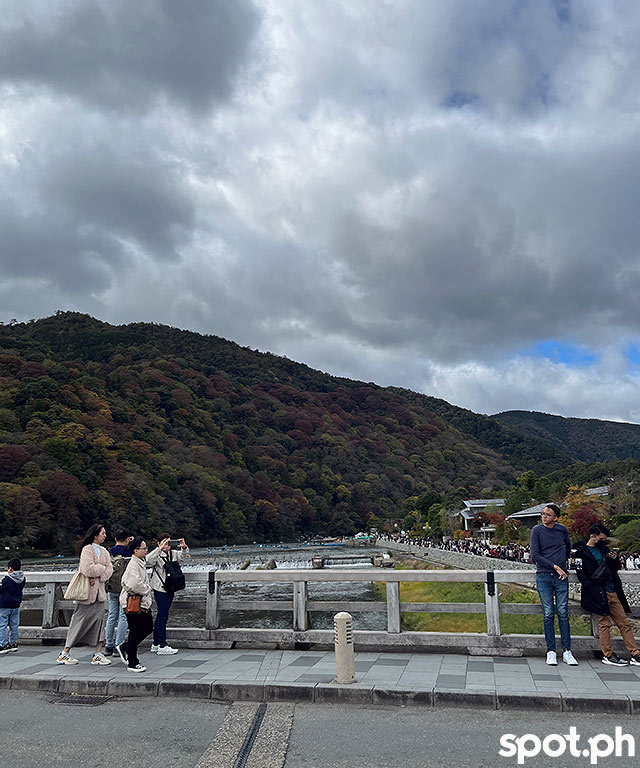
The Togetsukyo Bridge is a 155-meter-long bridge that crosses the Oigawa River. The river is divided into two parts: the Hozu River upstream and the Katsura River downstream. With the artistic form of the bridge embodying the Japanese artistic tradition, it is a popular shooting location for films.
The name Togetsu means moon crossing, which came from an emperor’s thought that the moon looked like it was crossing the bridge when he saw it. The bridge was first built in 836, but the one that you will see today was completed in 1934. The mountains around the bridge are covered by the pink hues of the cherry blossoms in spring and blanketed by the fiery red color of maple leaves during the fall season.
The bridge is located at 1-5 Sagatenryuji Susukinobabacho, Ukyo Ward, Kyoto, 616-8384.
Sagano Romantic Train
If you want to see more of what Kyoto's natural scenery offers, then you need to hop on the Sagano Romantic train for the ultimate experience. Its 25-minute route starts from the Saga Torokko station and ends at Kameoka Torokko station. The sightseeing train line runs old-fashioned trains through the scenic countryside, running along the Hozugawa River gorge.
Once the train reaches the Kameoka Torokko station, you have the option to elevate your countryside experience by making your return journey by boat down the Hozugawa River. The travel is a two-hour cruise along a 16-kilometer course.
The train operates from 9 a.m. to 4 p.m. every day, and tickets cost 620 yen per adult. Tickets for the riverboat ride are at 4100 yen per adult.
Kinkakuji Temple
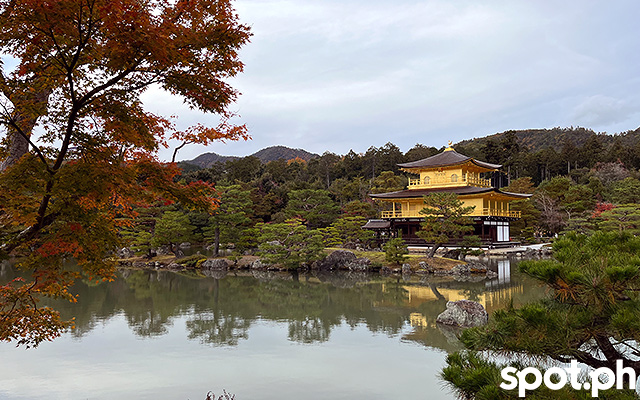
The last but definitely not the least must-visit tourist destination in Kyoto is the Kinkakuji Temple. Known as the Temple of the Golden Pavilion, you will see a majestic temple covered in gold leaf floating on water.
The pagoda was made to house the sacred relics of the Buddha and was designated as a UNESCO World Heritage Site in 1994. Before the construction of the temple, the land became the villas of rulers. Also, it became the center of Kitayama culture, which infused various aspects of the Ming Dynasty Chinese culture into the Japanese culture. The place was named after the third shogun, Ashikaga Yoshimitsu, and was part of his private retirement villa. It is the only building left from the entire retirement complex. The three stories of the pavilion are constructed with different architectural styles. The first floor has a Shinden style used for palace buildings, the second floor has a Bukke style used in samurai residences, and the topmost floor has a Chinese Zen Hall style topped by a golden phoenix.
The temple is at 1 Kinkakuji-cho, Kita-ku, Kyoto 603-8361. The complex is open from 9 a.m. to 5 p.m. every day, and entrance fees are at 500 yen per person.
How to Get Around Kyoto
Just like most of the main cities in Japan, Kyoto is a compact city with a well-developed and efficient transportation system. Even if some of the famous tourist landmarks are farther than usual, you can easily reach them via subways and trains. Sometimes, you would also need a bus to get to your destination, such as the Kinkakuji Temple. You can also explore more of Kyoto by walking in downtown Kyoto and Arashiyama areas.
Where to Stay and Eat in Kyoto
For accessibility, we recommend that you get a place to stay around the center of Kyoto, near the Gion and Higashiyama districts. If you want to try out the traditional way of living, we suggest that you experience living in a ryokan. Potentially the oldest form of hotel in the world, ryokans highlights local hospitality and personalized customer service. Common elements of this Japanese accommodation include tatami flooring, futon bedding, private baths, and in-house kaiseki meals. The best ryokans to book based on reviews are Hiiragiya, Seikoro Ryokan, and Yuzuya Ryokan. If you prefer to stay in a hotel, check out Hyatt Regency Kyoto or Dusit Thani Kyoto for some high-end experience. For mid-tier hotels, The Royal Park Hotel Iconic Kyoto and Hotel Okura Kyoto are good choices.
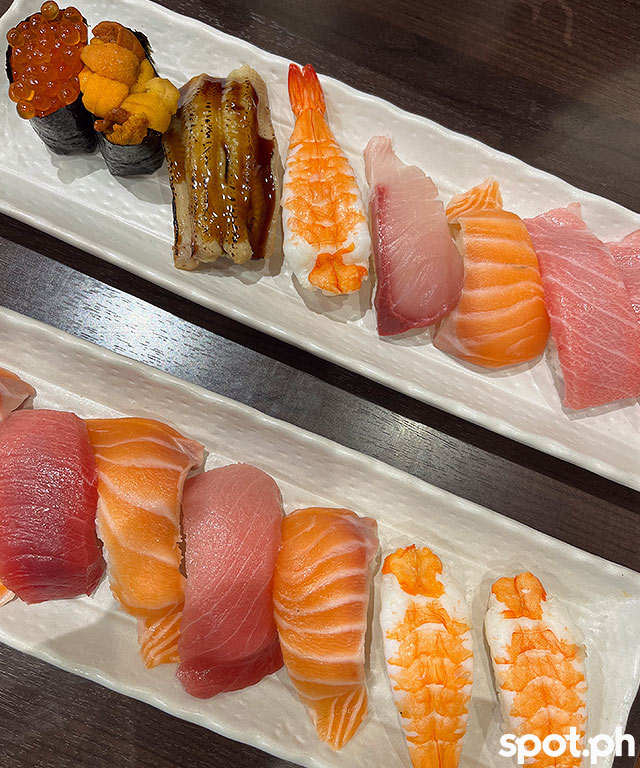
These hotels are also located near the famous food places in Kyoto. If you want to have a taste of Kyoto’s finest kaiseki tempura (but pricey), visit Kyo Tominokoji Tempura Yoshikawa at Yoshikawa Inn. If you’re looking for the TikTok-viral Kichi Kichi Omurice, you’re in luck because it’s also just right here in this area. Kyoto is also the perfect place to get your much-needed caffeine fix. Kyoto-style coffee utilizes a special brewing method that takes approximately 16 hours. Some of the most popular coffee spots include Walden Woods, Wife and Husband, Weekenders Coffee, and Kurasu.
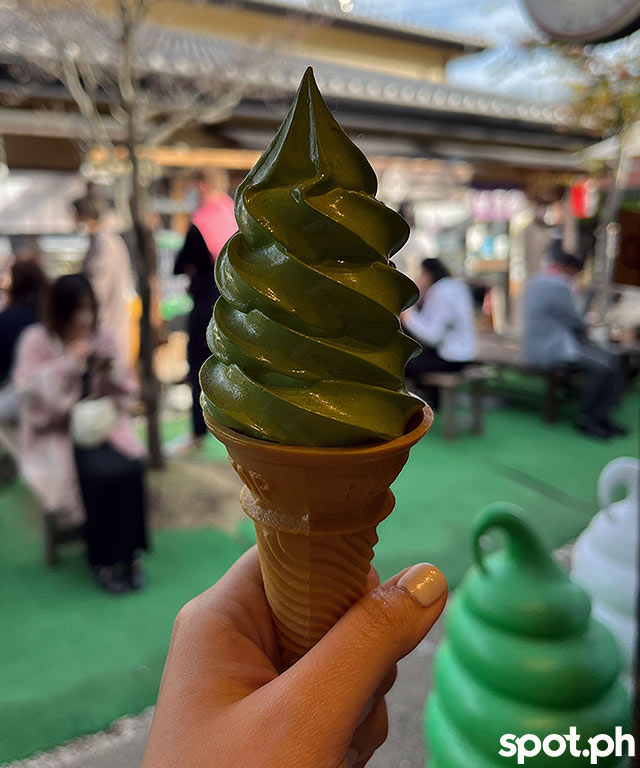
Matcha likewise originated in a small city in Kyoto named Uji, which is 45 minutes by train from central Kyoto. This is why you can’t leave the city without having some matcha drinks. You can either try it out at Nakamura Tokichi, located in the Kyoto Station or at Tsujirihei Honten in Uji. If you want to have the best-tasting and value-for-money sushi, then line up at Sushi Naritaya when you visit the Arashiyama district.
How to Get to Kyoto
Since there are no direct flights to Kyoto from the Philippines, the trip to this city is usually paired with a vacation to Tokyo or Osaka. If you’re coming from Tokyo, you can reach Kyoto in approximately two hours by taking the Tokaido-Sanyo Shinkansen. If you’re coming from Osaka, you can go aboard the same bullet train to get there in fifteen minutes or ride the commuter trains to arrive in Kyoto in an hour.