
Osaka Guide: The Best Things to See and Do for Two Days
From a city tour to a food trip.
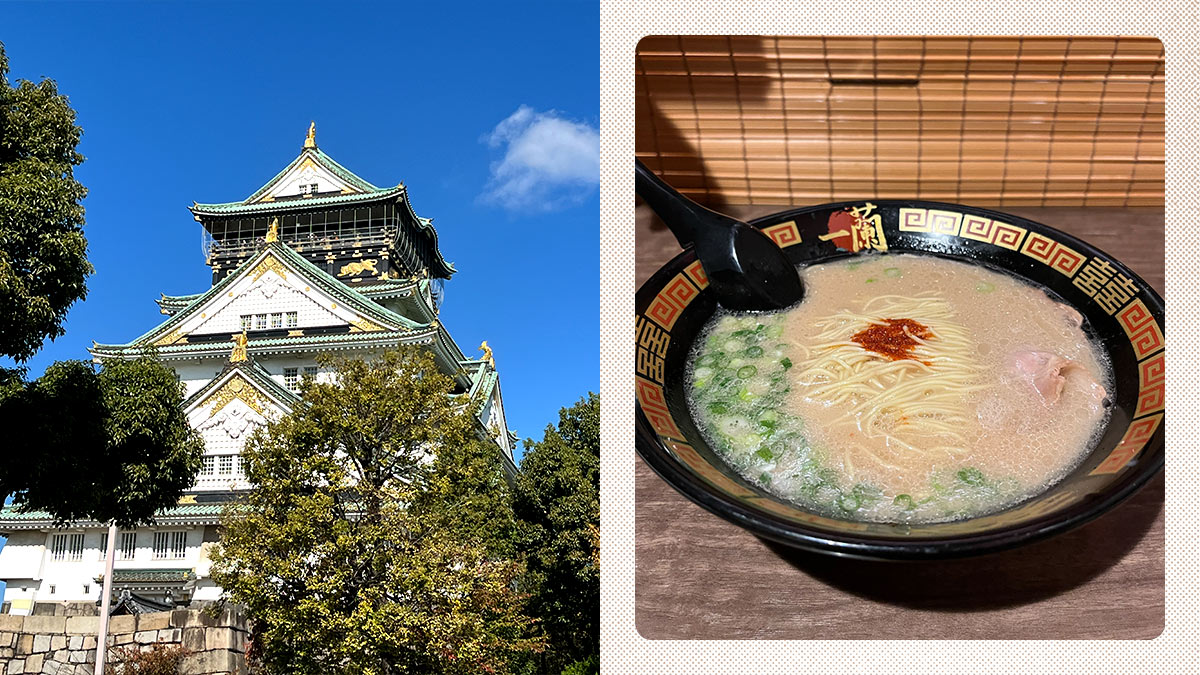
(SPOT.ph) As traveling has recovered to pre-pandemic levels, Japan has become one of the best countries to visit among Filipinos because of its reasonably priced flights from the Philippines, exciting culture, food that is satisfying to our palate, and its wide selection of goods that you can bring home. But the most attractive thing about this country is that you can travel from end to end by train, thanks to its very efficient transportation system. You can spend as little as five days visiting a few adjacent cities or as much as two weeks exploring the whole of Japan. And one of the top-of-mind cities in Japan that can be toured for a day or two is Osaka.
What to Know about Osaka, Japan
Osaka is the second largest metropolitan area and the second most populated city in Japan, next to Tokyo. Considered the more laid-back counterpart of the capital, Osaka is popularly known as the nation’s soul kitchen. The Osaka gastronomy started after the Osaka Castle was built by the new ruler Toyotomi Hideyoshi in 1583. Because Osaka was conveniently positioned at the center of everything, he envisioned making the city the core of commerce. He called merchants from neighboring regions of Sakai and Fushimi to trade the goods they transported via boats in Osaka. The city also became the trading center and source of staple goods, such as rice, that provided food to the entire nation. With this, Osaka flourished to become the Merchant City.
Because of the constant supply of raw ingredients from different parts of Japan, people in Osaka began experimenting with various dishes. The dashi, an essential ingredient unique to Japanese culture, made its first appearance in Osaka. Dashi has become integral to the flour-based dishes of Osaka cuisine, including udon, takoyaki, and okonomiyaki. Today, Osaka has lived true to this promise of being the culinary capital by having some world-renowned chefs, overwhelmingly delicious street food, and the country’s most beloved dishes.
Osaka City Tour on Day 1
Osaka Castle
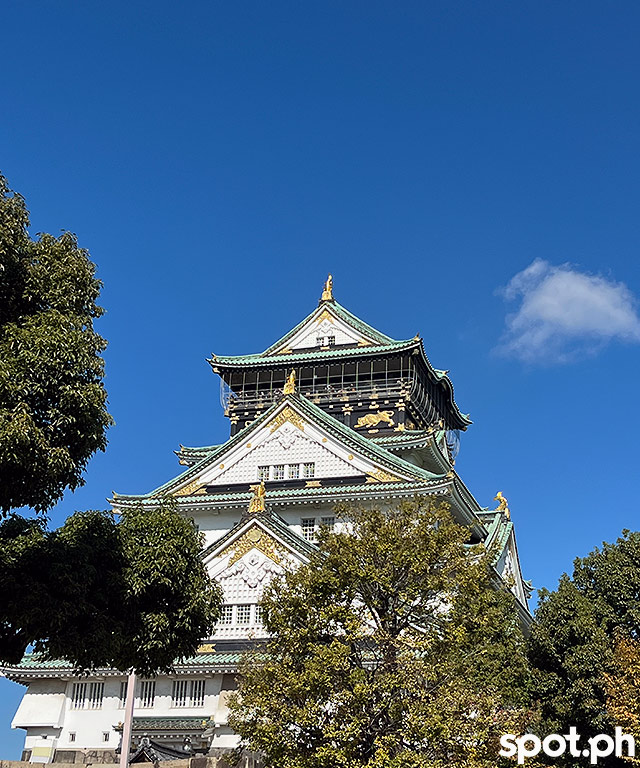
We’re all familiar with the traditional Japanese architecture of temples and castles that give Japan its unique charm. But the green and white facade of the Osaka Castle is one of the most famous landmarks in Japan because of the history it symbolizes. Osaka Castle (or Osaka-jo in Japanese) was built by Hideyoshi Toyotomi, a feudal lord and warrior during the Sengoku period. His obsessed with gold is prominent in the castle's interior and exterior, which are adorned with this precious metal. He held the castle as a stronghold during a period of unrest, bringing temporary peace. Throughout history, the castle was destroyed by wars and fire, and the most recent reconstruction happened in 1928. Nevertheless, there are still original structures that have remained intact since the 1600s.
You can enter the castle to visit the museum, which details the extensive history of Osaka and the castle. On the top floor, you can see the view of the park surrounding the castle. The Osaka Castle Park opened in 1938 and is a popular destination during the sakura (cherry blossom) and koyo (falling leaves) seasons. If you want a picturesque view of Osaka Castle from afar, you might also want to ride a boat around the moat for the ultimate experience.
Osaka Castle is at 1-1 Ōsakajō, Chuo Ward, Osaka,. The castle tower is open daily from 9 a.m. to 5 p.m. Admission is 600 yen for adults.
Glico Man
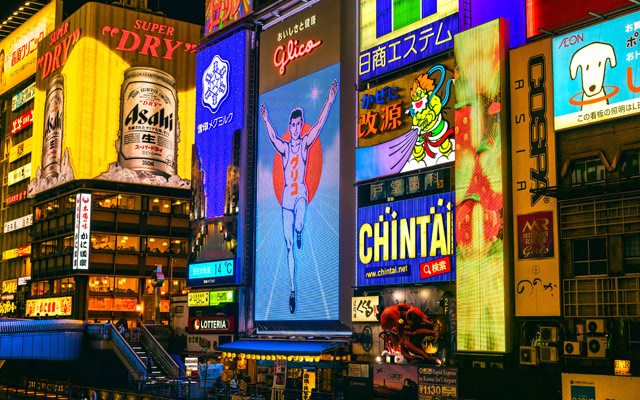
Have you ever tried Pocky? The manufacturer of Pocky and one of Asia’s most popular confectionary companies, Glico, is advertised by the running man. The huge, neon sign is a landmark that brightens the entire Dotonbori stretch by the river. The sign features a man running on a blue race track, who was chosen as the official mascot for Glico’s first product, a candy caramel. The founder, Ri-ichi Ezaki, created the snack as an energy product by adding glycogen. Each treat can give you the energy to run 300 meters, so the running man becomes the appropriate representation of the treat.
Dating back to 1935, the sign had several overhauls to highlight sporting triumphs throughout the years, such as when Japan hosted the Soccer World Cup and the city supported the mighty Hanshin Tigers, Osaka’s baseball team. In recent times, the neon sign has also included known landmarks such as the Osaka Castle and the Tsutenkaku Tower in its background. Because of its vibrancy and retro-futurist vibe, the area below the Running Man has become the favorite meeting place of people. It is the center of all the fun activities in Dotonbori where you get to meet performers and magicians.
Glico Man is at 1-chōme-10-3 Dōtonbori, Chuo Ward, Osaka.
Harukas 300
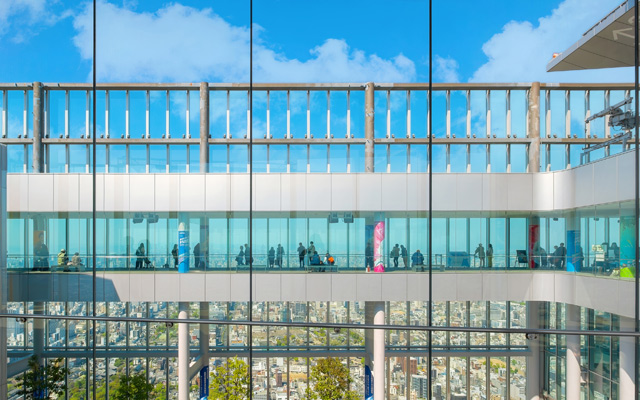
Want to see the 360-degree view of Osaka from the tallest skyscraper in the city? Harukas 300, the observation deck of Abeno Harukas, perfectly gives you that amazing view. The Harukas 300 observatory occupies the building's top three floors (58th - 60th).
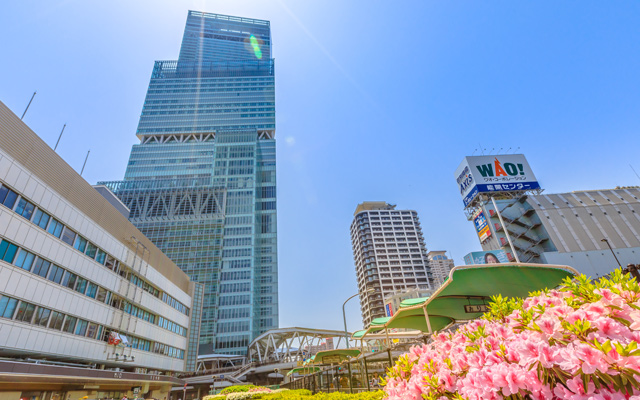
On the 60th floor, covered by floor-to-ceiling glass panels, you can see the whole of Osaka and even the surrounding regions of Kyoto, Kobe, and the Rokko Mountains. Here, it feels as if you’re walking on air. On the 58th floor, you can see an open-air wooden deck space and a cafe. During the daytime, you see a diorama or a historical map below you. At sunset, there's the vicinity with a filter of gold turning to wine red as the dusk falls. At night, the cityscape looks like a box of jewels.
Abeno Harukas does not only have an observatory, but it also houses the largest department store in Japan, an art museum, and a hotel. The Abeno Harukas Kinetsu Department Store covers 100,000 square meters of retail space and occupies two buildings. Meanwhile, the Abeno Harukas Art Museum does not have a permanent art collection but has changing exhibitions of mainly Western and Buddhist art.
Harukas 300 is at 1 Chome-1-43 Abenosuji, Abeno Ward, Osaka. The observatory is open from 9 a.m. to 10 p.m. daily. Tickets for adults cost 1800 yen per person.
Osaka Aquarium Kaiyukan
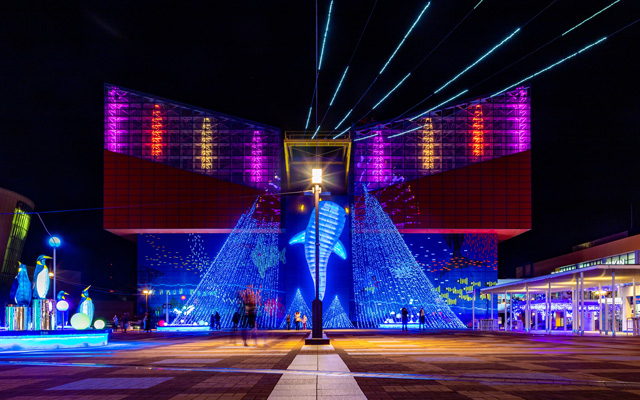
Considered one of Japan’s most spectacular aquariums, Osaka Aquarium Kaiyukan is located in Osaka’s bay area. The aquarium tries to recreate the natural environment of the aquatic animals of the Pacific Rim. The place is creatively built such that the 15 large tanks represent the various regions of the Pacific Ocean. The center of attraction, the Pacific Ocean, is a nine-meter deep, 34-meter long tank containing 5,400 tons of water that serves as the home of whale sharks. Other interesting tanks include the sunlit Japan Forest and the icy Antarctica.
In this two-and-a-half-hour trip to discover marine life, visitors take a spiral ramp from the eighth to the fourth floor. There are 30,000 creatures and 620 species, including otters, sea lions, penguins, dolphins, whale sharks, rays, and jellyfish. If you’re lucky, you can also witness them during feeding and training times.
Osaka Aquarium Kaiyukan is at 1 Chome-1-10 Kaigandori, Minato Ward, Osaka. It is open from 10 a.m. to 8 p.m. daily. Admission fees cost 2,700 yen per adult.
Cup Noodles Museum Ikeda
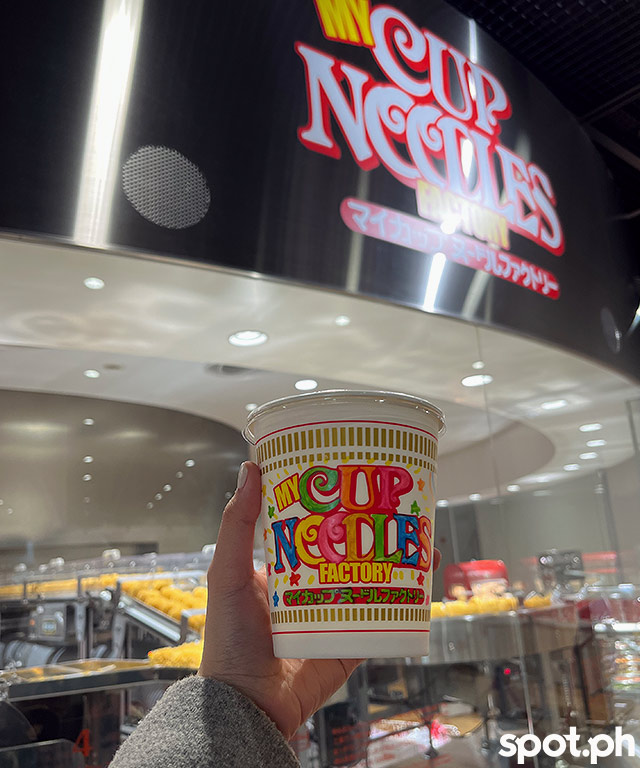
Cup Noodles fans out there, which I bet is everyone, get excited about Cup Noodles Museum Ikeda. It has everything about Cup Noodles right at the birthplace of the world’s first instant noodles! How geeky and cute, right?
Momofuku Ando invented Chicken Ramen, noodles that cooked instantly by just adding hot water, using common tools in his backyard in 1958. On a trip to the U.S., however, he realized that supermarket managers didn’t find it super convenient to eat because they still needed a cup to heat the noodles. This gave way to his ingenious invention of the Cup Noodles in a disposable cup. With this innovation, he became the CEO and Chairman of Nissin Food Products. Later, he also invented the Space Ramen, which can be eaten in space.
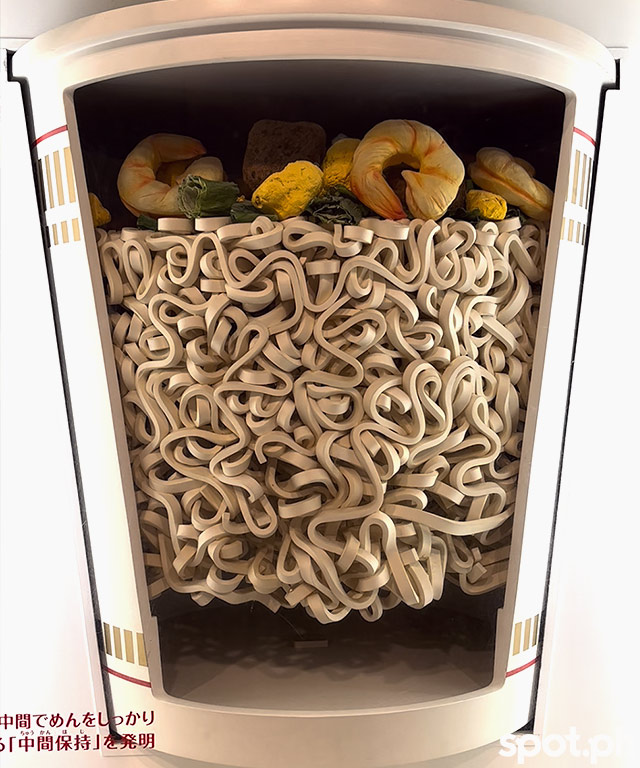
Inside the museum, you will get a visualization of the personal story of Mr. Ando and how the Cup Noodles came to be. The exhibits also show the 800 product packages that came after Chicken Ramen. If you want some immersion, it’s also nice to try some activities such as designing and customizing your original CUPNOODLES package, where you can select your favorite soup and toppings. If you’re in for actual cooking, you can also make Chicken Ramen by hand. This includes kneading, spreading, steaming, seasoning, and drying the wheat flour.
Cup Noodles Museum Ikeda is at 8-25 Masumicho, Ikeda, Osaka. It is open from 9:30 a.m. to 4:30 p.m. every day except on Tuesdays. Admission is free. For the activities, the my CUPNOODLES Factory activity costs 500 yen per person while the Chicken Ramen making costs 1,000 yen per adult.
Kuchu Teien Observatory
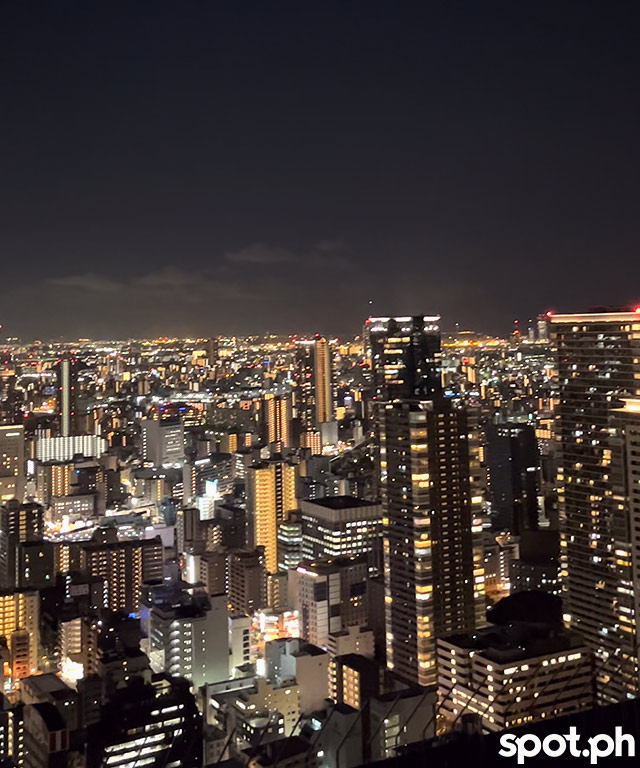
If you can’t get enough of the stunning Osaka cityscape, head to another equally good observatory at the Umeda Sky Building. Designed by the prominent architect Hiroshi Hara, The Umeda Sky Building consists of two 173m tall skyscrapers erected at the end of the economic bubble in 1993. The open-air Floating Garden Observatory of Kuchu Teien on the 39th floor links these two buildings together.
However, the observatory is not the only attraction that this tourist spot has. To reach the top, you will ride either of the two aerial escalators made of glass panels that will make you feel like you’re floating on air. This is one of the popular Instagrammable spots in the landmark.
Kuchu Teien Observatory is at 1-chōme-1-88 Ōyodonaka, Kita Ward, Osaka. It is open for visitors from 9:30 a.m. to 10:30 p.m. every day. Tickets are at 1,500 yen per adult.
Shopping and Food Trip in Osaka on Day 2
Dotonbori Food District
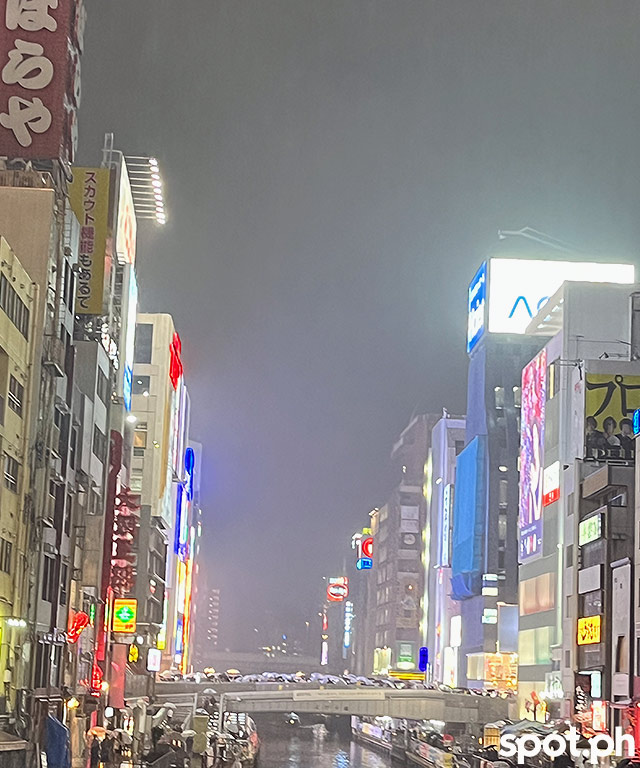
Living and embodying the term “kuidaore” (“eat until you drop”) that is used to describe the food scene in Osaka, the people of Osaka spend on quality food more than anything else in the world. The best place to experience this interesting food culture is in the Dotonbori district, packed with eateries serving well-loved local dishes. It is a paradise for foodies who want authentic Japanese food from street food vendors, Izakaya-style pubs, and all-you-can-eat restaurants. Some exciting food that you can try include takoyaki, okonomiyaki, kushikatsu, kitsune udon, teppanyaki, gyoza, and candied fruit.
Dotonbori Food District is in Chuo Ward, Osaka. The opening and closing times of establishments here vary, so we recommend that you check online before going.
Shinsaibashi-suji
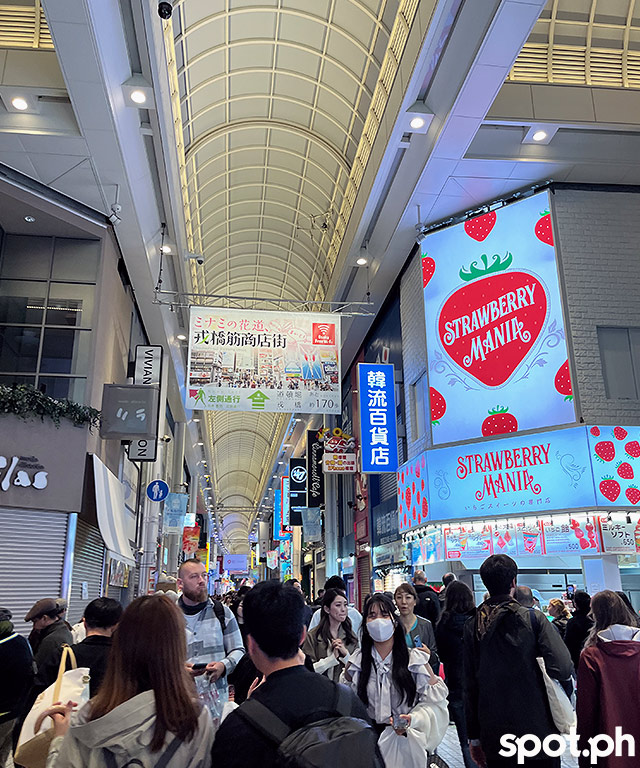
Shinsaibashi-suji is a shopping haven for all kinds of shoppers. Spanning two kilometers, this shopping street has many cosmetics stores, clothing establishments, and character shops. The entrance to this strip is by the Glico Man sign. Drugstores are found on almost every block of this area, with two well-known chains, Matsumoto Kiyoshi and Daikoku Drug, selling Japanese cosmetics and medicines. Apparel and accessories shops, originally from Japan, such as Uniqlo, GU, and Owndays, are also conveniently located here. There are also quirky capsule toy specialty stores, 100-yen shops, and character shops around the area.
Shinsaibashi-suji is in Chuo-ku, Osaka.
Amerikamura
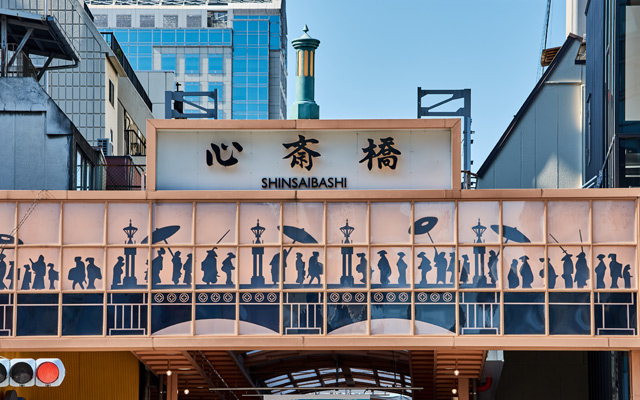
If you’re in for something hip and trendy, you should follow wherever the Osaka youngsters go. These young folks are always seen at Amerikamura, or what they call Amerikamura, which is the center for new trends and street fashion such as the Harajuku style. People go here to shop for vintage clothes, vinyl records, and sneakers imported from the West Coast of America. You can also spot new concept clubs here.
Amerikamura is in Shinsaibashi-suji, Chuo Ward, Osaka.
Umeda
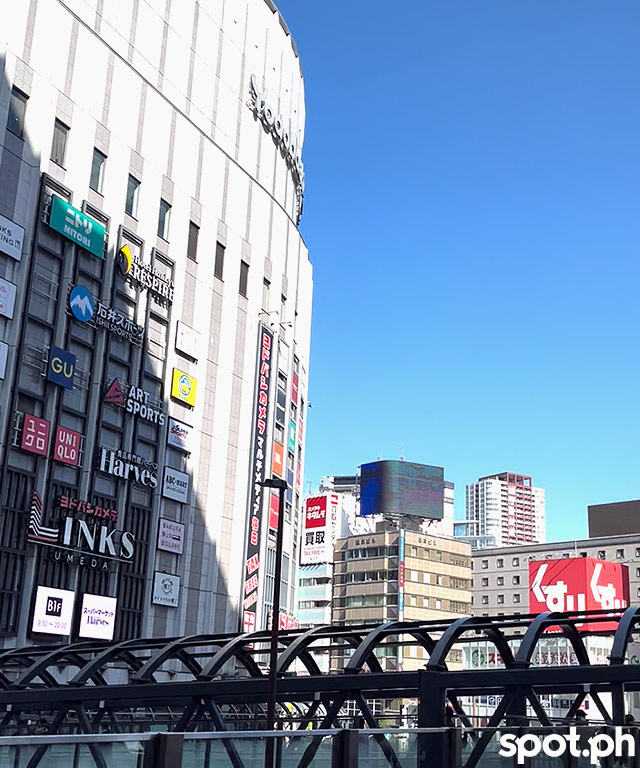
Umeda is the place to be if you want an all-in-one luxurious shopping and entertainment experience. The skyscrapers around the area are malls that house high-end fashion shops, lifestyle boutiques, and technology stores. Three of the most famous shopping centers here are Grand Front Osaka, LUCUA Osaka, and Yodobashi Camera, all found near the Umeda station. Big department stores also offer different kinds of products: Hankyu Umeda Main Store for luxury items, Hanshin Department Store Umeda for food and souvenir specialties, and Daimaru Umeda for other fashion items. As for entertainment, you can find karaoke and dart bars around the area.
Umeda is in Kita Ward, Osaka.
Kuromon Market
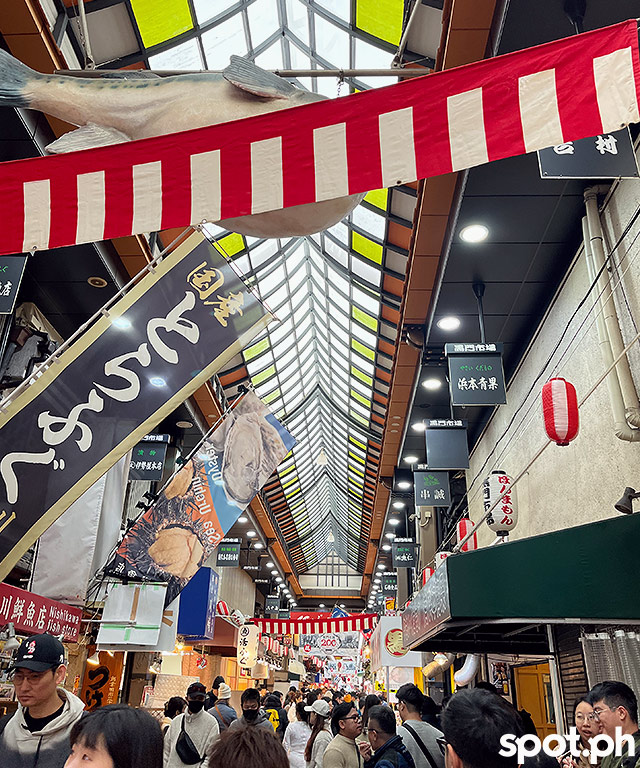
The Kuromon Market is a 600-meter stretch known for its fresh seafood. The history of the place dates back to the early 19th century when fish traders did business in this area. Since establishing the market in 1902, it has grown to hold approximately 150 establishments today. Some of the vendors sell fresh seafood, vegetables, and meat, while others are eateries that serve smaller portions of noodles, curry, grilled seafood, onigiri, and pickled vegetables.
Kuromon Market is at 2 Chome Nipponbashi, Chuo Ward, Osaka.
Shinsekai
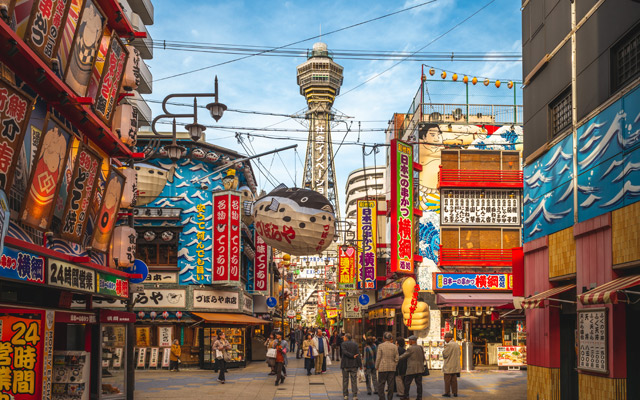
Shinsekai is a district that was developed after being neglected for decades. Paris was chosen as the model for the northern half of the district, with the Tsutenkaku Tower modeled after the Eiffel Tower. The southern portion drew inspiration from Coney Island in New York. At Shinsekai, you will also find the Janjan Youocho shopping street, with its famous kushikatsu shops. Kushikatsu, one of Osaka’s best-known specialties, is freshly fried skewers of chicken, beef, pumpkin, and asparagus with dipping sauce.
Shinsekai is at 1 Ebisuhigashi, Naniwaku, Osaka.
Extra Day at Universal Studios Japan
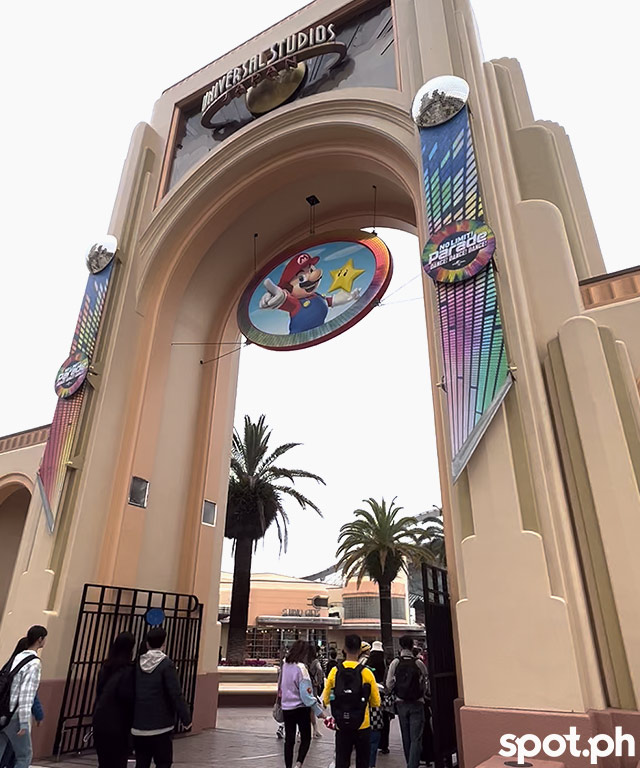
Just in case you have one more day to spare, you might want to spend it in Universal Studios Japan. Universal Studios Japan is the third most visited theme park globally. This is because its concept is a seamless fusion between the Eastern and Western cultures - the concept of huge theme parks mimicking famous Western cities and the introduction of iconic Japanese characters such as Mario and Luigi.
How to Get Around Osaka
The easiest and cheapest way to go around most of Osaka is via the Osaka Metro train line. The city’s main hubs, which are Shin-Osaka, Kita, Honmachi, Minami, and Tennoji, are conveniently located on the Midosuji subway line of the Osaka Metro. There are just two tourist spots that are relatively off the line: Universal Studios Japan through the JR line and Cup Noodles Museum Ikeda through the Hankyu Line. A prepaid ICOCA card is the best way to pay for your trips across all train companies.
Where to Stay and Eat in Osaka
We recommend that you stay in a district that’s accessible to everything, meaning to the train stations and shopping areas. The most famous ones are Shinsaibashi, Namba, and Umeda. In Shinsaibashi, you can stay at Hotel Nikko or nearby hotels such as Osaka Excel Hotel Tokyu or Courtyard by Marriott Osaka Honmachi. In Namba, you may want to check in at Swissotel Nankai Osaka, Hotel Royal Classic Osaka, or Citadines Namba Osaka. In Umeda, great choices are Hilton Osaka or Hotel Hankyu Respire Osaka.
As for food, there are countless excellent restaurants around the metro. Therefore, we will suggest the best ones for each type of Japanese food that you might want to eat. A must-try for Kobe beef is Ishida, located at the Links Umeda Mall. You shouldn’t miss Gyukatsu Motomura, which has branches in Namba and Umeda for beef katsu.
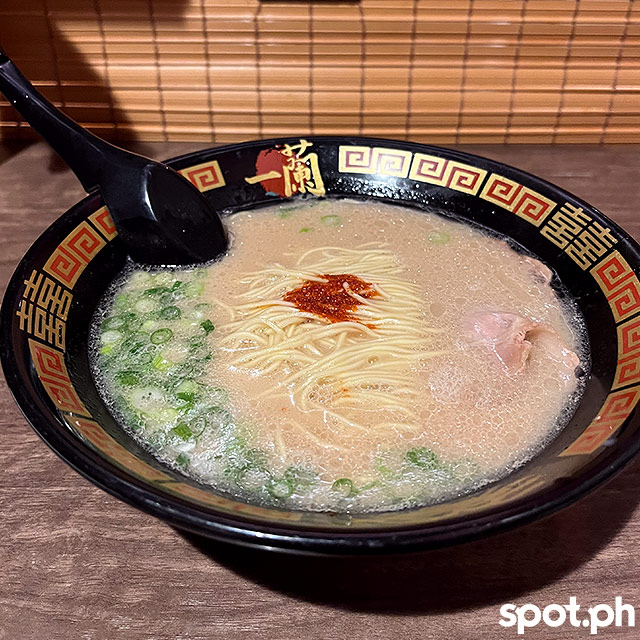
For ramen, don’t get discouraged by the long lines of Ichiran; it means it’s a crowd favorite! Meanwhile, if you want to experience a Michelin-rated restaurant serving Osaka's iconic okonomiyaki, check out Mizuno in Dotonbori. If you’re just too tired to leave the Shinsaibashi and Namba vicinity but still want good food, we recommend that you try out Sushi Takeuchi, Takoyaki Wanaka Sennichimae, and Tempura Tarojiro.
How to Get to Osaka
Spending your vacation in Osaka is perfect for relatively short trips as it is only four hours away from the Philippines via a direct flight. You can take the Nankai or JR lines from Kansai International Airport to the city center. If you’re coming from Tokyo, we recommend you experience Japan’s bullet train, the Tokaido-Sanyo Shinkansen, to get to Osaka in two and a half hours.
Also read:
10 Under-the-Radar Destinations in Tokyo and Kansai
The SPOT.ph Guide to Japanese Food