
The SPOT.ph Guide to Exploring Osaka, Kyoto + More by Train
Get away from Tokyo and check out what the Kansai Region has to offer.

(SPOT.ph) Japan is a country of contrasts. And nowhere else is this contrast in fuller display than in the Kansai Region, home to Kyoto and Osaka, where the old meets the new in a tight embrace.
With Japan’s extraordinary railway system—undeniably one of the best in the world, going around to see the best this region has to offer can be fuss-free. Hop from Osaka to Kyoto and back again, feed the adorable deer of Nara, and make it back in time for dinner in Dōtombori or Shinsekai—all these are possible even if you only have a few days thanks to the country’s unassailable trains.
Also read: The SPOT.ph Guide to Applying for a Japanese Visa
Explore Kansai Region via Japan Rail in Five Days
Japan’s dizzying network of railway lines and heavy tourist traffic means there are a lot of options when it comes to train travel. There’s the popular JR Kansai Pass, the Kansai Thru Pass, and the all-encompassing Japan Rail Pass.
These passes provide convenience but are quite pricey and may not be worth the money you spend if you’re not covering extensive distances. They can also be confusing.
We advise, then, that when deciding which pass to buy in Kansai is to see if it is actually worth getting one. Buying a one-way ticket every time may be worth the trouble if it saves you a considerable amount of money, with the base fare going for as low as JPY160 (P65) per trip.
You can also check the website HyperDia for fare rates and compute beforehand how much your train trips will cost.
We recommend that you buy a Suica smart card or Kansai’s ICOCA card if you decide not to purchase a pass and just pay per trip. All you need is to load it up every time you’re hopping on a train. You can also use it to pay for purchases in konbini (convenience stores) and to buy tickets for other modes of public transportation.
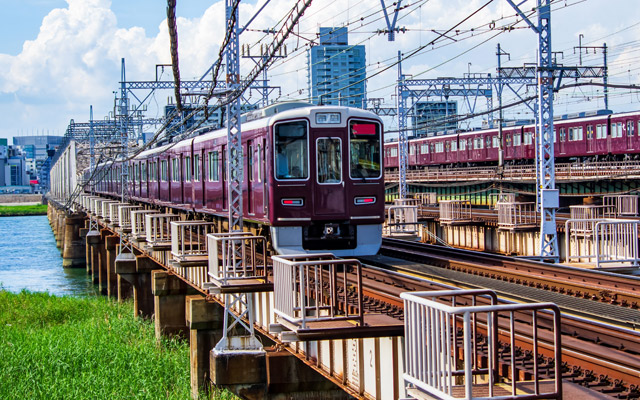
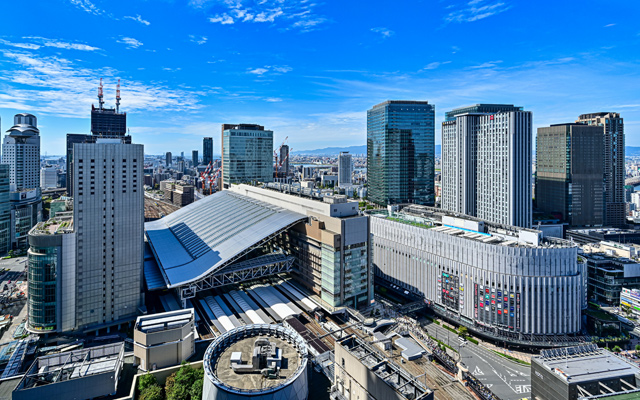
We suggest Osaka as your base for this trip around Kansai, especially since it's also the location of Kansai International Airport where many flight options are available from Manila. It’s also the main railway hub of the region, making it well-connected to almost every point of interest in the surrounding areas.
Also read:
The SPOT.ph Guide to Exploring Hong Kong by Train
The SPOT.ph Guide to Exploring Taipei by Train
Day 1: Osaka-Minami
For your first day in Kansai, we recommend settling in first by spending it in the Minami district of Osaka, where there’s so much to do, see, and most especially, eat. Arguably the city’s liveliest area, Minami includes the neighborhoods of Namba, Shinsaibashi, Dōtombori, and Amerika-Mura.
You can start your walking tour of the area at Shinsaibashi (Midō-suji Line, Shinsaibashi Station) and its famous eight-block-long covered shotengai or shopping arcade. You could spend a good two to three hours just strolling by the innumerable boutiques, bookstores, and other retail shops.
At the end of the arcade is Ebisu-bashi or Ebisu Bridge, which is almost always crowded with tourists posing for photos with the popular Glico running man in the background.
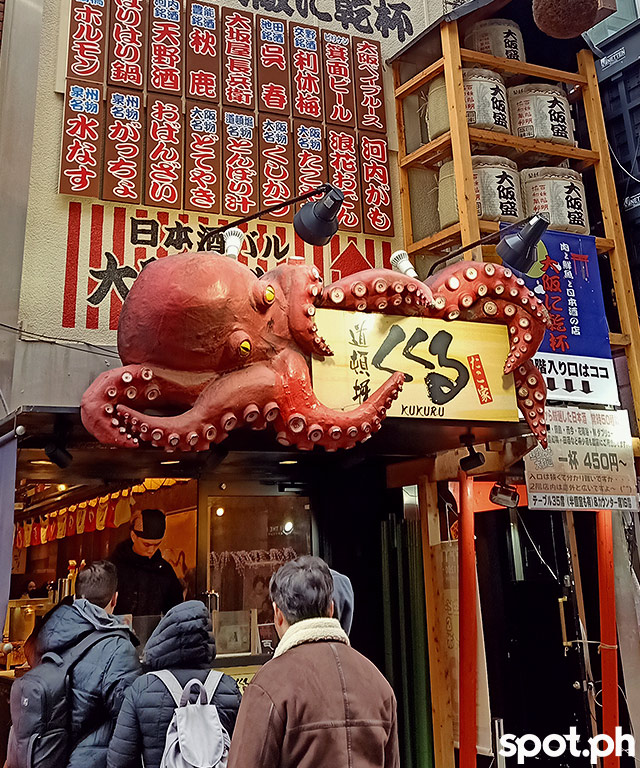
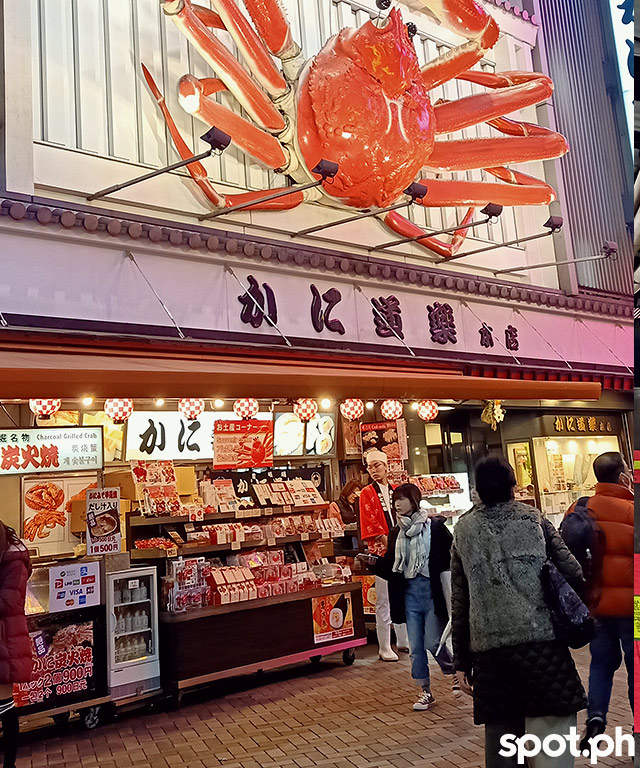
It's also your gateway to Dōtombori, which is perhaps the area that is most emblematic of Osaka. This strip is a feast for the senses. Everywhere you look is just a riot of neon signs, restaurants, and food stalls while anime OST or J-Pop blasts all around you. It can be overwhelming, but in a good way. Make sure you stay until nighttime to see the area all lit up in a frenzy of colors.
Pro tip: Be on the lookout for the drumming mechanical clown called Kuidaore Tarō, the mascot for the city’s famed eat-’til-you-drop culture.
End your stroll at Amerika-mura and make a beeline to its most popular meetup place, Triangle Park, a great starting point for food and bar crawls which are highly recommended if you’re in the area.
Day 2: Kyoto
Unlike Tokyo and Osaka wherein most top sights are within the reach of trains, Kyoto is a different ball game altogether as some of the major sights are accessible only by bus. Exploring this ex-capital of Japan by train might be a bit limiting, but worth doing just the same.
For the first half of your day trip to Kyoto, you can spend a leisurely morning in Arashiyama with JR Saga Arashiyama Station as your starting point. Grab a cup of coffee at the popular and trendy % Arabica with its floor-to-ceiling windows that frame the surrounding verdant hills.
Once you’ve pretty much awakened your senses, it's time to walk toward Kameyama-kōen, a peaceful park where locals take a stroll or have a quick breather before hiking into the mountains.
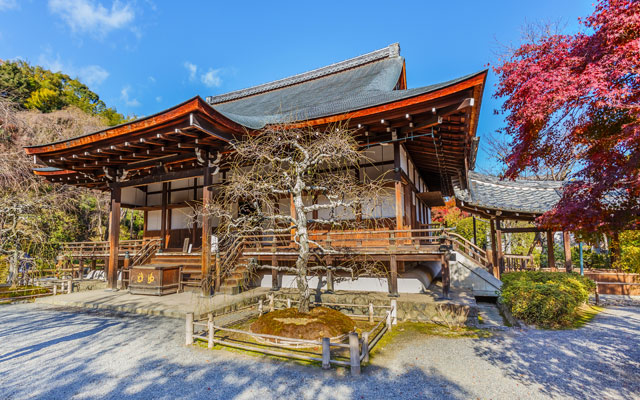
Continue your walk by heading out to Tenryū-ji, a UNESCO Heritage Site and Arashiyama’s most important temple. Make sure to spend some time admiring its garden which has a central pond and the lush Arashiyama mountains as a breathtaking backdrop.
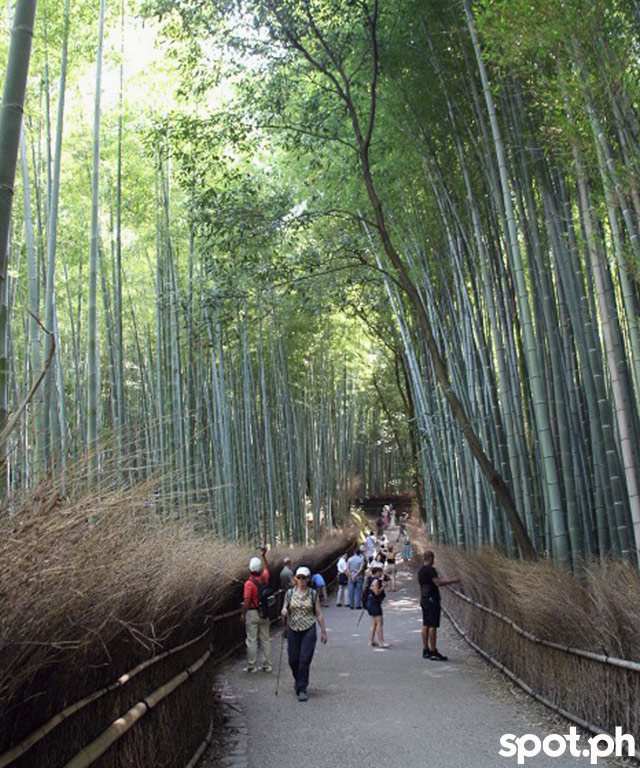
End your walking tour of Arashiyama with its most popular sight—Arashiyama Bamboo Grove. Photos may fool you into thinking that this is a peaceful place because it’s always overflowing with tourists. But the otherworldly beauty of this place is worth all the jostling for good IG-worthy photos.
Once you’re done appreciating the beauty of Arashiyama’s innumerable bamboo trees, head back toward JR Kyoto Station, and from there catch the train going to JR Inari and get off that station. Just outside is the gate leading to Fushimi Inari Taisha, a shrine older millennials will most probably recognize from the movie Memoirs of a Geisha with its seemingly endless and hypnotic rows of vermilion torii gates.
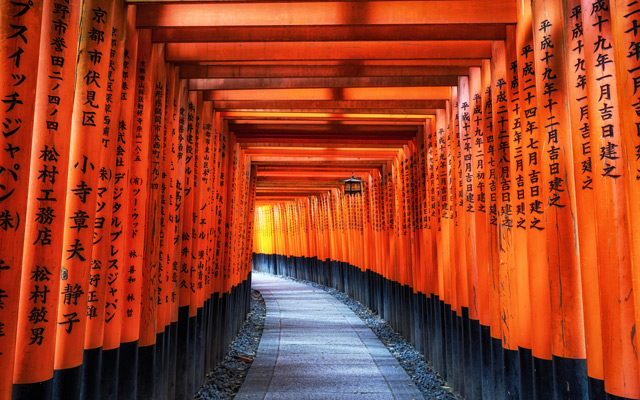
You will want to take loads of pictures for sure, and if you have extra energy, you can hike up a few meters up the mountain. You don’t want to attempt doing it all the way as the pathway covers a total of four kilometers.
As dusk sets in, trace your way back to JR Kyoto Station. The surrounding area may be a bit underwhelming considering how the city is a treasure trove of historical sights. Cross over to the opposite street where the retro Kyoto Tower stands tall, and go up the observation deck to have a 360-degree view of Kyoto.
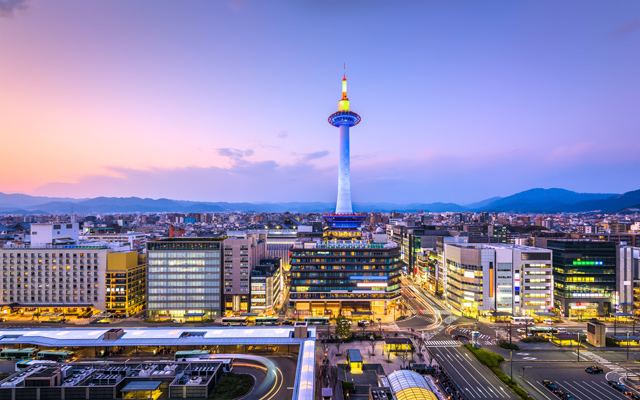
You can have dinner at JR Kyoto before heading back to Osaka. On the 10th floor of this striking steel and glass station is Eat Paradise, where you’ll find a great selection of restaurants offering tonkatsu, tempura, and even Western dishes.
Got a bit more energy? Go up the station’s 15th-floor Sky Garden terrace for breathtaking views of Kyoto at night. Keep in mind that the area closes at 10 p.m.
Day 3: Universal Studios Japan
Most Pinoy travelers to Kansai, especially first-timers, would not pass up the opportunity to spend a day at what has become the region’s most popular attraction: Universal Studios Japan.
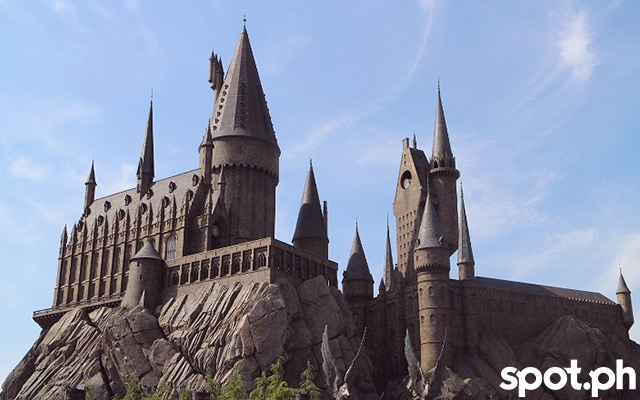
Universal Studios Japan (USJ) is one of six Universal Studios theme parks worldwide, the second to open outside the U.S., and the fourth most popular theme park in the world. It has become so popular that the waiting time for each ride is usually two to five hours. If you have some wiggle room in your budget, you may want to purchase the Universal Express Pass a week before your visit because they sell like hotcakes.
Pro tip: Visitors think that weekends are the busiest days at USJ, but what most aren’t aware of is that many Japanese schools schedule their excursions to the theme park on Mondays and Tuesdays. It would be wise to avoid these days, too.
Make sure to have a heavy breakfast and head out early because USJ is always teeming with people—locals and tourists alike. You could spend your whole day here and before you know it, it’s time to head back home.
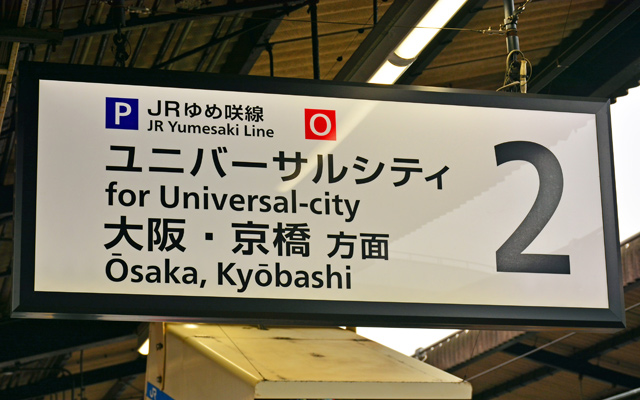
USJ has its own train station, Universal City. You can take off from any station on the JR Osaka Loop line (a.k.a. Osaka Kanjo Line) to Nishikujo Station. Then, take the Sakurajima Line (a.k.a. Yumesaki Line) to Universal City Station.
Day 4: Nara
After what could have been a thrilling yet tiring day at USJ, it would do your body and spirit well by having a more relaxed fourth day in Kansai. And what a perfect way to have a relaxing trip out of bustling Osaka than with a day trip to lovely Nara, Japan's first permanent capital in the eighth century?
Nara is only about 45 minutes by train from Osaka. Multiple Yamatoji rapid trains operate every hour between JR Osaka Station and JR Nara Station. Nara is compact and very walkable, so we suggest just taking a stroll to the major sights, most of which are near the train station.
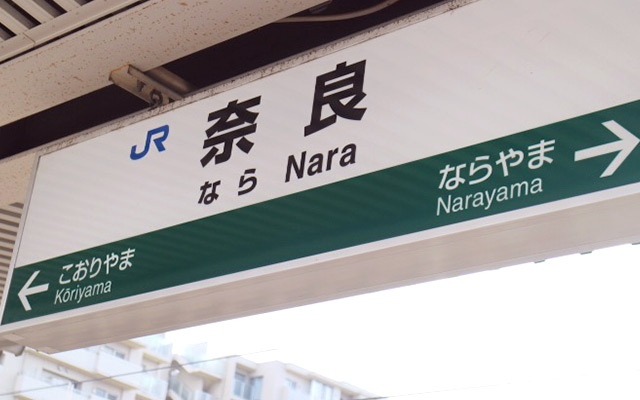
If you decide to walk, make sure that you’ve had some protein-packed breakfast and your faithful tumbler, because this suggested walking tour of Nara’s best hits covers about five kilometers. This would take up your entire day if you’re doing it at a leisurely pace.
However, if you wish to pack in more sights with less time and fewer calories burned, you may purchase the Nara Bus one-day pass for JPY500 (P201) that covers central Nara and the Toshodaiji/Yakushiji area. You can buy the pass at JR Nara Station or the Nara Kintetsu Station.
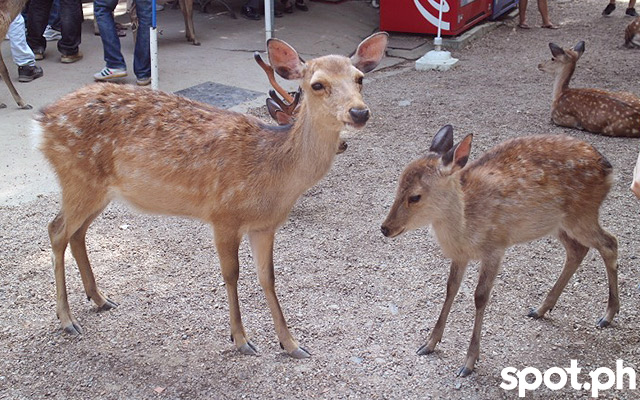
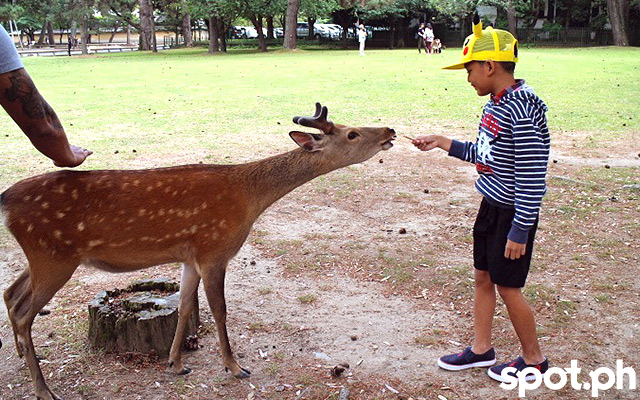
Start your tour of the city at either JR Nara Station or the Nara Kintetsu Station, then proceed to where all visitors to Nara go first—Nara Kōen or Nara Park. Spend maybe an hour or so playing with its resident adorable deer. Once you’ve made enough deer friends to help you pull a sleigh on Christmas, proceed to Isui-en Garden for some downtime.
Ready yourself because the next stop is the massive Tōdai-ji Nandaimon, the largest wooden building in the world. Aside from the breathtaking 15-meter tall bronze Daibutsu (Great Buddha), the immense and rather scary-looking Niō guardians carved by the legendary sculptor Unkei are also hard to miss.
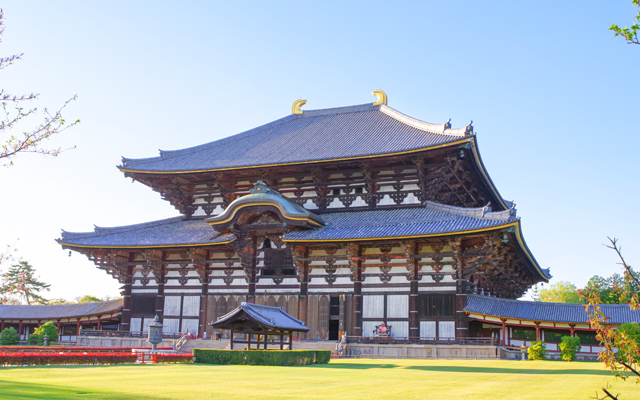
If you have spare time, you could visit Nigatsu-dō and Sangatsu-dō, two sub-temples of Tōdai-ji. They're quite a bit uphill but they have nice views of the surrounding areas.
Have some rest and drink a cup of tea at Mizuya-chaya Teahouse near Nigatsu-dō. Pair your matcha with onigiri or a bowl of udon if you’re hungry.
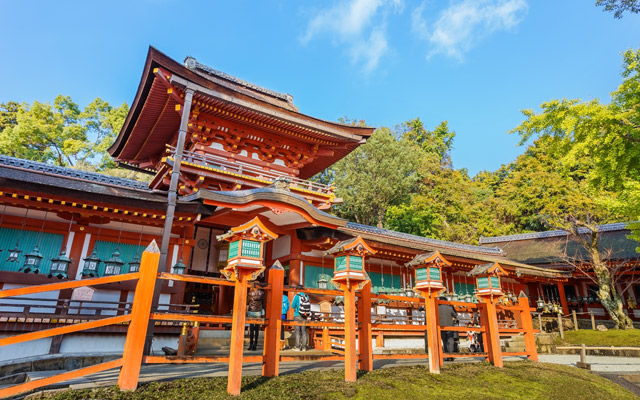
Next on the list is another UNESCO World Heritage Site, Kasuga Taisha. Founded in the eighth century, this charming shrine is ensconced in a lush hill dotted with sacred deer. You’ll surely take a lot of selfies in this shrine with its pathways that are lined with countless lanterns.
Your last stop in the historic city is another UNESCO World Heritage Site, the temple called Kōfuku-ji. The original complex had 175 buildings but now only a dozen remain. Its two remaining pagodas are of three and five storeys, with the latter being Japan’s second tallest.
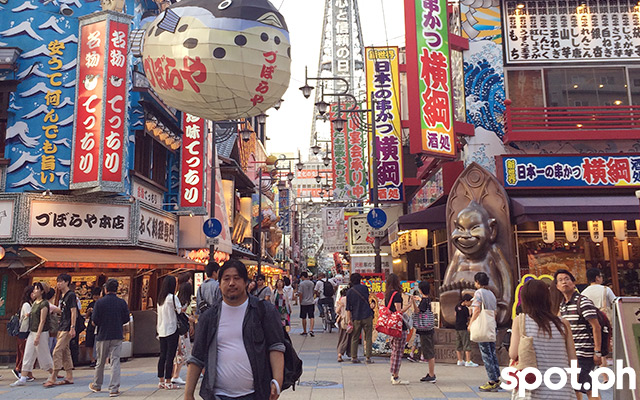
Cap off your day back in Osaka with a quick visit to its quaint Shinsekai neighborhood which retains much of the city’s old-world charm. If Dotonbōri has its 3D crab signage, Shinsekai has its giant blowfish lantern welcoming visitors. You’ll never run out of options for dining and drinking in this area, but make sure to have some kushikatsu, various skewered, battered, and deep-fried food.
Shinsekai is a short walk from the Shin-Imamiya Station on the JR Osaka Loop Line, Dobutsuen-mae Station on the Midosuji and Sakaisuji subway lines, and Ebisucho Station on the Sakaisuji subway line.
Day 5: Osaka
Take it slow on your last day in Kansai, you don’t want to be bone-tired for your flight back home.
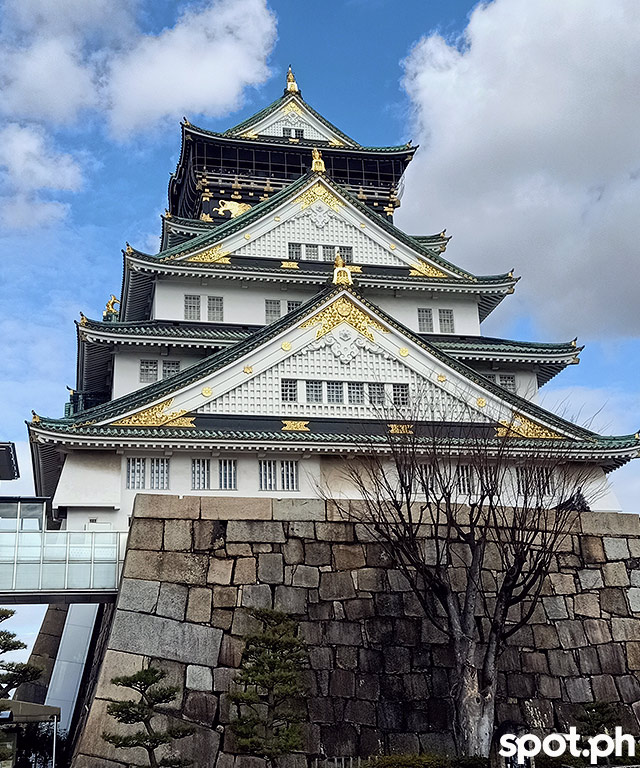
Start your day with a quick visit to Osaka-jō or Osaka Castle. Built in 1583 by 100,000 workers, it’s a remarkable sight in itself and offers splendid views of the nearby areas. The castle is served by its own train station, Osaka-jō-kōen on the JR Osaka Loop Line.
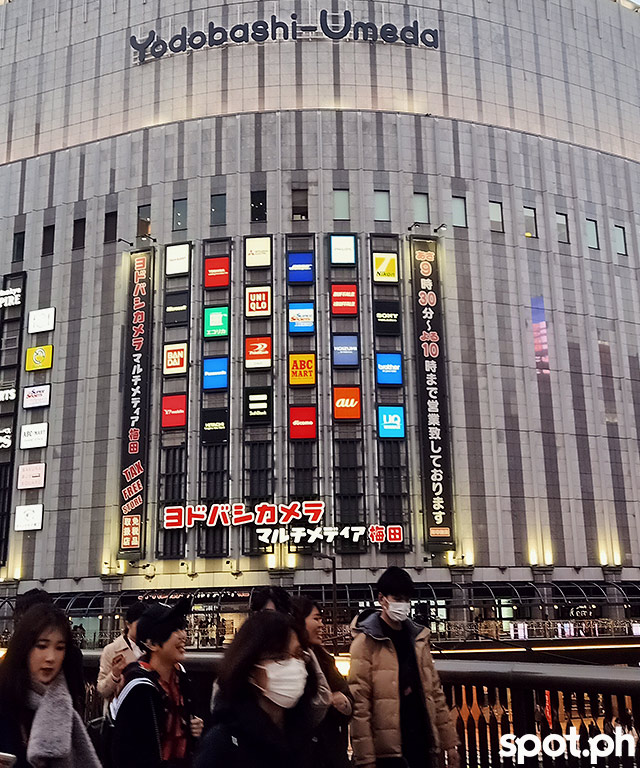
You can spend the rest of your last day in Umeda, a shoppers' have near JR Osaka Station. The malls and shopping arcades are all interconnected by underground passages. You can shop for electronics and cute stickers at the huge Yodobashi-Umeda or stop by Tokyu Hands for some last-minute pasalubong. If you’re into all things trendy, swing by HEP Five, a shopping mall with a red Ferris wheel on its roof.
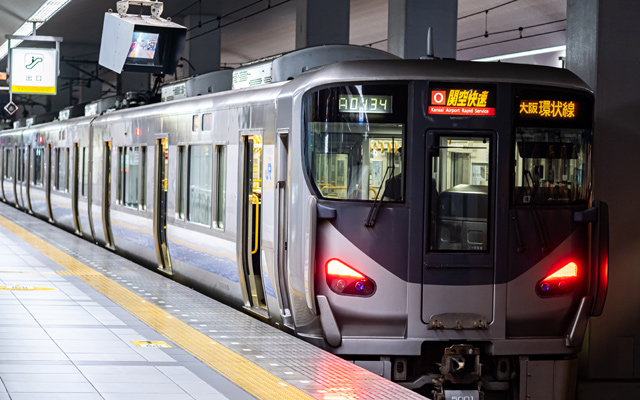
Heading back to Kansai International Airport for your flight home is as simple as hopping on an express train from Osaka. Travel time takes about 50 minutes.
Also read:
The SPOT.ph Guide to Exploring Bangkok by Train
The SPOT.ph Guide to Exploring Singapore by Train