
Sapporo Guide: The Best Things to See and Do for Two Days
From film fame to winter wonderland, uncover Sapporo's charm and delights.
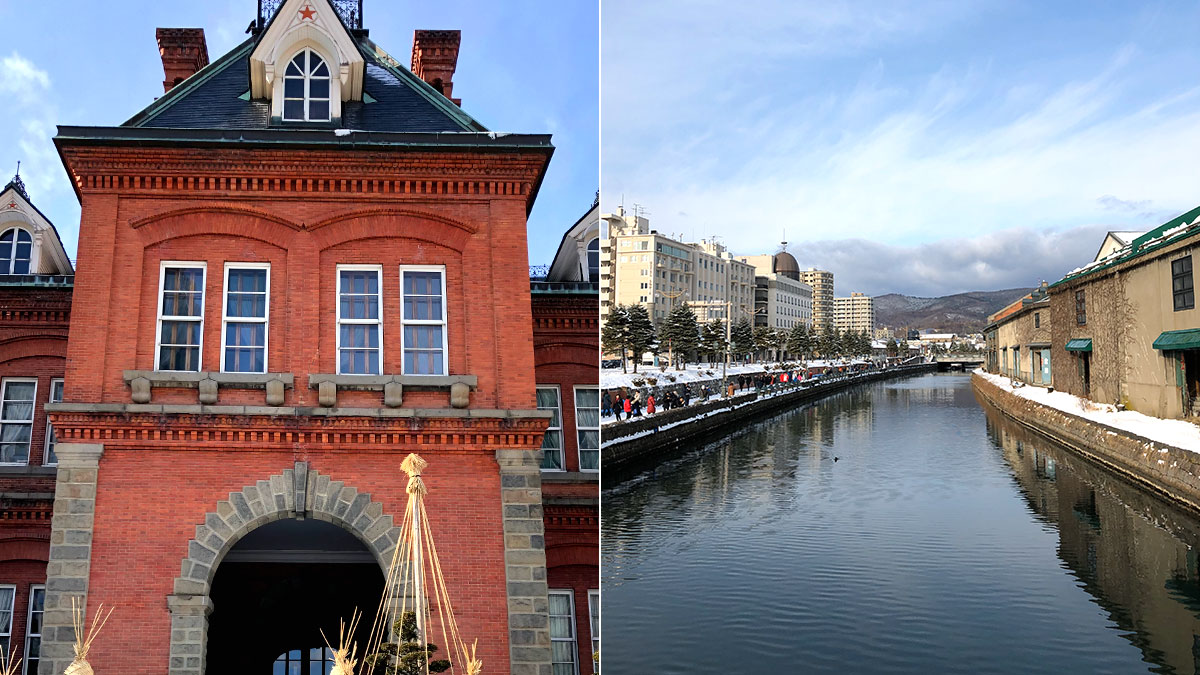
(SPOT.ph) Do you remember the romantic comedy film Kita-Kita? This is where you probably first saw and heard about Sapporo. Through the screen, the two main characters take you around Sapporo and explore its wonders. If you haven’t seen the movie, you might have seen Sapporo on your beer bottles because it is one of the most recognized beer brands in Japan. In the northern part of Japan, Sapporo transforms into a winter wonderland during the cold season, which is why the city is close to some of the nicest ski resorts around the world.
Also read:
Kyoto, Japan: The Best Things to See and Do for Two Days
Osaka Guide: The Best Things to See and Do for Two Days
What to Know about Sapporo
Considered the northernmost city designated by Japanese government ordinance and the capital of the island of Hokkaido, Sapporo is the fifth most populous city in Japan. Because of its location, the city is covered in snow more than a third of the year. The snowfall starts as early as October, and the average annual temperature hits as low as 8.9 degrees Celsius.
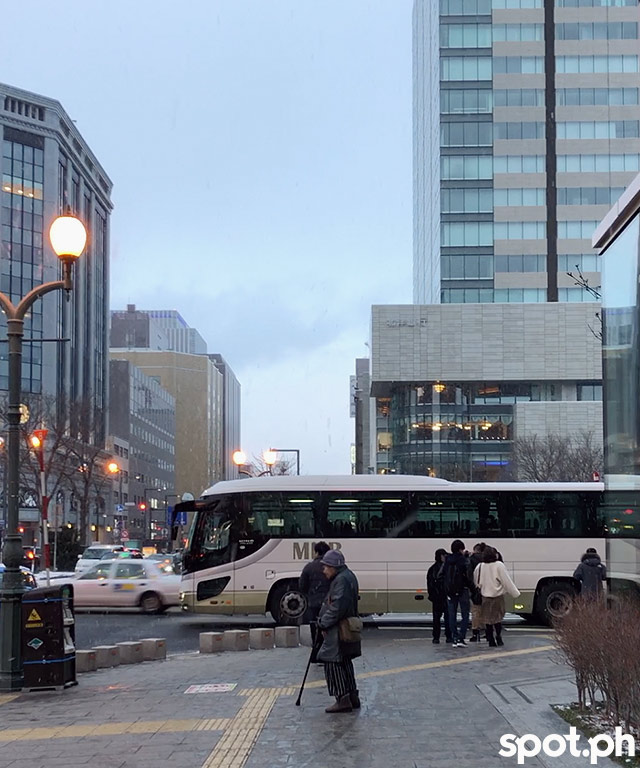
Sapporo literally means “an important river flowing through the plains” in Ainu language, referencing the Ishikari River which flows through Sapporo. Back in the day, it became the trading post with the Ainu, the indigenous people who first inhabited Hokkaido. Years after, Yoshitake Shima, the head of the Hokkaido Development Corporation, organized Sapporo to become a planned city like Kyoto. Because of the developments, the city became the political and economic center of Hokkaido. Several industries, such as potato and onion production, beer, flour milling, and paper-making started to flourish.
The place is also known for its annual Sapporo Snow Festival, which began in 1950. Since then, it has evolved into a huge event featuring snow and ice sculptures which runs for a week every February. The festival happens across three sites: the Odori Site, the Susukino Site, and the Tsu Dome Site. Sapporo became even more known globally when the Winter Olympics were held in 1972.
Here’s a detailed itinerary to make your experience unforgettable in this snow haven:
Day 1 at the Center of Sapporo
Nijo Market
Similar to Osaka and Kyoto, Sapporo also has its own seafood market. Because Hokkaido is surrounded by the sea on all sides, there is an abundance of fresh catch that makes its way to Sapporo, specifically to Nijo Market. Nijo Fish Market, occupying a whole block, has 15 fisheries and fishmongers selling the day’s catch. They sell a variety of seafood, which includes crabs, mackerel, salmon eggs, sea urchins, and various fish.
For tourists, we recommend that you get some meals here because the market has the freshest seafood. The restaurants here offer sushi, seafood rice bowls, and grilled seafood. Some of the most popular items include uni ikura donburi, sea urchin, and salmon eggs on rice.
The market is located at Minami 3-jo ~ Higashi 1-chome, Chuo-ku and is open from 7 a.m. to 6 p.m. daily.
Hokkaido Shrine
When the feudal system was abolished in 1871 and replaced with a prefectural system, Emperor Meiji’s order was to select three gods to develop and protect Hokkaido. The vessels carrying these gods were brought from Tokyo. The gods— Okunitama, Onamuchi, and Sukunahikona—were then enshrined in Hokkaido Shrine. The main god is Okunitama, Onamuchi is the god of business and prosperity, and Sukunahikona is the god of medicine and breweries. The fourth god that was enshrined here was Emperor Meiji himself.
The main shrine was burnt down in 1974, and a new shrine was built in its place in 1978, which still stands today. You can pray to these gods for success in business, victory, and good health. The 18-hectare complex also features sprawling lands filled with lots of cherry blossom trees and flowers all around. Two of the popular activities in the shrine are drawing fortune slips, such as Love Fortunes and Children’s Fortunes, and getting amulets for protection.
The shrine is found at 474 Miyagaoka, Chuo Ward, Sapporo, Hokkaido 064-8505. During the summer season, the place is open from 6 a.m. to 5 p.m. During the winter, it has shorter hours, from 7 a.m. to 4 p.m. Admission to the shrine is free. If you want a souvenir of your offered prayers in the shrine, you can get a goshuin, a red seal stamp at 300 yen.
Odori Park
Japan is one of the countries with a lot of green spaces. Odori Park, which spans 1.5 kilometers long and covers thirteen blocks, is a public park located at the center of the business district. You can visit this greenery if you prefer to live like a local. Locals would be seen having a picnic here or relaxing after hours of shopping. Odori, which literally means “large street,” was built in 1871. It divides the city into two and is designed to be a fire break for the city.
Today, the park is such a sight to see with a total of 87 flowerbeds and 4,700 trees that adorn the park. This includes large trees such as elm, plane, maples, zelkova, and flowering trees and shrubs such as cherry, magnolia, hydrangeas, azaleas, roses, and lilacs. Odori Park is bordered by two tourist attractions: the Sapporo TV Tower on the east and the Shiryokan, a historic court building, on the west. During February of every year, the park is one of the sites for the Sapporo Snow Festival, attended by more than 2 million visitors. The festival was born in Odori Park in 1950 when local high school students built the first snow sculptures.
The park is 2 Chome Odorinishi, Chuo Ward, Sapporo, Hokkaido 060-0042. It is open 24/7, and entrance is free.
Sapporo Clock Tower
The Sapporo Clock Tower is the symbol of Sapporo. As one of the few remaining Western-style buildings in the city, it was constructed in 1878 as a drill hall and commencement venue of the Sapporo Agricultural College
In terms of architecture, the Clock Tower is known for its balloon-type wooden architecture, the most common type of wood-frame construction in the 1900s. On the first floor, you can find a museum showcasing the building’s history. The second floor has displays about the clock and a ceremonial hall.
The tower is located at 2 Chome Kita 1 Jonishi, Chuo Ward, Sapporo, Hokkaido 060-0001, and is open from 8:45 a.m. to 5:10 p.m. every day. Admission costs 200 yen per adult.
Hokkaido Government Office
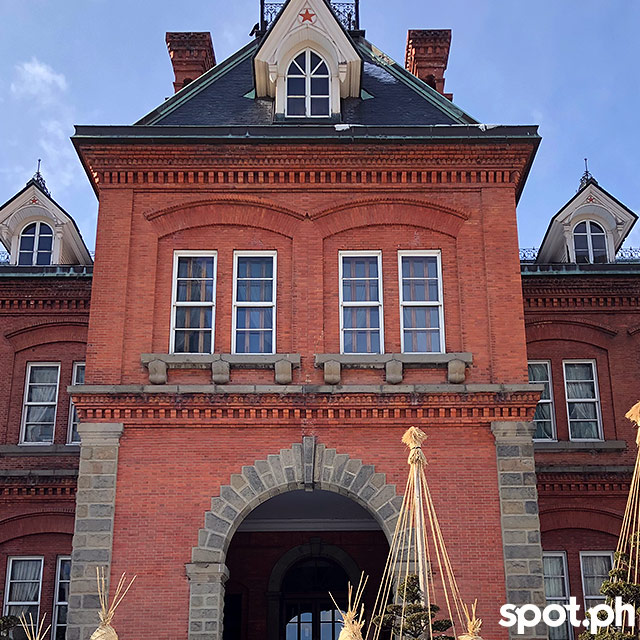
The former Hokkaido Government Office, also known as the “red brick office”, was used for approximately 80 years before the office was transferred to a new location. Recognized as an Important Cultural Property in 1969, the landmark was constructed in 1888 and has American neo-baroque architecture. Its structure was made of 2.5 million bricks made in the villages of Shiroishi and Toyohira and features a central dome.
The site is temporarily closed for renovation to make it earthquake-proof. The Hokkaido Government has released some details of the plan for the renovated building. There are different themes designated for each level: creativity and exchange for the basement, regional information and activity for the first floor, history and culture for the second floor, and a rooftop balcony in front of the dome.
The government building is at 6 Chome Kita 3 Jonishi, Chuo Ward, Sapporo, Hokkaido 060-0003. Since the building is temporarily closed, you can take a photo outside of this historic building as a memento.
Susukino
If you want to experience nightlife in Sapporo, you should definitely put Susukino on your list. Susukino is not the official name of the area, but largely, it covers the area bounded by Nishi 1-chome, Nishi 9-chome, Minami 3jo, and Minami 8jo. Susukino is also known as one of the three sites where the week-long Sapporo Snow Festival is held every February.
Susukino is the largest entertainment district in northern Japan. It’s a mix of all kinds of fun stuff: bars, clubs, restaurants, cinemas, shops, karaoke parlors, and pachinko parlors, or what they call local slot machines. One of the iconic establishments here is Norbesa, a commercial facility with fashion and amusement stores and has a ferris wheel on top. In terms of food, with Sapporo as the birthplace of miso ramen, Susukino has the famous alley, Ramen Yokocho, with tiny stalls serving the best noodles. But aside from these cited activities, Susukino also has Sapporo’s red-light district filled with many adult entertainment establishments.
Susukino is in Chuo-ku, Sapporo.
Day 2 Around Sapporo
Sapporo Beer Museum
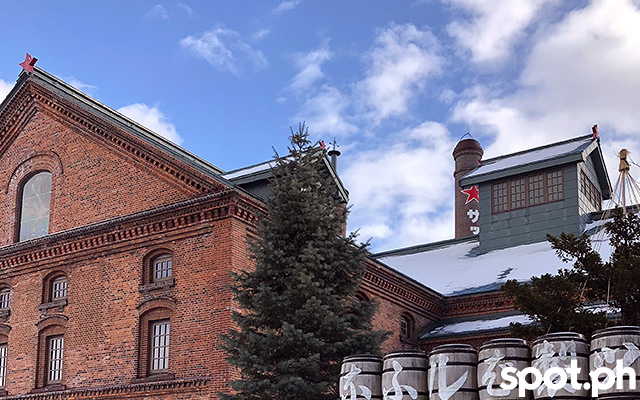
Did you know that Hokkaido is the birthplace of beer in Japan? Sapporo Beer, one of the oldest and biggest brands, started in 1877. The Sapporo Beer Museum, which opened in 1987, lays down the history of beer in Japan, Sapporo Beer, and the process of beer making. The Star Hall is the paid tasting corner where you can try various brews, such as the Hokkaido exclusive Sapporo Classic, the Sapporo Draft Kuro Label, and the Kaitakushi Beer. You can also get the three-drink tasting set to try everything at 1000 yen. In the beer halls, you can have all-you-can-drink beer and all-you-can-eat mutton BBQ, a popular local dish named after the Mongolian ruler Genghis Khan. Next to the museum is the Sapporo Beer Garden, which also has a number of restaurants.
The beer museum is located at 9 Chome-1-1 Kita 7 Johigashi, Higashi Ward, Hokkaido 065-8633. It is open every day from 11 a.m. to 6 p.m. except Mondays. The tour of the museum is free, but there is also a paid guided tour where you can sample “Fukkoku Sapporo Bakushu”, beer brewed using a method done way back since 1881.
Shiroi Koibito Park
Shiroi Koibito Park is a theme park built by Ishiya, a renowned confectionary manufacturer. The company’s number one product is the Shiroi Koibito cookie, one of the delicacies from Hokkaido. It is made of two thin butter cookies with a layer of white chocolate in the middle. The English architecture of the theme park originated from the founder Isao Ishimizu’s love for England.
Here, you can get firsthand experience on how cookies are produced or make the cookies or chocolates yourself. You can visit Chocotopia by joining the Premium Factory Tour, where you’ll learn about the history of chocolate. You can also make your own Shiroi Koibito or chocolate in the Sweets Workshop Dream Kitchen. If you just have twenty minutes to spare, you can join the session where you put chocolate in a mold and add your own toppings. If you have enough time, you can join the cacao-to-bar session instead. The Chocotopia Factory tour, meanwhile, takes you on a tour to see the actual production lines. To enjoy these finished products, you can check them out at the Chocolate Lounge Oxford.
The park is located at 2 Chome-11-36 Miyanosawa 2 Jo, Nishi Ward, Sapporo, Hokkaido 063-0052 and is open every day from 10 a.m. to 5 p.m. Entrance fees cost 800 yen per adult.
Otaru Canal
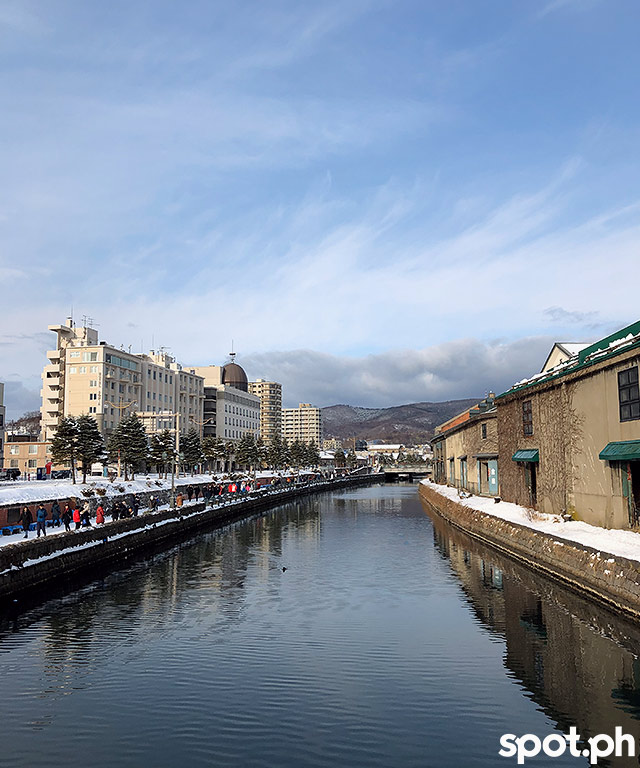
Another notable sightseeing spot in Hokkaido is the Otaru Canal. Around one and a half hours away from the center of Sapporo by train, the canal was used by small ships to transport goods to the warehouses. However, the canal was abandoned when modern docking facilities were built. In the 1980s, a part of the canal was restored instead of the planned landfilling, and the warehouses were transformed into museums, shops, and restaurants. More than 60 gas lanterns also light up the canal at night, creating a romantic atmosphere.
The canal is at 5 Minatomachi, Otaru, Hokkaido 047-0007.
Mount Moiwa Observation Deck
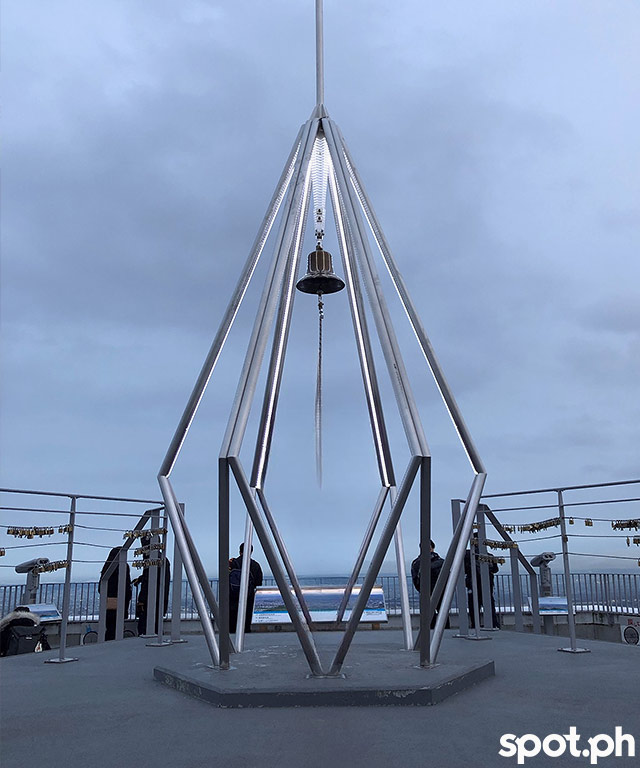
It’s nice to see the entire Sapporo from a vantage point, especially during winter, because it feels like you’re looking at a winter wonderland. You can get this panoramic view of Sapporo City, Ishikari Bay, and the surrounding mountains exactly at the Mount Moiwa Observation Deck, standing at 531 meters high. At the center of the deck, you will also find the Fortune Bell, a popular photo spot among tourists. It is believed that couples who ring the bell will have happiness in their lives.
To get to the view deck, you take the Mount Moiwa Ropeway from the base of the mountain then you transfer to a mini cable car. If you’re feeling a little adventurous, you can also easily climb one of its five mountain trails, with the shortest course at 2.4 kilometers and the longest at 4.5 kilometers long.
How to Get Around Sapporo
Sapporo is the easiest to navigate among all of the major cities in Japan because of its rectangular street layout and simple street naming system. There are three subway lines, a tram line, and buses that can take you across all of Sapporo. You can get one-day passes for subway lines or prepaid cards to take the subways and buses.
Where to Stay and Eat in Sapporo
For accessibility to the majority of the tourist spots, we suggest that you stay in a hotel in the city center. Some good choices include Mercure Sapporo, JR Tower Hotel Nikko Sapporo, Ana Crowne Plaza Sapporo, Solaria Nishitetsu Hotel Sapporo, Mitsui Garden Hotel Sapporo West, and The Knot Sapporo.
For different types of Japanese food, we have recommendations based on experience and customer reviews. For sushi bowls, visit Donburi Chaya at Nijo Market. If you’re looking for Yakiniku, you should eat at Yakiniku Restaurant Totori. For tonkatsu cravings, try out Tonkatsu Wako. Okonomiyaki originated from Osaka, but in case you want to eat it in Sapporo, Fugetsu is a must-try. For tempura, you can check out Tempura Ebiten. To cap off all of the eating, you should try the cheese biscuits, cheesecake, and cheese ice cream from LeTAO.
How to Get to Sapporo
Getting to Sapporo from the Philippines can be quite a ride because there are currently no direct flights operating for that route. The good news is that you can either book a flight that has a layover somewhere in Japan already, or you can also choose to make it a side trip if you’re visiting Tokyo. If you land in Tokyo, you can take a 90-minute plane ride to Sapporo’s New Chitose Airport and have a 35-minute train ride to the city center. You might also want to hop on a JR Tohoku/Hokkaido Shinkansen, then transfer to the Hokuto limited express to get to Sapporo in 3.5 hours.