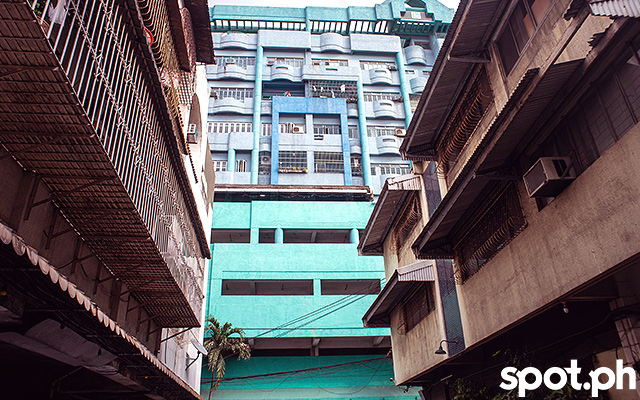
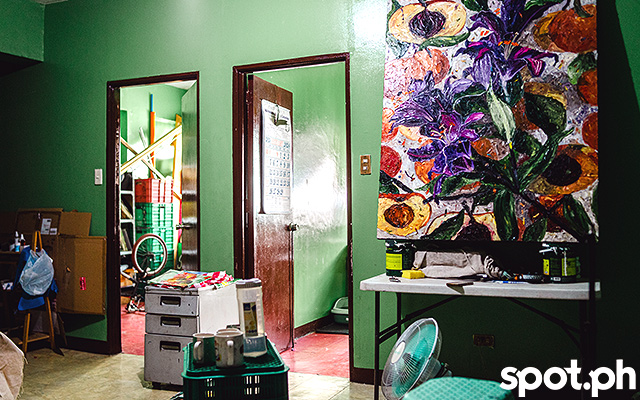
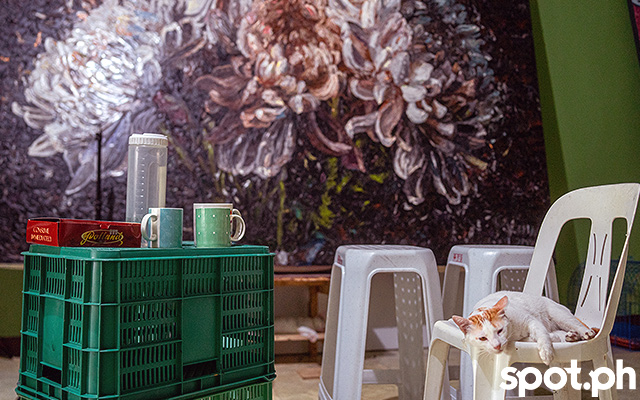
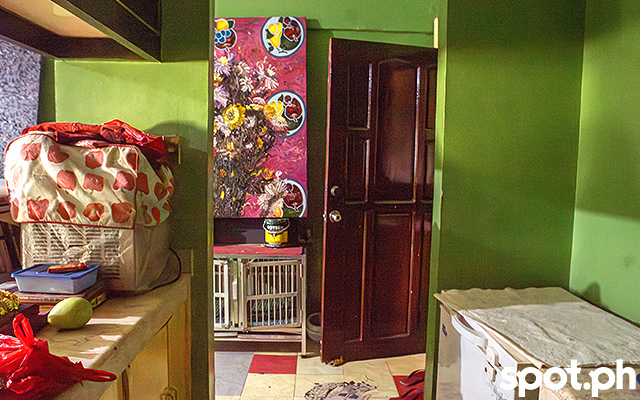
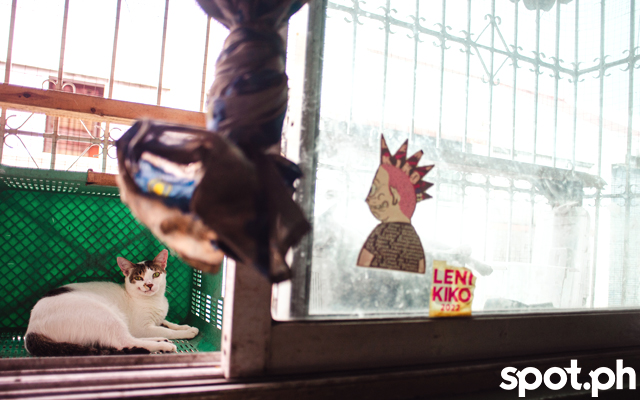
(SPOT.ph)Juan Luna Street, named after the revered 19th-century Filipino painter, stretches through the bustling districts of Binondo and Tondo. It's also the same gritty street where Dagupan native and 54-year-old visual artist Jonathan Ching spent most of his childhood. His family first settled in Binondo, then eventually in Tondo, where he set up his current studio space. It may be a coincidence that he's chosen the same artistic medium as the street's namesake, but there's nothing coincidental about Ching's entrance into the Philippine art scene. It was a deliberate choice that stemmed from a constant fear.
"It was the fear that I will go back to my design job," says Ching, who started his professional life as a web designer. "[For me, that job was] safe and comfortable. So no, I took the scenic route not to build up skills or complete my 10,000 hours in front of the easel but because of so many fears." There were other fears: of having nothing to say, of not being good enough, of being an impostor, and ending up a starving artist. These held him back from having solo shows despite actively joining group exhibits at the legendary Hiraya Gallery and the Cultural Center of the Philippines (CCP) in the late 1990s.
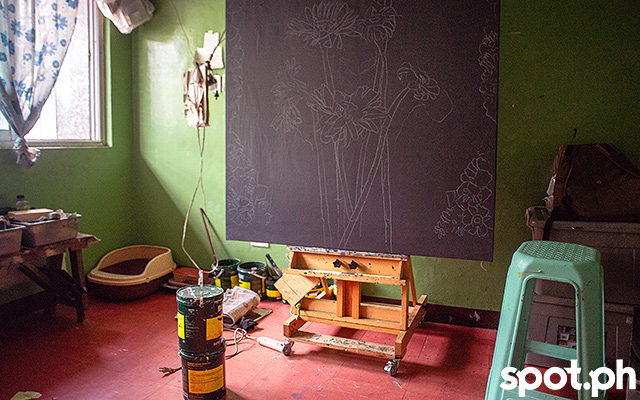
Jonathan Ching creates art from his apartment in Tondo
PHOTO BY Christine Chung
Article continues after this ad.
ADVERTISEMENT - CONTINUE READING BELOW
PHOTO BY Christine Chung
It was the casual invitation of artist and gallerist Soler Santos ("O Jon, may solo ka on so and so date") to have his first one-man show at West Gallery that pushed him to finally work on a series of pieces intended for a solo exhibition. After the good turnout of that 2008 show, Nothing is Required, Except Happiness, he had the confidence to approach Blanc Gallery owner Jay Amante to propose a second solo which he titled Whale Songs for the Disenchanted. Ching consequently learned to ride the momentum that was the result of those early shows, and there was no looking back since then. His art career is now 17 years old.
Jonathan Ching on Taking a New Path and Following His Artistic Impulse
Born to Chinese-Filipino parents, Ching says his mother might be his first staunch critic. "You didn't study painting, bakit ka nagso-show?" she would ask. "Bakit ang gastos mo sa paint? Ang kapal [mo mag-paint]." But this opposition towards an artistic career was not new in the Ching household. It was directed earlier on at his younger brother Mariano Ching who first pursued a career as an artist.
Article continues after this video.
ADVERTISEMENT
watch now
PHOTO BY Christine Chung
PHOTO BY Christine Chung
Jonathan and Mariano were engineering students. But while the former holds a degree in Civil Engineering from De La Salle University - Manila, Mariano shifted to Painting at the University of the Philippines Diliman. It was only a matter of time before the older Ching enrolled in the Visual Communication program at the UP College of Fine Arts. The brothers would commute to school together. "Nakikisit-in ako sa klase nila Sir [Roberto] Chabet," recalls Jonathan, referring to the esteemed conceptual artist who taught in the university.
The brothers seemed to follow each other to paths that led to honing their skills. "I got accepted and was due to start work in a week [for an engineering company], but that week, I found out that my brother Mariano enrolled in a summer drawing workshop [at] CCP. I followed him to CCP and resigned before my first day. So I wasn't able to take the next step in my career as an engineer," Jonathan says. "Our workshop teacher Gina Morales took us around to meet working artists—[some members] of the Salingpusa collective, Marcel Antonio—and to visit to Pakil, in the studio of Danny Dalena."
Article continues after this ad.
ADVERTISEMENT - CONTINUE READING BELOW
PHOTO BY Christine Chung
PHOTO BY Christine Chung
The Ching brothers eventually became founding members of the collective and artist-run space Surrounded by Water (SBW) formed in 1998 in Angono, Rizal. The space was later moved to Ortigas and then Cubao. For Jonathan, managing SBW among themselves was a learning experience. It made him appreciate the kind of work galleries put into running a space.
He partnered with fellow artist Geraldine Javierto oversee the space every Saturday. "We took a Saturday schedule, kasi dun off ko e," he says; he was then still working as a web designer by day. "Then medyo mundane s’ya. We cleaned the gallery. We cleaned the bathroom." But despite the mundane chores, SBW had another special purpose: it became a support group for aspiring artists. "At the time, we were just beginning. 'Yung important sa art student is after [finishing] school, dapat may support group ka. Mahirap yung mag-solo kaagad e. It gave us a platform din to get to know other artists," shares Jonathan.
Article continues after this ad.
ADVERTISEMENT - CONTINUE READING BELOW
PHOTO BY Christine Chung
PHOTO BY Christine Chung
Being at SBW went beyond art-making. "We have routines and schedules to follow. Like who does what. The experience taught me accountability. We can do anything we want as artists, but we are also accountable for everything we do."
Ching still remembers the advice the late Hiraya Gallery curator Bobi Valenzuela would give to young artists. "Sabi niya, hindi na uso 'yung starving artist. If you're an artist, it means you're creative. And use your creativity to feed yourself and feed your soul. If you're starving, you need to do something about it." It's likely Ching stands by this very principle sustaining his own art practice.
PHOTO: Christine Chung
Post a Comment
Magnifying the Mundane Into Larger-than-life Moments
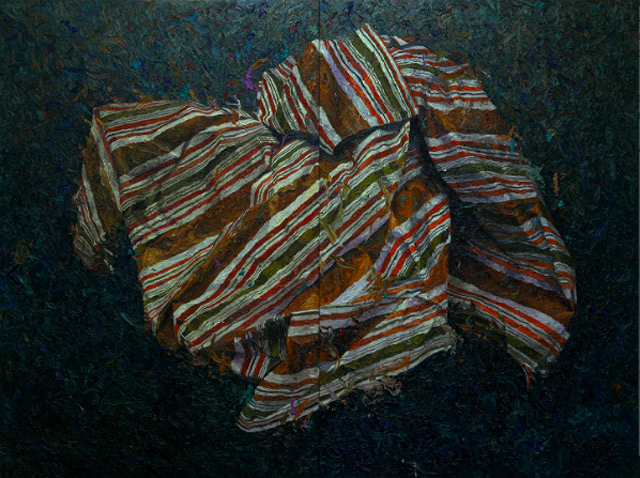
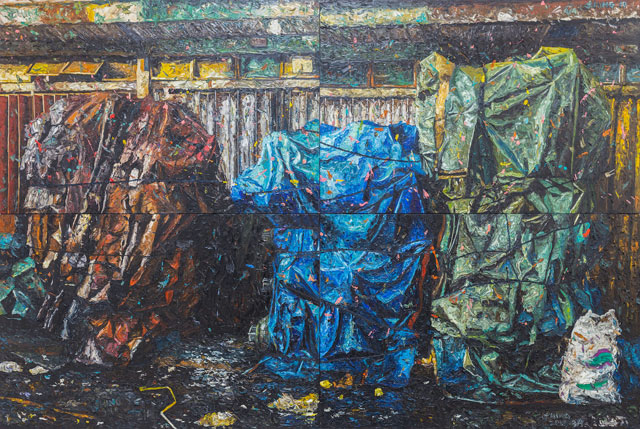
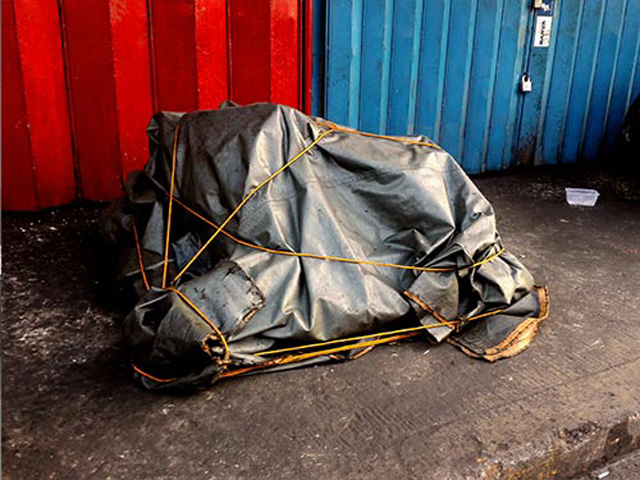
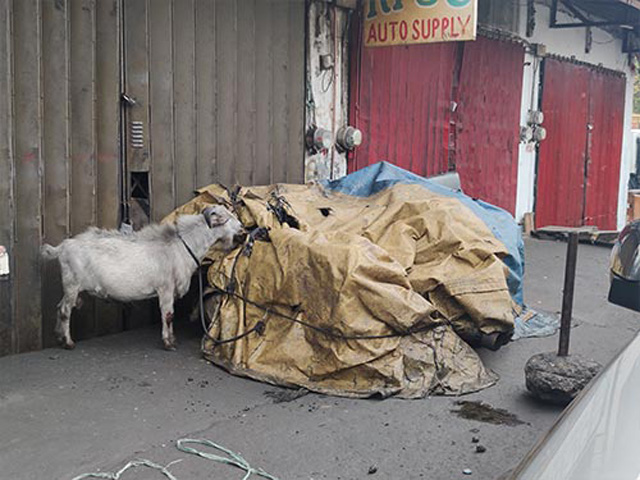
In the Ching brothers show Odds and Ends (Blanc Gallery, 2022), artist Yasmin Sison-Ching—Mariano's wife—wrote: "Jonathan and Mariano Ching grew up in the backdrop of a Blade Runner-like Divisoria and Ongpin, in the heart of dirty, dusty, smelly, lively and vital Manila…" Jonathan still paints this picture of Manila, capturing the often unnoticed facets of the urban environment and things that pique his curiosity while biking around his neighborhood. This is evident in 7 Seas in a Puddle (West Gallery, 2018) and in They Might Be Giants (Silverlens, 2016). Ching brings to the viewers' attention the bulky tarpaulin-covered objects on the street to evoke a sense of mystery while relating their imagery to our idea of a landscape as seen through the minuscule portions of the city.
"Night Bloom" from 7 Seas in a Puddle (West Gallery, 2018)
PHOTO Courtesy of West Gallery
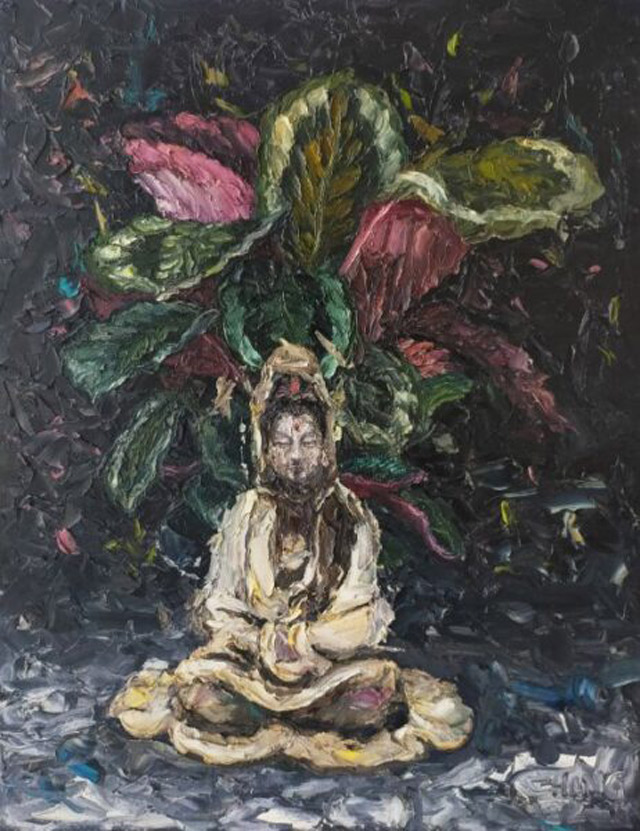
“Guan Yin” from Odds and Ends (Blanc Gallery, 2022)
PHOTO Courtesy of Blanc Gallery
They Might Be Giants (Silverlens, 2016)
PHOTO Courtesy of Silverlens
"These tarpaulins are strange features in my neighborhood that disappear by 8 a.m. and re-appear around sunset like some strange flowers. I like capturing interesting (at least to me) urban scenes before I become too used to them that they become invisible to me," says Jonathan.
"I think finding a subject interesting to the artist is very important. It conveys a personal bond between the artist and the subject, and it makes it personal," he explains, talking about the withered and wilted flowers that are often the subjects of his paintings. He compares it to doing portraits of old weathered faces, which he finds more interesting than drawing, say, an infant. "There’s character, parang kailangan may pinagdaanan before ka mapunta sa ganong state."
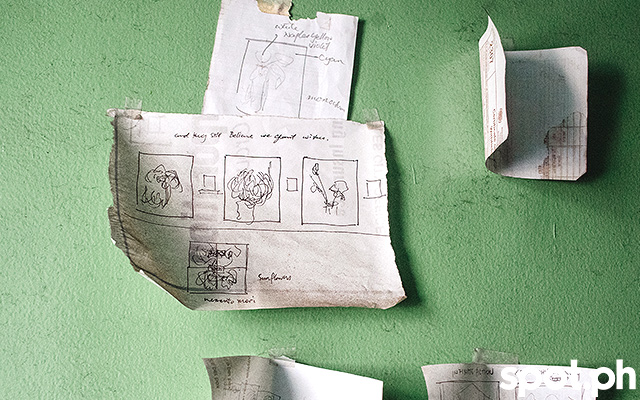
Photograph taken by Ching as reference to his paintings
PHOTO Courtesy of the artist
PHOTO Courtesy of the artist
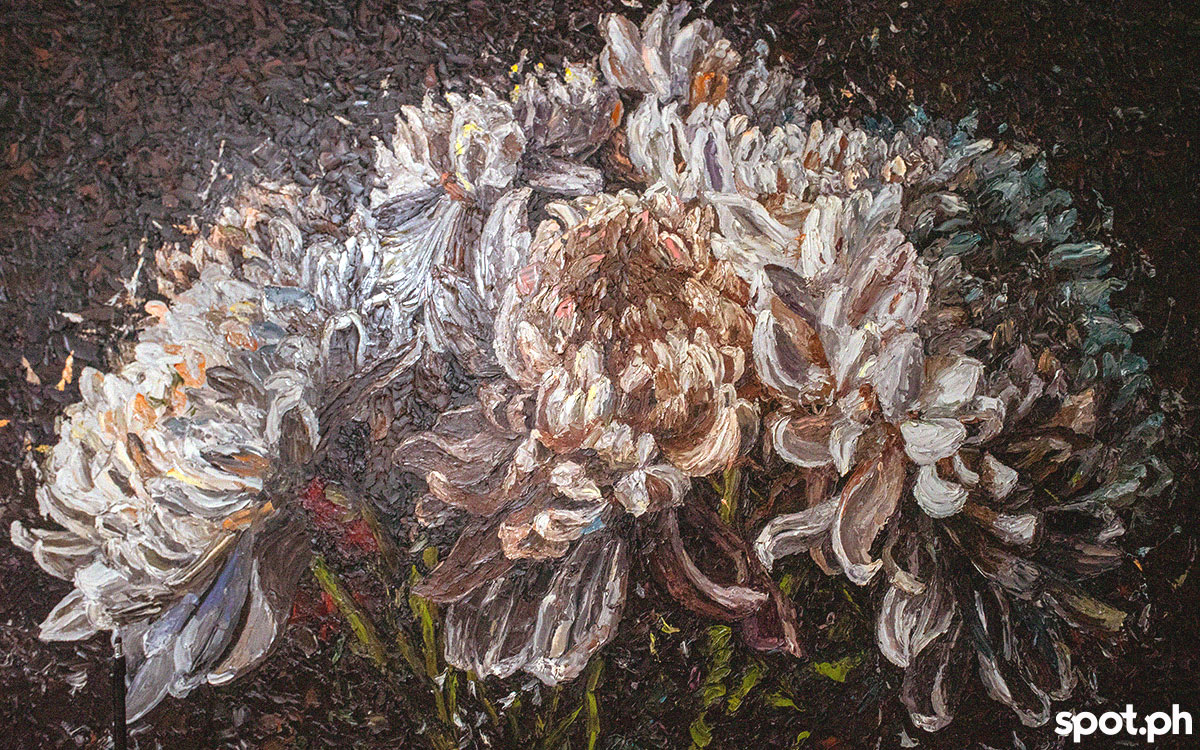
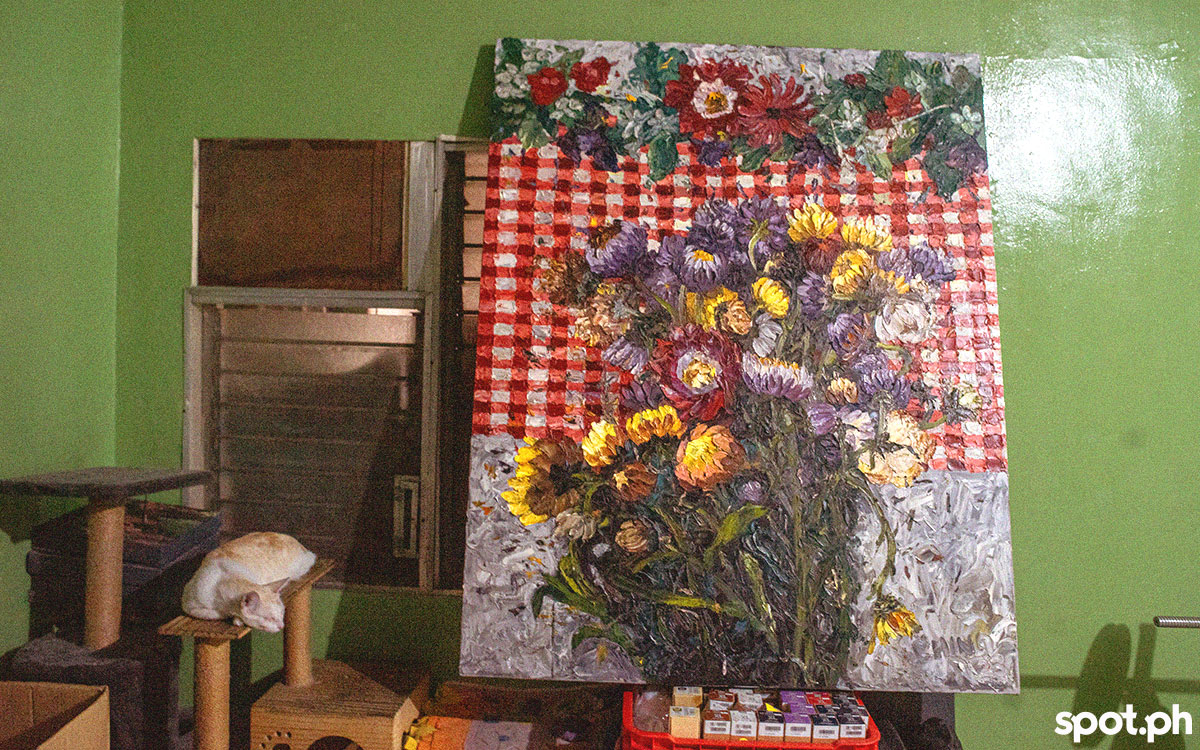
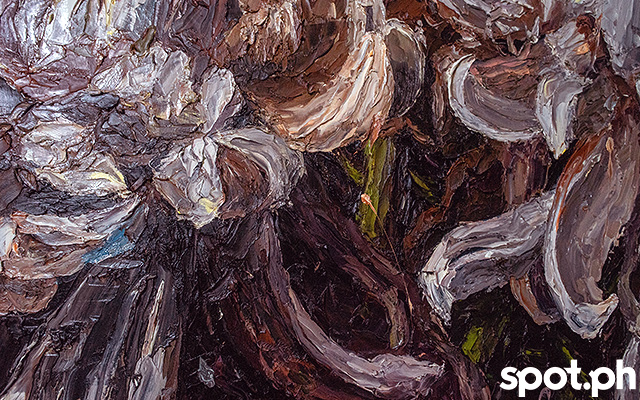
In the history of classical painting, particularly still lifes and portraits, flowers have been depicted while they're in bloom, at the height of their freshness, often paralleled with the beauty of women subjects holding a bunch of flowers as if making an offering. Ching’s rich impasto and textural layerings onto canvas, almost leaning into abstraction, clearly veer away from such depiction and instead attempt to capture contemporary contexts of decay and the inevitable passage of time.
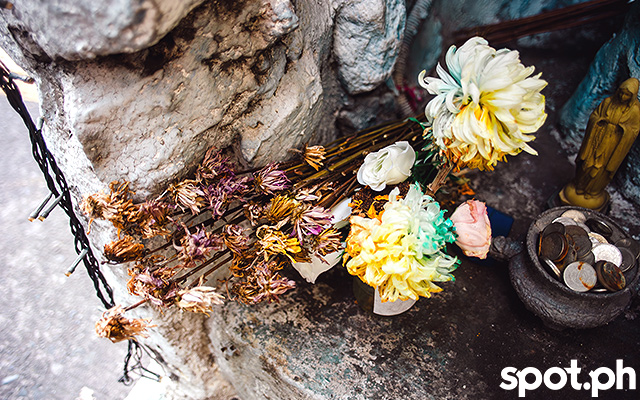
In most of Jonathan's paintings, the flowers are from his mother’s altar and grottos nearby. "She is Buddhist, and in the Buddhist and Chinese tradition, there are offerings to the gods, deities, and ancestors. Deliberate na kailangan na offertory flowers siya. Mas it resonates with me, and mas may meaning sa akin."
Flowers offered at a nearby grotto
PHOTO BY Christine Chung
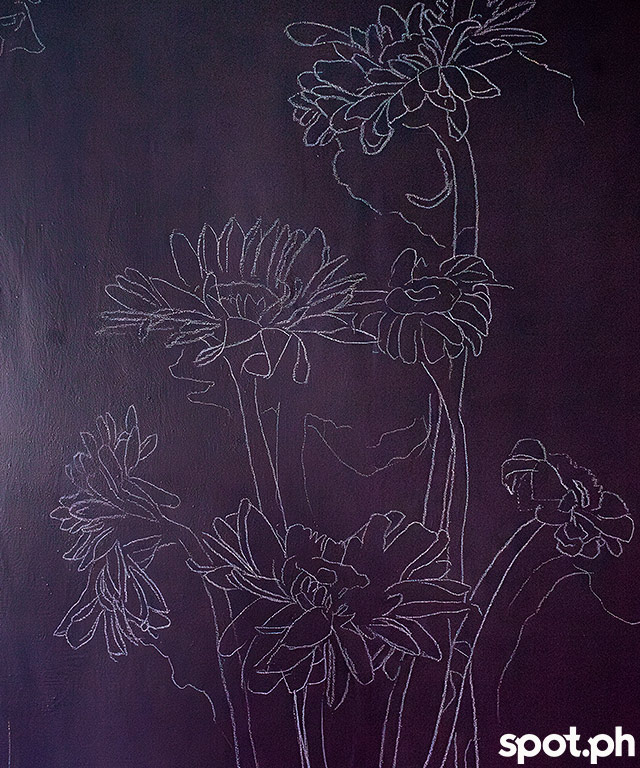
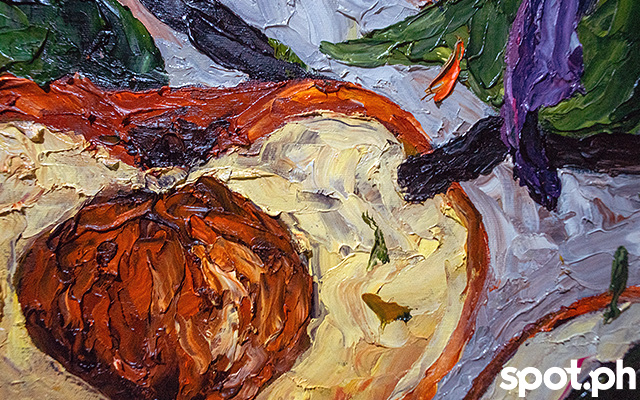
Details of Jonathan Ching's art
PHOTO BY Christine Chung
PHOTO BY Christine Chung
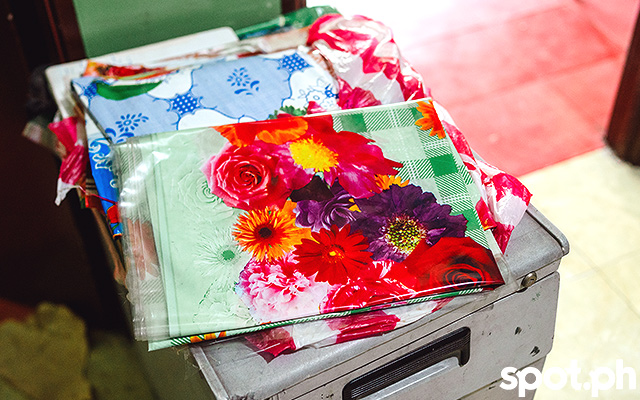
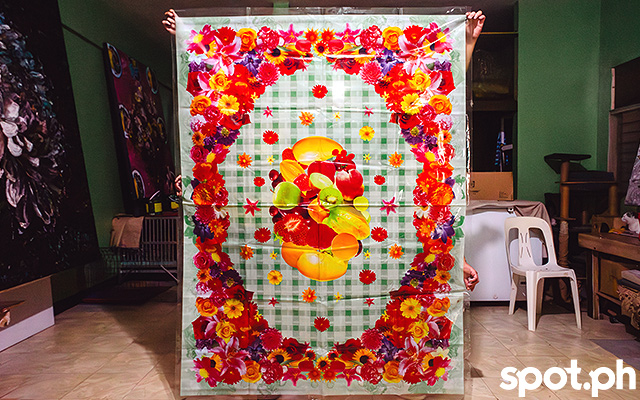
For his Art Fair Philippines 2024 presentation, Ching further explores the imagery of decay as he juxtaposes it against the idea of permanence represented by the unspoiled and pristine state of fruits and flowers illustrated in kitschy plastic table covers. "Maybe it's about the real versus the artificial, our negotiations with our gods, or just the beauty of faded things."
PHOTO BY Christine Chung
PHOTO BY Christine Chung
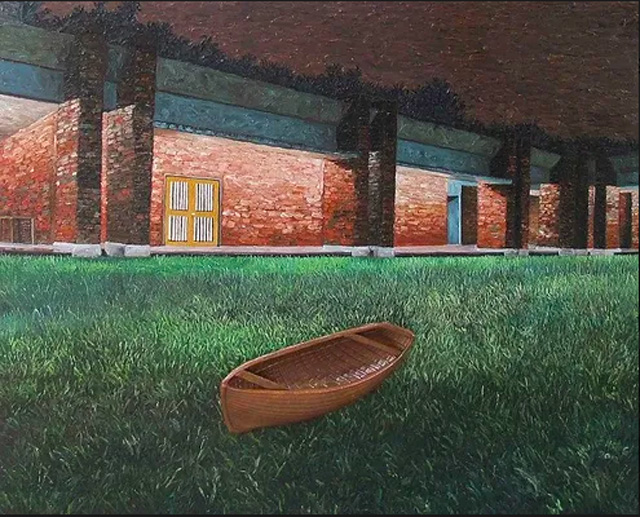
Ching’s 2012 solo show In the Space Between Raindrops at Finale Art File Gallery demonstrates both poetic and painterly approaches to constructing an image to evoke emotions. He paints a seemingly magical but profound scene of a canoe found outdoors lying on grassy ground.
In the Space Between Raindrops (Finale Art File, 2012)
PHOTO Courtesy of Finale Art File
"The idea was we can usually squeeze in the work we love in between other things. The spaces between the raindrops are big enough when aggregated," he says. In reality, Ching has allowed himself to not only make space for his art, but build a room where feelings of fear, wonder, and curiosity can all exist together— which prompts him to continue creating.
Art Fair Philippines 2024 is from February 16 to 18, from 10 a.m. to 9 p.m., at The Link, Parkway Drive, Ayala Center, Makati City. For more information, visit Art Fair Philippines' website.
We use cookies to ensure you get the best experience on Spot.ph. By continued use, you agree to our privacy policy and accept our use of such cookies. Find out more here.

Comments