

This Church in QC Holds the Works of Five National Artists
Take a closer look the next time you're in UP.
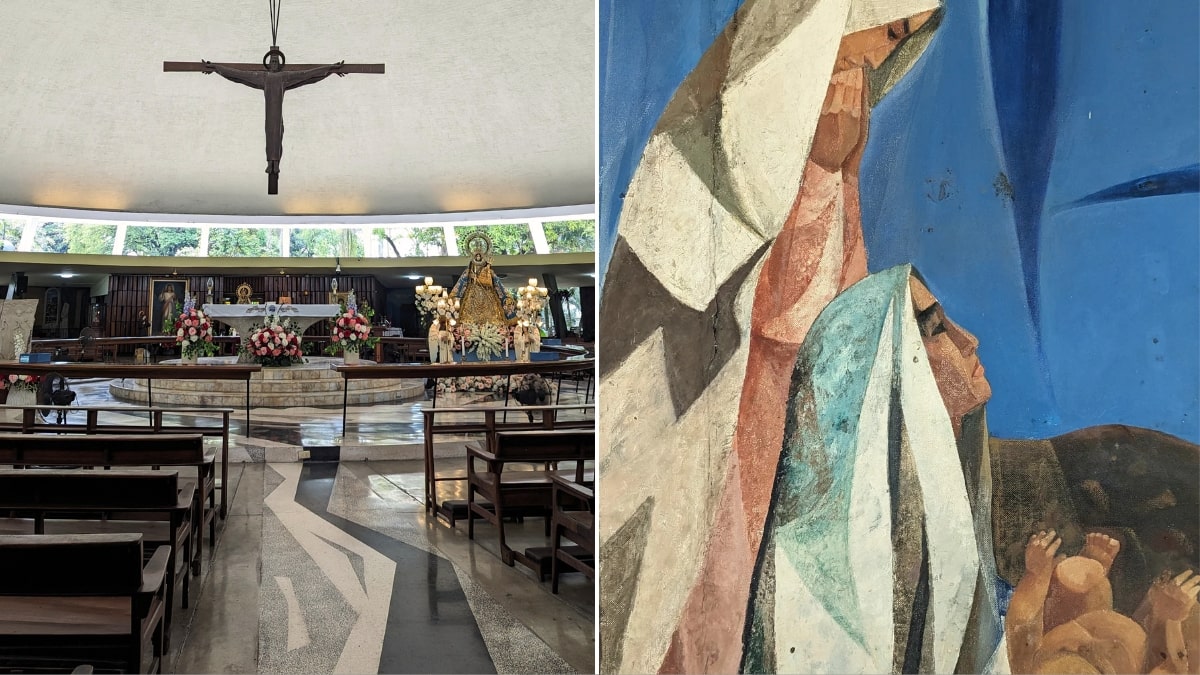
(SPOT.ph) A staple of Sunday happenings, for those who live in and around the Diliman area of Quezon City, is taking a walk in UP Diliman and hearing mass at the Parish of the Holy Sacrifice. The domed structure near the infirmary and the now-being-rebuilt Shopping Center is a familiar sight to many. Rarely do people give it a second glance—yet this place of worship holds more than meets the eye. The next time you hear mass, or simply visit, you may want to take in the works of five national artists that make up the church.
Also read: The Brutalist Architectural Gems to Check Out in Metro Manila
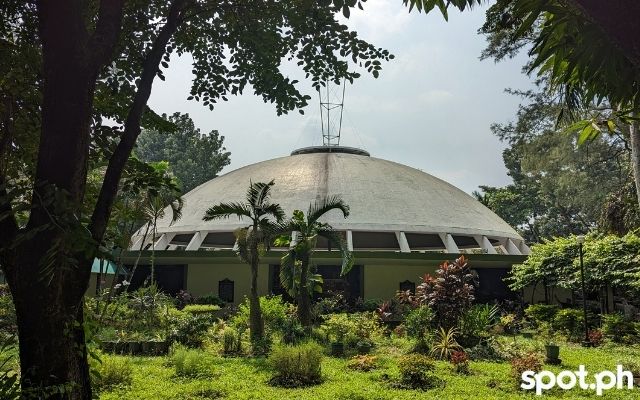
You can find the works of five national artists at the UP Diliman Church
Standing since 1955, the Church of the Holy Sacrifice is a collaboration of five national artists: Leandro Locsin (for architecture), Vicente Manansala, Ang Kiukok, Arturo Luz, and Napoleon Abueva (last four, for visual arts).
Also read: How a 111-Year-Old University Is Stepping Into the Future
The Story Behind the Church of the Holy Sacrifice
What started out as an old sawali and bamboo chapel of the U.S. army structure became a small brown one under the leadership of UP Chaplain Fr. John Patrick Delaney, S.J. Still, the priest did not stop there. Delaney went on to head the creation of a church and eventual cultural treasure.
Locsin was only in his 20s when he worked on the church. You likely know him now for landmarks such as the PICC, the CCP, and more brutalist works of art. Before those standouts, he designed the modernist Church of the Holy Sacrifice, done with a certain lightness opposite the spectrum of his more famous works. None the lesser, of course.
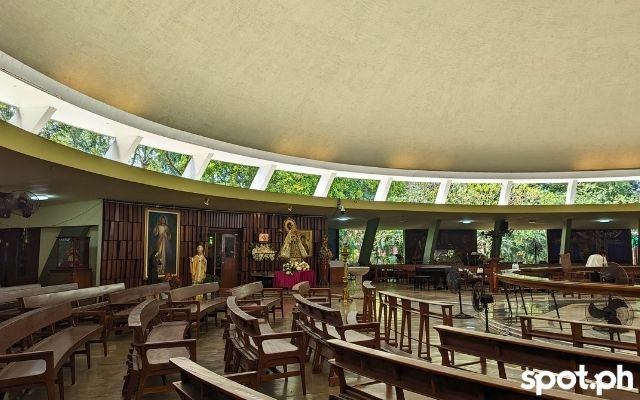
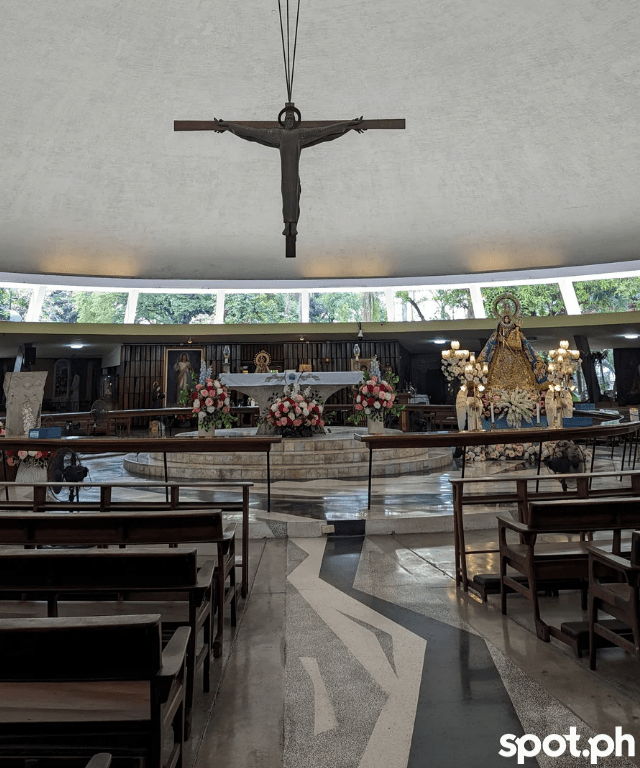
This domed structure incorporates a more egalitarian sense of the church—arguably one of the first to do so. The altar is right at the center, with devotees seated around it in the circular space. Delaney wanted to put an emphasis on the oneness of the priest and parishioners during Holy Mass, thus the less-than-usual arrangement.
A thin-shell concrete dome caps the church. This single feature is arguably what makes the structure so memorable, earning it the nickname of "flying saucer". A signature of Locsin's designs is the incorporatio of sunlight; you can see that in this early work with the way the sun shines through right where the dome connects to the main building. The pure white dome itself—only 10 centimeters thick at the center, it is said—is a feat of engineering courtesy of Alfredo Juinio.
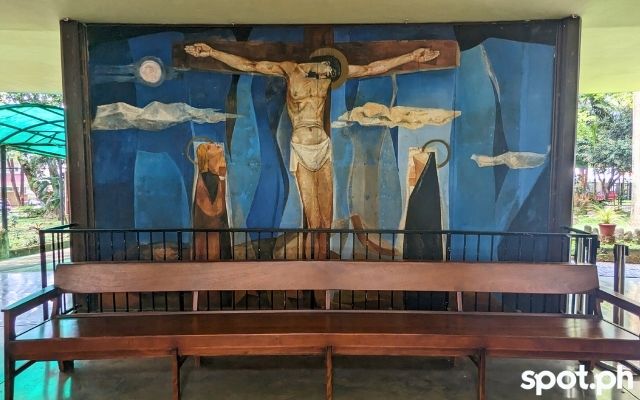
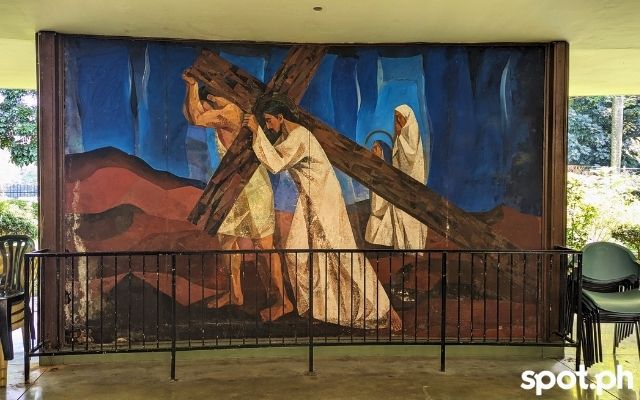
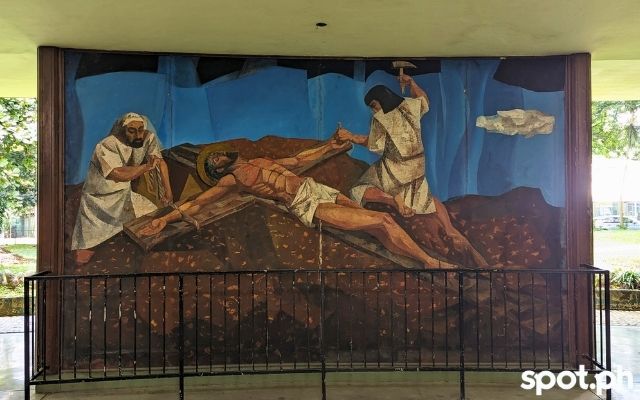
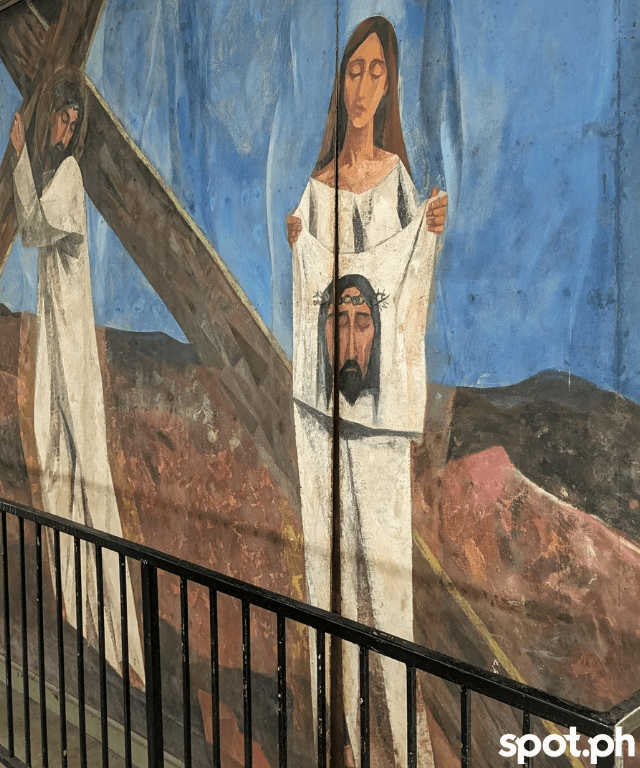
Around the congregation are the Stations of the Cross. These bright murals were made by Vicente S. Manansala with the help of the then much younger Ang Kiukok. He painted a total of 15 murals, all in bright tones that retain their hue today. Manansala was already a revered artist at the time; his most well-known piece "Madonna of the Slums" was made in 1950.
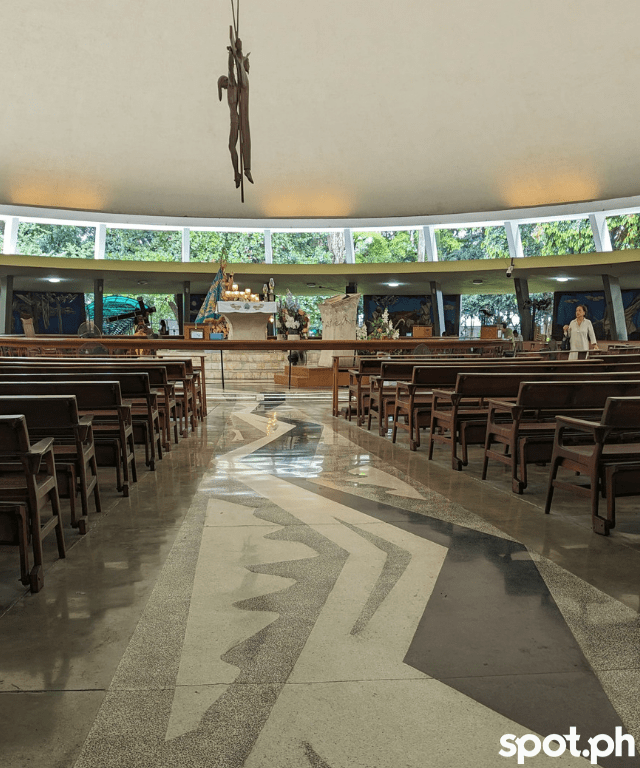
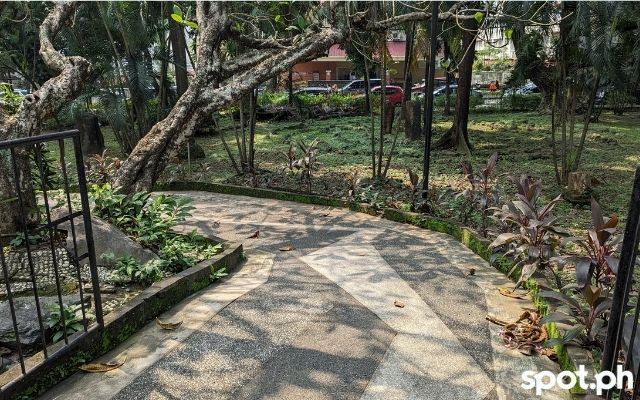
Arturo Luz created a "River of Life" mural that flows from the main archway and three more pathways down to the altar. This mosaic of black, white, and gray marble in the jagged, angled shapes he is known for, represents life flowing like a river from it's source: the altar of God. The themes of the neo-realist pioneer's work continues on in the walkways leading to the church's gardens.
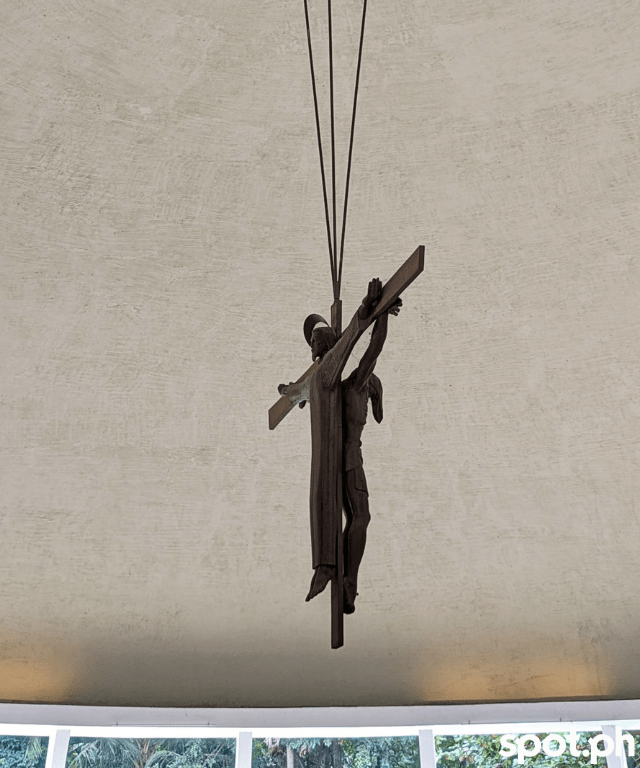
Napoleon Abueva's works include the giant wooden cross and the marble altar. Two figures hang from the cross: the Crucified Christ and the Risen Christ, highlighting the Holy Eucharist. In 1979, the sculptor returned to create the marble altar, with The Sermon on the Mount on one side, and scenes of Christian community on the other. Abueva's works can be found beyond the church; the late artist has pieces all around campus, including the two massive ones that flank University Avenue, serving as a sort of portal to the campus.
Also read:
Here's How You Can See All the Abueva Sculptures in UP
PHILCOA: Then and Now
The church was declared a National Historical Landmark by the National Historical Commission of the Philippines in 2005. At the time they worked together for this structure, the National Artists Award had not yet been inducted—it started in 1972, with the aforementioned artists rewarded the laureate well into the the 20th Century and even after. Shall we call it providence that decades before the recognition, the artists' paths had already intersected, leaving a public mark that we enjoy till now?