


(SPOT.ph) Ah, pochero! This dish originally came from Spain, where it’s spelled as puchero, a word that refers to the earthenware pot it was once typically cooked in. What's fun is that pochero is not unique to the Philippines or Spain, either. It's also cooked in countries like Mexico, Argentina, and Brazil, with each region having their own style of preparing the dish. Here in the Philippines alone, pochero in Central Luzon usually consists of pork belly or ribs cooked with saba, carrots, chickpeas, and potatoes swimming in tomato sauce. All this gives the Tagalog pochero a signature reddish color—a stark contrast to the pocherong Bisaya, which is more soup than stew and resembles the Batangas bulalo, as Northerners tend to remark upon seeing this southern-style pochero.
The pocherong Bisaya is a sought-after dish, especially during cold, rainy days. It is made from beef leg shanks, cooked with cabbage, bamboo shoots, and corncob, sauteed and spiced with ginger and lemongrass, onion and garlic. And we wouldn’t dare forget the marrow, for it is unique to the pocherong Bisaya. You may need to use the long, narrow knife restaurants provide you with to tease the meat out from the bone. Or, if you’re among the ravenous ones, you can suck the marrow from the bone to get the full taste.
We sampled this dish as served by three prime spots in Cebu. We’re talking the places people usually go for their pochero fix with one goal in mind: to find out which of the three well-known restaurants has the pochero worth coming back to time and time again. We tried them out to test the bang-for-your-buck factor, location and accessibility, and of course, flavor.
Also read:
Smackdown: Cebu’s Most Popular Croissants
10 Comfort-Food Spots in Cebu You Can Hit Up for Deliveries
Midnight Munchies: 10 Late-Night Restos for A+ Eats on GrabFood and Foodpanda
We try out these popular restaurants to find the best pochero in Cebu
Marjo’s Pochero
Gorordo Avenue, Cebu City (Across BDO Gorordo and beside QC Pavilion)
Contact: 0905-237-9168 | (032) 407-5594
Email: info@marjospochero.com
Website: marjospochero.com
Priced at P555

Marjo’s Pochero has been around since 1969, making it a go-to place for Cebuanos for quite some time now. While the name has stayed the same, it has passed hands several times over the years. The place is open from 7 a.m. to 9 p.m. on weekdays and from 7 a.m. until 10 p.m. on weekends. The restaurant’s signature dish is already in the name, for Marjo’s prides themselves on their own version of the beloved dish. Located along Gorordo Avenue, the restaurant is arguably the most accessible of the three in this list because it’s closest to the heart of the city.

Priced at P555, the pochero here comes in a serving that’s just right for two people with a fair appetite. This version is the most affordable among the three, and also has the smallest serving—proportionate to its price. The dish has plenty of cabbage, giving the broth a distinctly leafy-green flavor. As for the sweetness of the corn, we find it too mild for our liking. Its soup is quite light in terms of flavor and consistency. On a scale, it tilts abundantly to the leafy side rather than to the sweet, salty, or meaty flavor profiles. It’s perfect for those looking for that gentle flavor on the healthier, (seemingly) guilt-free palate, especially if you don’t like fat swimming in your soup. Meat-wise, it’s definitely chewy-and-stringy rather than melt-in-your-mouth soft. The mild flavor suits a more veggie-leaning palate; we boosted ours with a bit of soy sauce and chili.
Their bone marrow portion is the smallest of the three. You will need a small knife to dig inside the bone and pluck the marrow out. It has a softer taste compared to the other two, so chances are you will not find it as overpowering; a possible preference for some. There’s also the factor of size, so if there’s more than one eating, a debate on who gets to enjoy the prized marrow may ensue.
The verdict: Marjo’s pochero leaves a very light aftertaste; perfect if you’re craving for a bowl of pochero but don’t want an overload of flavor lingering in your mouth.
Kusina Clasica
GND Building, F. Cabahug Street, Cebu City
Contact: 0938-412-1740
Facebook: www.facebook.com/pages/category/Restaurant/Kusina-Clasica
Priced at P680
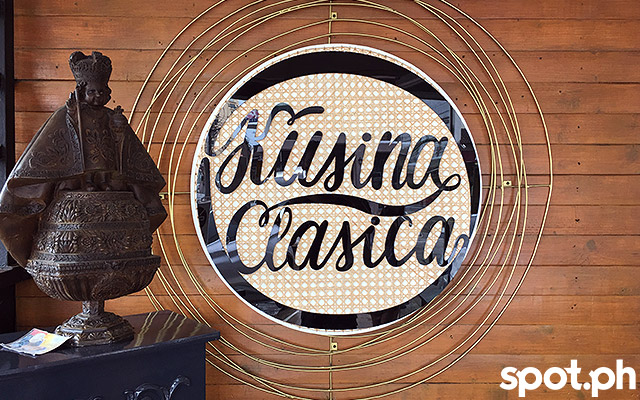
Located on F. Cabahug Street, Kusina Clasica is a go-to place for many, especially since it’s close to popular spots. It’s near the GAGFA Tower and nightlife hubs, such as ICON, along with other nearby drinking circuits. It’s open from 7 a.m. to 11 p.m. from Sunday to Thursday, and 24 hours during the weekend on Friday to Saturday. Ah, nothing is better than having a late-night pochero after a drink or two. Or better yet, having one before sunrise to nurse a potential hangover. The place boasts traditional Filipino dishes, which are made to suit the Cebuano taste. Plus, with the dining area on the second floor overlooking the street, it makes a great people-watching place, too. Note that Kusina Clasica is often a busy place, especially late in the afternoon or during evenings.
Priced at P680, their pochero is served piping hot in a huge bowl that can more than comfortably feed about three people (perfect for friends, family, or two people dating with their forever-alone friend tagging along! Not an attack). Upon serving, you’ll immediately get a whiff of the pochero’s mouthwatering aroma, but what further triggers your appetite is seeing the sheer size of the dish.
The huge island of beef shank and bone towers over the hot bowl of soup, surrounded by shreds of cabbages and bamboo shoots and a single bright yellow corn cob. The meat can be overwhelmingly huge, to be honest, especially if there’s only two of you. Hey, who wouldn’t want to get their money’s worth? Moving forward with the eating part, lest we kept you waiting too long.

Kusina Clasica’s pochero has a sweet aroma of corn, and yes, you can taste it immediately upon taking a sip of the broth; a light note amidst the bits of beef fat swimming in the broth. Said sweetness adds a layer of mildness that lets other flavors in. Part salty, part savory, this dish has a subtle combination of flavors. If by chance you’d like a stronger blast, a bit of sili can fix that right away. The spiciness helps create a tug-of-war on your palate.
The beef is remarkably soft. To our pleasant surprise, it breaks away easily using just a spoon—no need for a knife, for the meat is so tender it almost melts in the mouth along with the flavorful fat. The marrow from this Kusina Classica dish has a particularly strong, savory taste, and its portion is the largest among the three in the list. It has a soft and almost spongy texture that easily breaks down, almost like cream. The marrow in Kusina has a rather unique blend of fattiness with a metallic tinge that may appeal to others. If marrow isn’t your thing, we’d still suggest this one is worth trying; even just a pea-sized portion will give you a good burst of flavor. As for the aftertaste, it’s more on the sweet side—the sweet corn cob taste lingers.
The verdict: Overall, this lands on the must-try list. We also recommend you come in hungry, to make the most out of the stew. Pair it with a cup of rice or two, and you’ll be smiling in satisfaction.
Abuhan Restaurant - House of Pochero (Not to be confused with Abuhan Restaurant Mango)
Bacalso Avenue, Mambaling, Cebu City
Contact: 0936-846-9166 or (032) 344-1532
Website: abuhan-house-of-pochero-restaurant.business.site
Priced at P750 (medium) and P800 (large)

For over 40 years, Abuhan Restaurant: House of Pochero has been among those classic Cebuano places known for its home-cooked flavors and traditional recipes. The restaurant’s emphasis on tradition is evident in the name itself, as abuhan means “the fireplace in the kitchen,” and as the establishment puts it, it’s where long hours of preparation is devoted to creating healthy and hearty meals for the family. This famous restaurant used to be located in the former Kan-Irag Hotel in F. Ramos Street but you can now spot it in Mambaling. Of the three, it’s farthest from the city center. It’s open from 10 a.m. to 9 p.m. daily.
Abuhan’s pochero comes in two serving sizes, medium (P750) and large (P800). The medium serving is perfect for two people to share, even those with huge appetites. The first thing you’ll probably notice is the thickness of the soup, with little trails of oil giving the surface a nice sheen. The beef portion is large for the bowl it is in, also towering like a hill, with plenty of visibly long bamboo shoots, cabbages, and a chunky corn cob as well.

As for the taste, it is far different from the rest on this list. Because its aroma is faint, nearly imperceptible, really, the broth’s burst of flavors is bound to take you by surprise, as it did us. The moment the soup hits your tongue, you’ll taste the lemongrass and ginger, followed by a smooth flood of mild sweetness, and then a lingering hint of spice. What makes its sweetness special is that its mellowness doesn’t take over from the rest of the spices. The broth strikes a balance between all the flavors so well we argue you might as well drink the soup from a cup as if it were a savory tea. Not to mention the broth is viscous, flavorful, and soothing as it slides down your throat.
We nearly wolfed down half a bowlful of the soup before we even ventured into the meat. We didn’t even think of adding soy sauce and chili to it; that’s how flavorful it is. We daresay that the broth alone is more than enough to pair with your rice.
The beef is a bit on the stringy side, but still nicely tender. It has a mild savory flavor, and we had to either eat it along with the soup or dip it in soy sauce. Of the three choices, we have to say that the marrow here has the most approachable taste; right between strong and mild, striking a safe balance to keep the taste from going overboard. It looks less bloody and more fatty, unlike Kusina Classica’s. While not as huge as Classica’s portion, Abuhan’s marrow is sizable enough for two to share with no argument.
The verdict: We can see Abuhan’s pochero as somebody’s ideal comfort food. It has a rustic charm that brings to mind lola’s cooking during rainy days, thanks to its traditional taste that seems like it comes from a generations-old recipe. The combination of flavors is indeed over 40 years’ worth. We’re willing to bet it really was cooked over an abuhan.
The Grand Winner
Among these three prime pochero spots, we have to give it to Abuhan. It was able to strike the perfect balance when it comes to size, portion, taste, and price. It’s the priciest one in the list, but it delivers that gustatory knockout punch that leaves you thinking about it long after eating. Not only does it give you a lasting, dare we say enjoyable, aftertaste, but also a more lasting after-thought. It’s not without reason that families here have enjoyed it for generations, and folks visiting from elsewhere head to Abuhan when they can. The fact that there are Cebuanos—those who have long since moved out of the island and lived in other cities—who still think with longing about Abuhan’s pochero, proves this spot truly serves up a taste of their beloved hometown.