
Is It Really the Rainy Season When It's Still So Hot?
PAGASA has these criteria as basis.

(SPOT.ph) Rainy season is officially here, state weather bureau Philippine Atmospheric Geophysical Astronomical Services Administration (PAGASA) said Friday, June 2, with no regard to the sweltering heat you're feeling or the sweat on your back.
The weather bureau monitors rainfall, not temperature, as part of its criteria in announcing the start of wet season. Scattered thunderstorms, Super Typhoon Betty (international name Mawar) and the monsoon rains that dampen the western parts of Luzon and Visayas were enough to signify the start of wetter days ahead, it said.
Monsoon breaks, or breaks in rainfall events, may still occur and it can last days or weeks, PAGASA said.
Read more: Why Does it Get so Hot in Dagupan During the Dry Season?
How PAGASA determines the onset of rainy season
Rainy season can only be declared when certain criteria have been met, based on PAGASA's amended criteria for the onset of rainy season last May 2019.
Also read: Why Karding, Like Odette and Yolanda, Struck During Christmas Months
One of those is the start of five-day period (between May to July) with rainfall of 25 millimeters or more, with three consecutive days of at least 1 mm of rainfall per day.
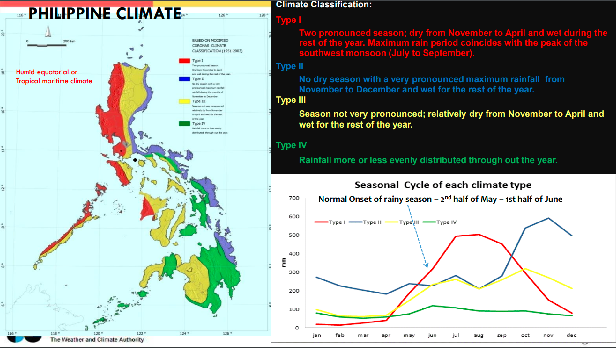
At least seven or more of these areas in the Philippines under the Climate Type I (which has two pronounced seasons: dry from November to April, and wet during the rest of the year) must meet criterion no. 1:
- Laoag
- Vigan
- Dagupan
- Iba
- San Jose, Occidental Mindoro
- Metro Manila (Science Garden, Port Area, Sangley Point, NAIA)
- Ambulong, Batangas
- Iloilo
- Muñoz, Nueva Ecija
- Clark, Pampanga
- Cubi Point, Subic
- Coron, Palawan
- Cuyo, Palawan
For Metro Manila, at least two stations must be met for it to satisfy criterion no. 1.
It also has a wind criteria, where prevailing winds should come from the west (south-southwest, southwest, west-southwest, west, west-northwest).
Once these criteria are satisfied, PAGASA will declare the onset of rainy season, with the five consecutive days when the criteria are met as the specific onset dates.
Also read:
The Category Is Depression: Tropical Cyclones, Other Bagyo Terms Explained
Why Does PAGASA Name Typhoons After People?