
SPOT.ph Roundup: 5 Menstrual Products to Try That Aren't Sanitary Pads
Bleeding doesn't have to be this hard.

Products recommended on our websites are independently selected by our editors. If you buy something through our links, Summit Media may earn an affiliate commission at no extra cost to you.
(SPOT.ph) The Philippines has a long way to go when it comes to menstrual health and hygiene. The lack of information translates to a lack of options, so it isn’t surprising that menstrual pads remain the top—and often only—choice for Filipino women everywhere. Inserting an object up there to collect blood flow is still frowned upon in a country where conservatism prevails. However, anyone who has ever used sanitary pads knows they aren’t exactly the most comfortable to deal with.
Nothing says you’re on your period like wearing a sanitary pad. It can show through a tight-fitting pair of jeans, it can make ruffling noises while walking, and it can carry a strong stench one can be hypersensitive to. You notice every cough, every squeeze, every drop of blood that comes out of you. It feels a lot like being in a diaper, too, one that requires changing every four hours or less.
So in case something out there (read: society) has stopped you from exploring other choices, we’re here to show you that other menstrual products exist. No need to settle. Finding out which one is right for you might necessitate a few trial and errors, as each one serves a different function and purpose, but hey, figuring out what works best for your body is always worth the journey. Below is a handy guide to tampons, menstrual cups, menstrual discs, cloth pads, and period panties.
It might be tempting to purchase the cheapest product you find on Shopee and Lazada, but try to resist the urge! Menstrual products are not to be taken lightly, especially ones that go inside the body. You’ll want a product from an established brand that is FDA-registered. Anything else might be harmful to your vaginal health.
With that said, let’s explore some options.
Also read: Menstruation Privilege in La Union Gives LGU Workers Monthly WFH Passes
Types of menstrual products
Tampon
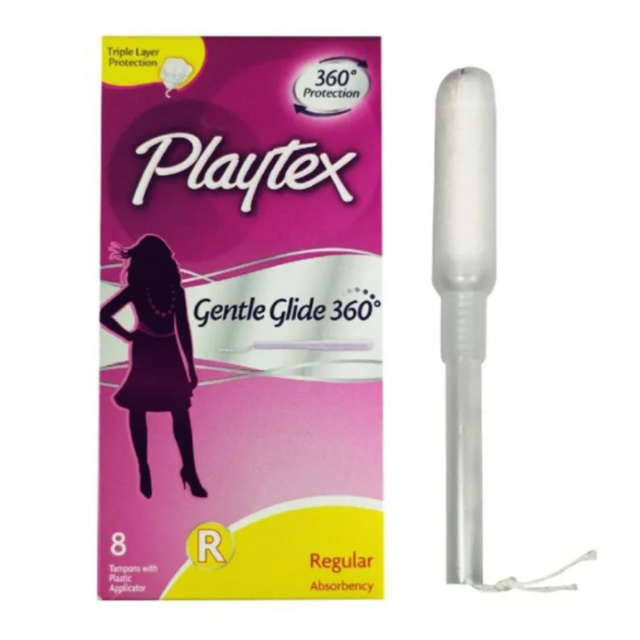
There’s a lot of anxiety surrounding the tampon, especially if you’ve never seen or tried one. Still, it is a risk worth taking, considering that tampons allow you to function like you aren’t bleeding. You can pee, swim, and exercise with peace of mind.
Tampons are bullet-shaped cotton rolls that are inserted into the vagina to soak up blood. It comes in many absorbency ranges: light, regular, super, and super plus. In most cases, the tampon is enclosed in a plastic applicator so sliding it inside is much more doable than just shoving dry cotton in. You also shouldn’t feel anything once it’s tucked inside.
Every tampon will come with a string on the tail-end of the cotton for easy removal. However, tampons expand as it absorbs blood, so pulling it out might pose a bigger challenge than actually getting it in. Take note that using tampons will come with a risk of toxic shock syndrome (TSS), however rare it is. The good news is that TSS isn’t hard to avoid—just make sure to replace tampons every four to eight hours, just like what you already do with menstrual pads.
Fortunately for us, tampons have become more available in generic drug stores like Mercury Drug and Watsons, making it the only menstrual product other than sanitary pads to be easily accessible. Some reliable brands we recommend are Playtex, KOTEX, and NALA. Tampons come in packs of 8, 12, and 16, with prices ranging from P210 to P500 per box.
Menstrual cup
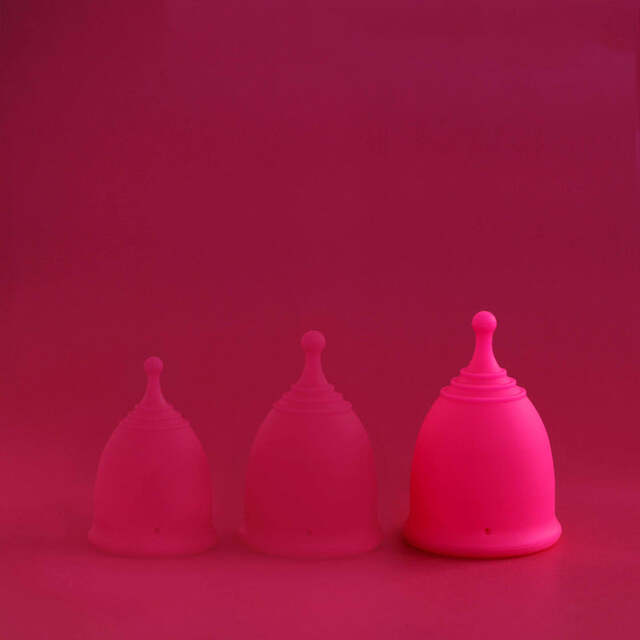
Menstrual cups are for the active woman who doesn’t want her daily routine bogged down by constant product replacing. What we mean by that is that a menstrual cup can hold twice the amount of blood than a sanitary pad or tampon, so it can be worn for up to 12 hours. It’s also a much more environmentally friendly option compared to tampons.
However, insertion of this funnel-shaped product can be a bit more daunting compared to a tampon considering its width. It makes use of suction to sit in the vaginal canal, so finding the correct fit and position for you will also have its learning curve. Menstrual cups can also be one of the messiest products to deal with—grabbing the cup from the inside often necessitates squeezing it, which can cause the collected blood to spill over. The general rule of thumb is that smaller cups are for women who haven’t given birth vaginally, while larger cups are for women who have. It’s not so much about the vaginal size but the pelvic floor muscles that tend to weaken during and after the experience of pregnancy.
The brand we recommend is Sinaya Cup, the first local brand for menstrual cups in the Philippines. Sinaya cups are straightforward and can be used for up to two years. However, its price point can be expensive for a beginner who might not even be sure if a menstrual cup is for them. Luckily, menstrual cups are slowly rising in popularity over the years, so there are now plenty of other options to choose from like Bulan, Haliya, R/evolution, and Loop, to name a few. It’s also now offered at Mercury Drug Stores and Watsons.
The price ranges from P350 to P1,200. It might be more expensive than a sanitary pad or tampon at first glance, but take into account its durability for long-term use—it might even end up being cheaper than you realize.
Also read: 10 Stores to Tap When You’re Finally Ready to Use a Period Cup
Menstrual disc

You’ve heard of a menstrual cup, but what about menstrual discs? This is perhaps the least popular option in the country, but that doesn’t mean you should be crossing it out.
Menstrual discs are placed at the base of the cervix, which means it’s inserted much higher up than where tampons and cups are situated. We only recommend going this route if you’ve reached that super healthy relationship status with your body wherein you are at peak familiarity. But like most things, it takes practice. Some menstrual discs are removed using a silicone string, while others have a looped handle to provide a better grip.
Another difference between a cup and a disc is that the latter can be used in another activity without inconvenience: sex. In fact, plenty of brides are encouraged to pack up on menstrual discs to save the honeymoon—and who can say no to mess-free period sex?
Speaking of mess-free, menstrual discs are also perfect for those who hate the chaos that often comes with the removal of tampons and menstrual cups. There are menstrual discs for one-time use, which might be a more preferable option for those who don’t want to go through the inconvenience of cleaning the sink and toilet of blood stains. However, the price of convenience is that this option isn’t very environmentally-friendly.
You’ll find reusable ones on the market, but they’re a bit rarer to come by. If you’re in it for the long run, we recommend brands like Serene, HER Period Co., Bessy, Higala, and Ziggy for this one.
Cloth pad
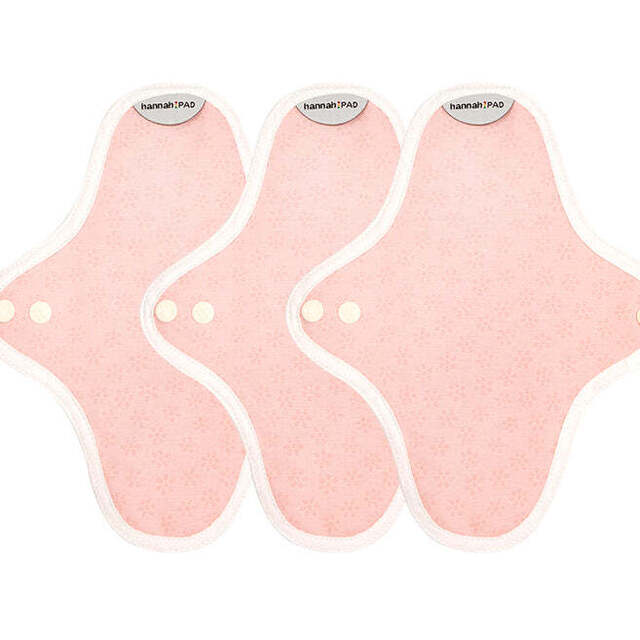
Want to stray away from sanitary pads, but not committed enough to forget about them completely? We understand the sentiment—and so do many other brands.
Cloth pads are a response to single-use products that so many Filipino women are already familiar with, which means there’s no more learning curve to get right into this. Like menstrual cups and discs, cloth pads can last up to two years or even longer when properly cared for, but its price range is way cheaper starting at P150. It’s basically friendlier to the wallet and to the environment as long as you’re willing to put in the time and effort to wash them as necessary.
You’d want to pick one that is simultaneously absorbent and waterproof. The waterproof layer will ensure the bottom will be free from leakages, while the blood seeps to the absorbent layers. It’s also good to be on the lookout for bamboo charcoal cloth, which is hypoallergenic and helpful for odor absorption.
The sizes are similar to sanitary pads, with pantyliners, day pads, and overnight pads to choose from depending on how heavy your flow is. We recommend buying two to three pieces of each size so you can use them in rotation (i.e. use one while the other has just been washed and is waiting to dry). Check out brands like Hannah, Ka Nami Pasador, and Simula, but there are also lots of other small-scale finds available on Shopee and Lazada.
Also read: 10 Online Stores to Hit Up for Period-Proof Undies and Reusable Pads
Period panties

If you can’t be bothered to wear any menstrual products at all, then period panties are for you.
Period panties sound exactly what it promises to be—it’s perfect for those who don’t want to have anything inside them but also do not want to deal with the feeling of being in a diaper. Tempting as it sounds, the truth is that free bleeding is not for everyone. It will take some time to get past the fear and paranoia of leaking, but the journey should be smooth-sailing once you overcome that.
This pick is highly similar to a cloth pad with its absorbent and waterproof features minus the bulk. Period panties can hold up to 30 to 40 ml of blood. Having an antimicrobial layer will also reduce the odor, too. You can wear them for up to 12 hours but changing them regularly will leave you with a fresher experience. It’s best to pair period panties with another menstrual product like a sanitary pad on heavier days,then leave period panties to handle the rest of the lighter days.
Many reputable brands have started to offer period panties to the mainstream market like Uniqlo, Barebone, Lily of the Valley, and Mirko. However, take note to only buy period panties that are 100% PFAS-free, the chemical that makes products resistant to heat, stains, and water. Its presence is beneficial for period panties, but having long-term exposure to PFAS will lead to several health issues like high cholesterol, increased risk for certain types of cancer, and pregnancy complications.
Again, we recommend buying period panties in three pieces or more, so you’re able to alternate uses while some are in-between washes.
Links are updated regularly and as much as possible but note that products can run out of stock, discounts can expire and listed prices can change without prior notice.