
SPOT.ph Tries: What It's Like Spending the Day at teamLab Planets Tokyo
Here's another destination to add to your Tokyo itinerary.
Products recommended on our websites are independently selected by our editors. If you buy something through our links, Summit Media may earn an affiliate commission at no extra cost to you.
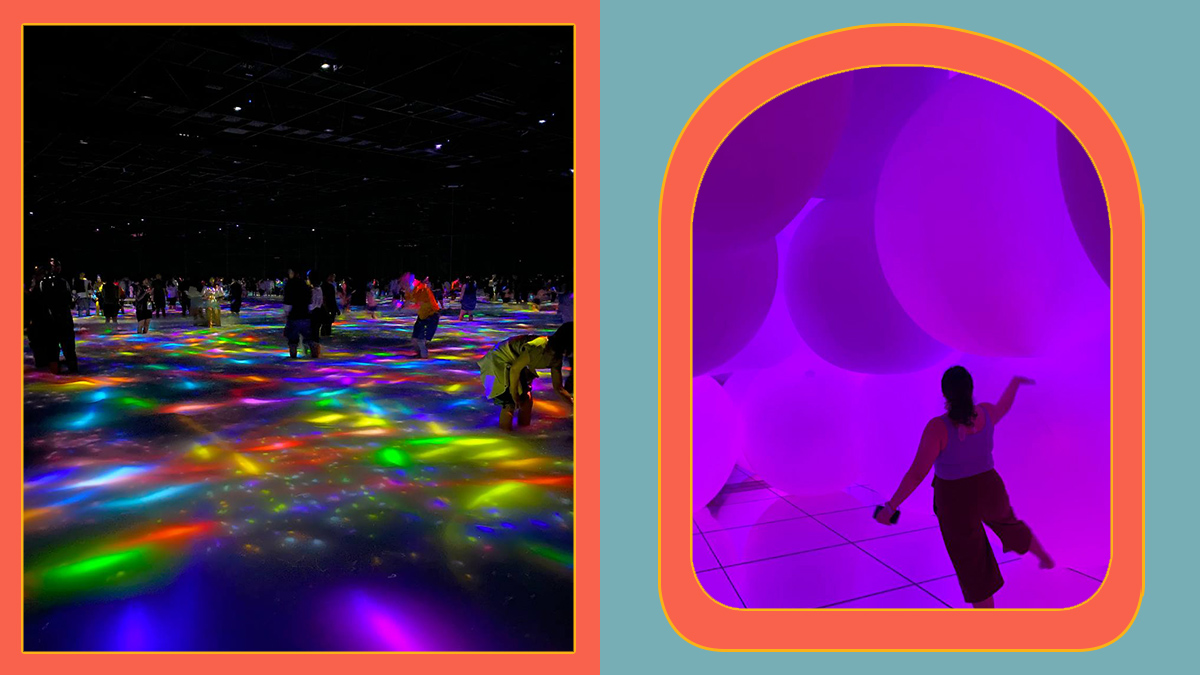
(SPOT.ph) Japan is a destination of choice for most Filipinos. Whether it's a trip to enjoy the natural sights and man-made attractions or simply one to experience first-world living, the Land of the Rising Sun offers travelers many things to do. During a recent trip to the Japanese capital, we got to explore TeamLab Planets Tokyo, an innovative, multi-sensory, multimedia art museum. We experienced everything this attraction has to offer and had an absolute blast. Here are some of the highlights from our trip.
Also read:
10 Under-the-Radar Destinations in Tokyo and Kansai for Your Japan Revenge Trip
Attention, Potterheads: Tokyo's Harry Potter Theme Park Opens in June
You Can Soon Buy Tickets to the Studio Ghibli Theme Park Online
Here's what you need to know about teamLab Planets Tokyo:
TeamLab Planets Tokyo is an immersive art space that combines nature and technology for a full sensorial experience. Located in Toyosu, this expansive attraction consists of two main spaces in the exhibit hall called the Water and the Garden area, an outdoor ramen and flower shop with a special dining room exhibition, and a multimedia pillar that not only changes with your presence but one that you can control right from your fingertips.
Although it's arguably smaller compared to other teamLab exhibits, teamLab Planets Tokyo is unique in that you immerse your entire body and the bodies of those around you into the art and make it your own. Here, the boundary between the body and the artwork dissolves such that what you see every time you visit is the collective work of all the guests interacting with the pieces. Lines between the self, others, and the world around you are blurred as you all interact to create a beautiful, once-in-a-lifetime work of art.
How to Get Tickets
Tickets for teamLab Planets Tokyo can be purchased directly from their website. However, due to demand, tickets to the exhibition are released in batches for the upcoming months. It is recommended that you book weeks, if not months, prior to your visit to ensure the availability of tickets.
Here are the prices for tickets to enter teamLab Planets Tokyo:
- Adults: JPY 3,200 (P1,220)
- Students: JPY 2,000 (P765)
- Children: JPY 1,000 (P383)
- Persons with Disability: JPY 1,600 (P612)
- Children 3 years old and younger: Free
Alternatively, you can purchase tickets from third-party sellers like Klook.
TeamLab Planets Tokyo is open from 9 a.m. until 10 p.m., with the last entry being at 9 p.m.
Entering teamLab Planets Tokyo
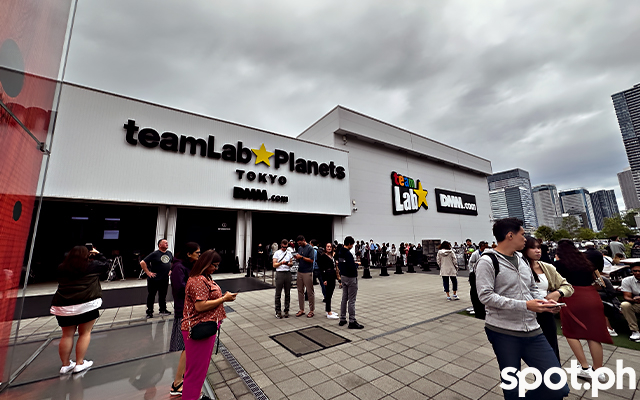
Before you even enter the main exhibit halls, you can already have a feel of the exhibit you will see inside. In the outside public area, guests can already interact with some artworks: the "Universe of Fire Particles Falling from the Sky," the "One Stroke Bench," the "Table of Sky and Fire," and "Reversible Rotation-Non-Objective Space. "
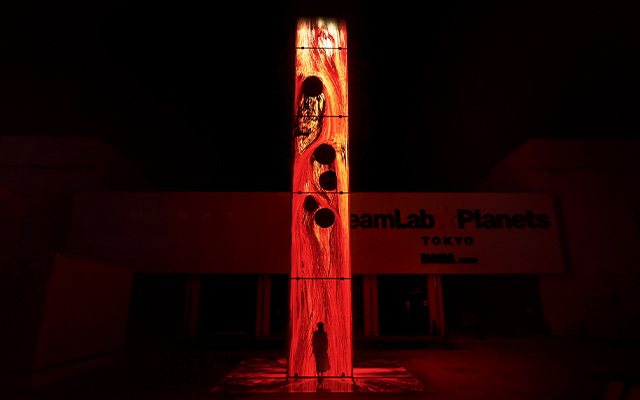
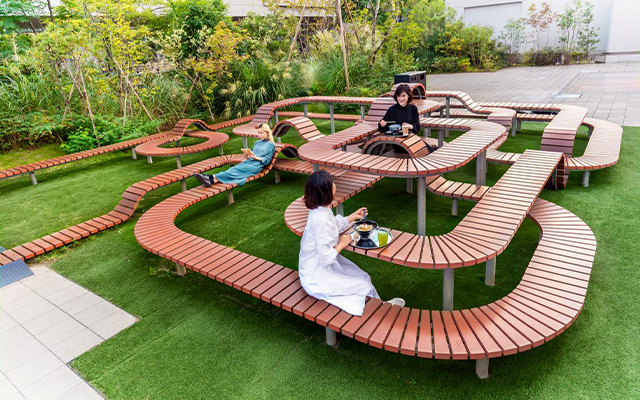
These artworks can be viewed and interacted with even without an entrance ticket. Additionally, those who arrive early and want to have a meal before entering the exhibit can do so at the Vegan Ramen UZU Tokyo, which has a stall within the public space.
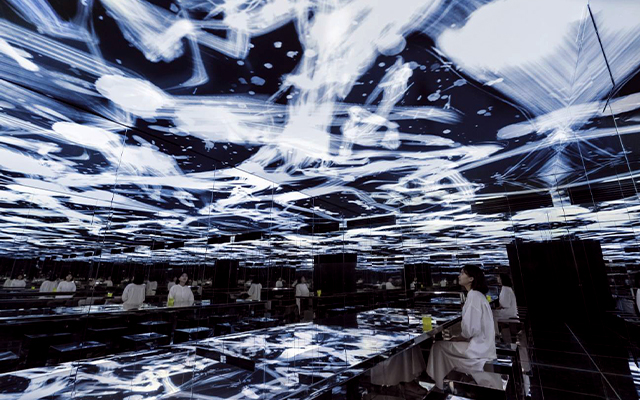
But if you think it's going to be just like any other meal at a ramen house, think again. When you eat your bowl of noodles, you can choose to do it indoors and experience the "Reversible Rotation-Non-Objective Space" installation while the "Spatial Calligraphy" artwork surrounds you and rotates in a clockwise and counter-clockwise direction blurring the lines between table, art, and consumption.
Alternatively, you can also dine outdoors on the "One Stroke Bench" or on the "Table of Sky and Fire," which perfectly reflects the surroundings and makes it seem like you are eating on perfectly still water.
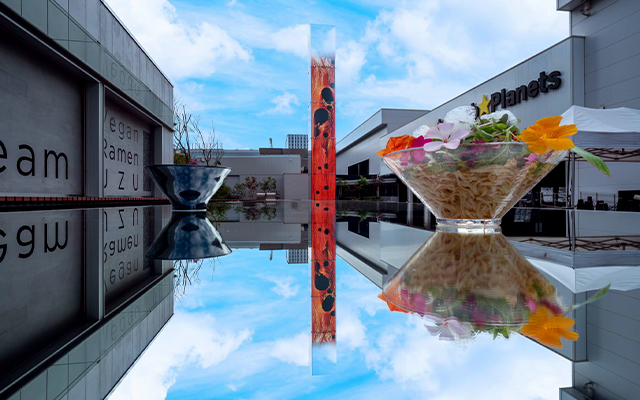
Once you're done exploring the outdoor areas, queue up and get ready to enter the main exhibit. On good days there will be no lines, and entrance can be swift, but on peak days like weekends and public holidays, bring a lot of patience as you may end up having to line up for hours.
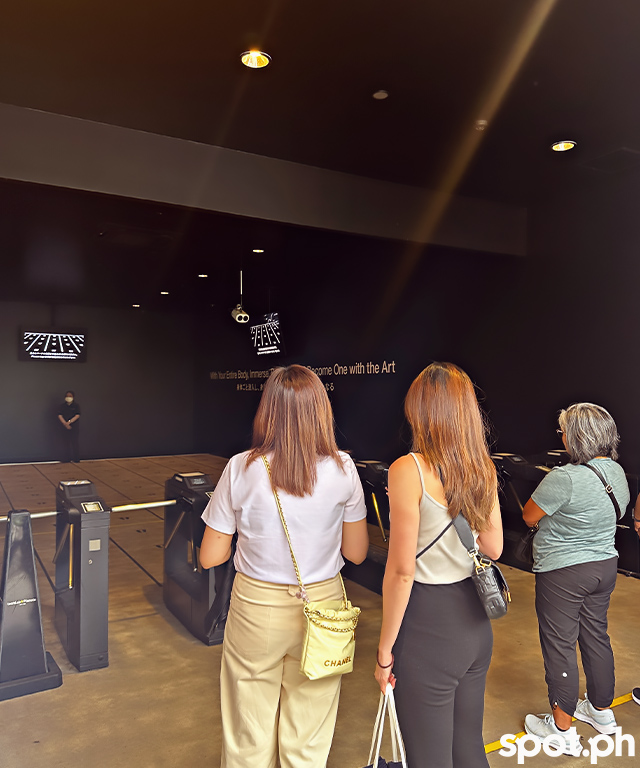
Before entering the exhibit, all guests will be briefed about how to go around the halls. Don't know how to speak Nihongo? Don't worry. The guide is delivered both in Japanese and English.
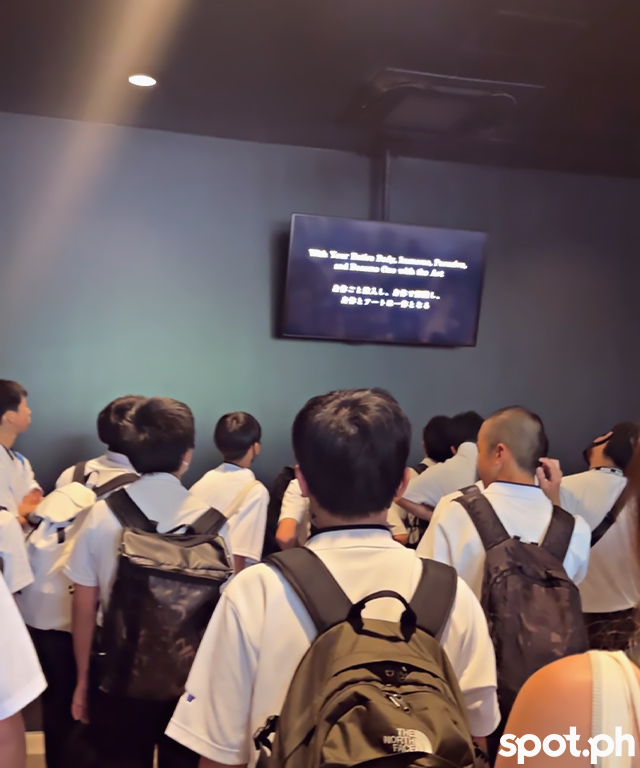
At this point, you will be asked to take off your shoes. ICYDK, the exhibit is meant to be experienced barefoot to allow the viewer to fully immerse in the artwork spaces and become one with the world. If there's one thing you should know, it's that the art at teamLab Planets Tokyo is meant to be experienced with all five senses, not just with your eyes and ears.
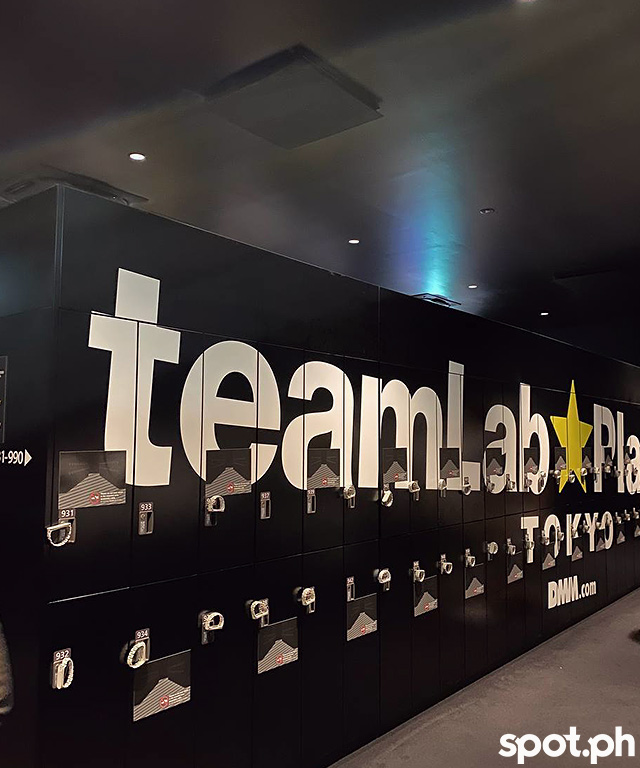
You can store your shoes and other bulky items in the lockers provided. We suggest leaving all your bags here and not bringing anything aside from your phone or camera.
We're going to tell you now that your feet will get wet in this exhibit. In some places, the water can reach up to an adult's knee. We recommend wearing something that is above the knee or something that can be folded. Otherwise, you might want to consider bringing a change of clothes. There are also mirrored floors, so we wouldn't recommend wearing skirts or dresses, but this is Japan. If you are wearing a skirt or a dress, just ensure you have shorts underneath. Rental shorts are available should you need them.
Exhibitions in the Water Area and the Garden Area
Once you leave the locker area, you will reach a fork in the path. You have to choose between going to the Water Area and the Garden Area. Don't worry, regardless of which you choose first. You can go back and visit the other one after. For an optimal experience, we recommend visiting the Water Area first, as most of the exhibits are in this part. If you don't want to get your feet wet or are unable to go around non-flat and inclined areas, please skip the Water Area.
The Water Area
When you search teamLab Planets Tokyo on Google or Instagram, most IG-worthy photos are taken in this area. We don't want to give away everything you will experience at the attraction but make sure to spend a lot of time in these sections as they are the core experiences at teamLab Planets Tokyo:
The Infinite Crystal Universe
Get ready to be dazzled with hundreds to thousands of LED lights reflected off a room of mirrors. In this art installation, guests will be treated to an appreciation of the vast expanse of the universe. Here, light points are used to create three-dimensional objects and as a way to show infinity in all directions.
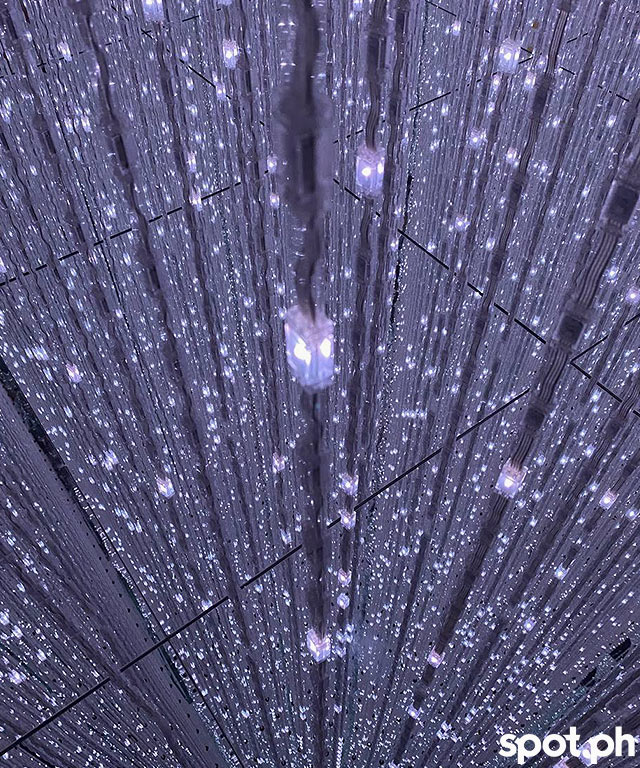
Make your way around this installation and see it in two different viewing areas. One space allows you to be within the infinite universe created by the reflections, while another allows you to become an observer from the outside.
Both vantage points are incredible to experience. Make sure to take your time in each section and take unique photographs amidst the infinite galaxy-like backdrop.

You might see a tablet somewhere within the exhibit. Make use of this to control the way the light spreads throughout the exhibit and the colors of the LED. Just exercise a bit of patience. When there are a lot of people the queue of commands might take a while before it can be executed onto the exhibit.
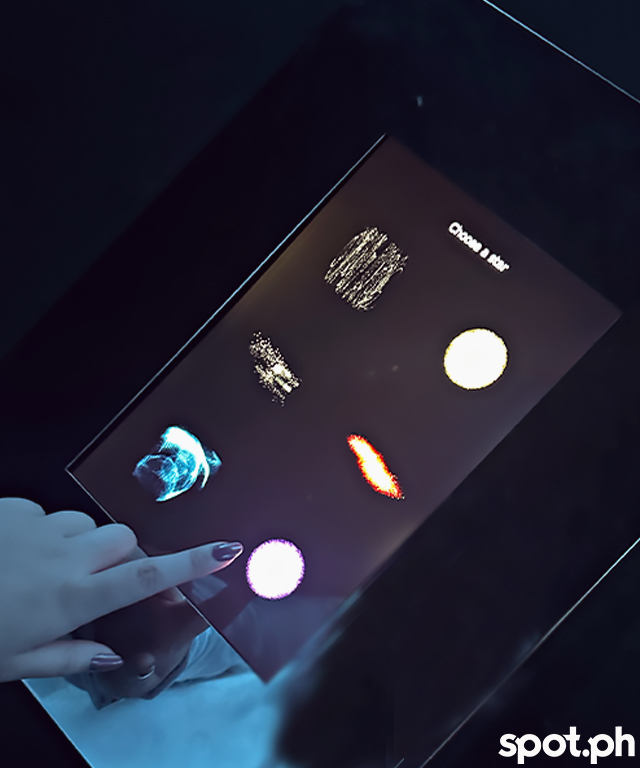
Drawing on the Water Surface Created by the Dance of Koi and People
Arguably the most Instagram-famous installation, Drawing on the Water Surface Created by the Dance of Koi and People is the quintessential interactive installation in the Water Area.
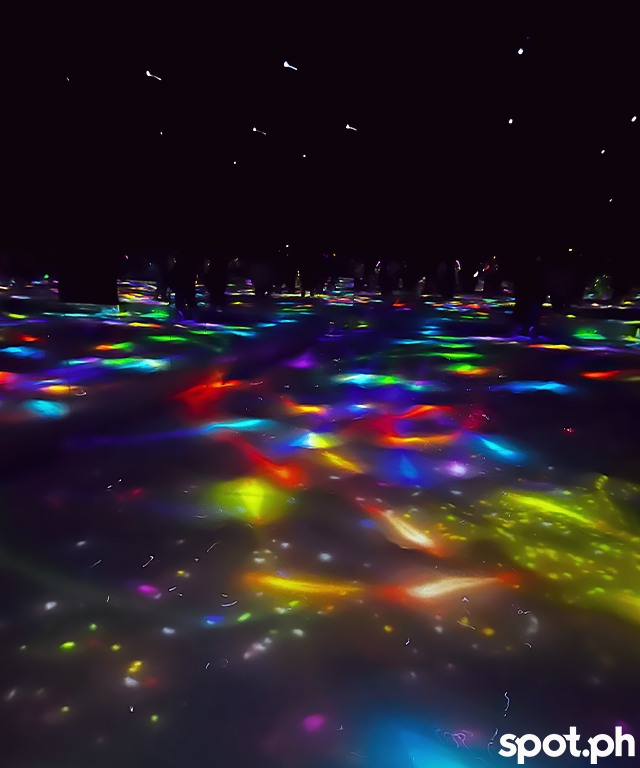
Here when you enter the water, you create ripples that change the waterscape. When you touch a swimming carp, it turns into a flower. Through time, the carps eventually glow, and they form a bright glowing line resulting in a watery surface filled with colors.
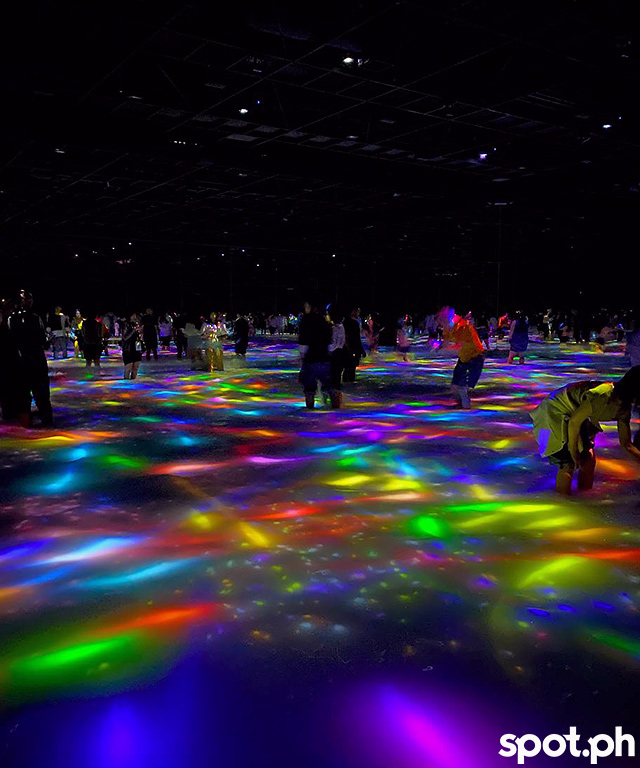
Fun fact, depending on the season you visit, the carps turn into a different flower, i.e., when you visit in spring, they turn into cherry blossoms, sunflowers in the summer, and so on.
Expanding Three-Dimensional Existence in Transforming Space- Flattening 3 Colors and 9 Blurred Colors, Free Floating
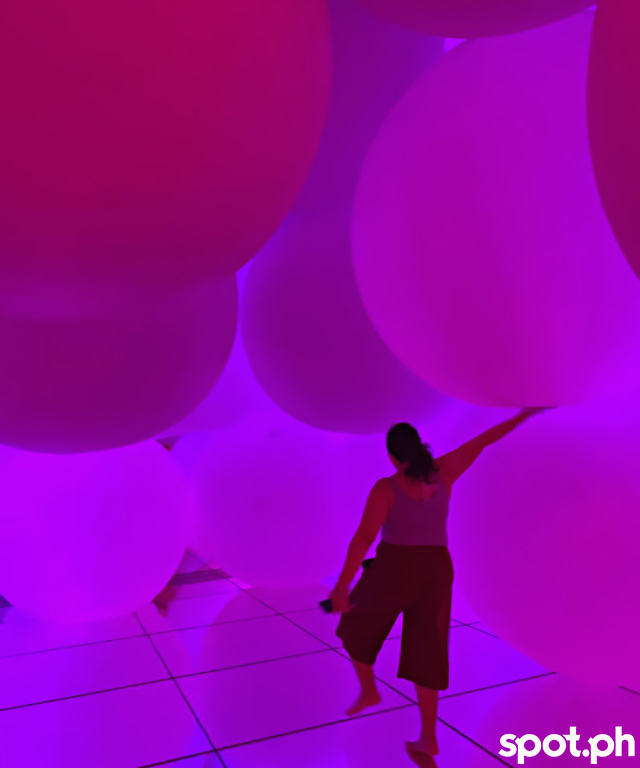
The next exhibit combines light, sound, and touch to create a wonderfully colorful environment. Expanding Three-Dimensional Existence in Transforming Space- Flattening 3 Colors and 9 Blurred Colors, Free Floating is a touch-activated exhibit where free-floating spheres generate a sound and change colors when touched. It becomes extremely lively and beautiful with the interaction of more people within the space. This leads to the spheres being extremely colorful and pinging sounds enveloping everyone.
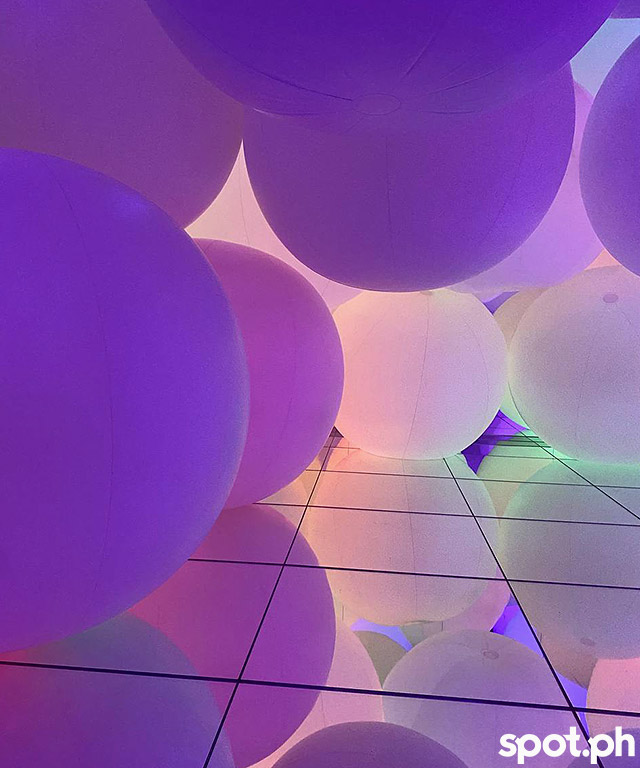
At some point in the exhibit, though, the entire space shifts into a single color when the spheres glow a specific set of three colors. This disrupts what viewers formerly see as a three-dimensional space. Everything becomes flat and one-tone.
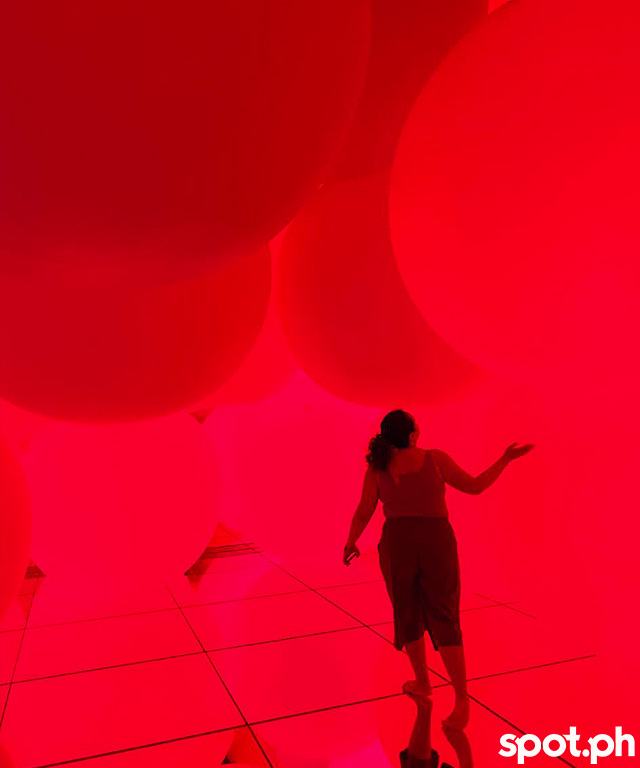
This installation is a great place to unleash your inner kid and run around trying to make the sphere change colors.
Floating in the Falling Universe of Flowers
After running around, wading in the water, and all the movement from the previous exhibits, the last artwork in the Water Area is a perfect place to relax and find your zen.
In Floating in the Falling Universe of Flowers, you can lie down, sit or stay in any comfortable position and immerse yourself in one giant artwork. Here flowers of all colors float and disperse throughout the dome-like space. At some point, if you relax your body enough, you might feel like you are in a trance and floating with the flowers.
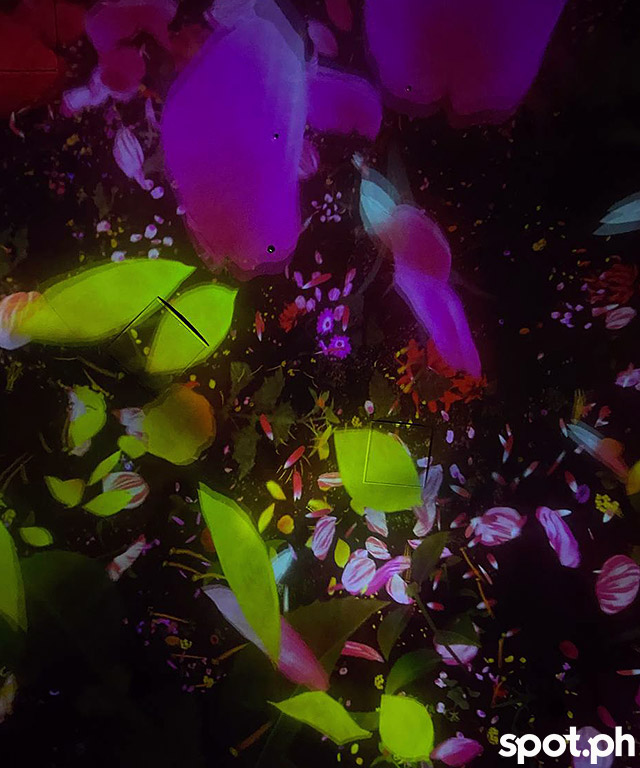
Fun fact, depending on how long you stay in this area, you might be able to see different flowers representing each of the seasons. Moreover, the projections are not pre-recorded. They are constantly simulated by a computer program designed by teamLab. This ensures that everyone gets a unique experience and show every time they visit.
The Garden Area
After you have thoroughly explored the Water Area, you can proceed to the next set of exhibits, this time in the dry Garden Area. There are only two main artworks in this space. As the name suggests, they deal mostly with flora—a combination of technology and natural plants like moss and orchids.
Moss Garden of Resonating Microcosms - Solidified Light Color, Sunrise and Sunset
Depending on the time you visit, you'll have a completely different experience at the Moss Garden of Resonating Microcosms - Solidified Light Color, Sunrise and Sunset. During the daytime, the garden reflects the natural light of the surroundings thanks to the transparent glass ceilings and the reflective surfaces of the silver eggs. A soft haze of water vapor is released to add to the ambiance of a murky, mysterious foggy garden.
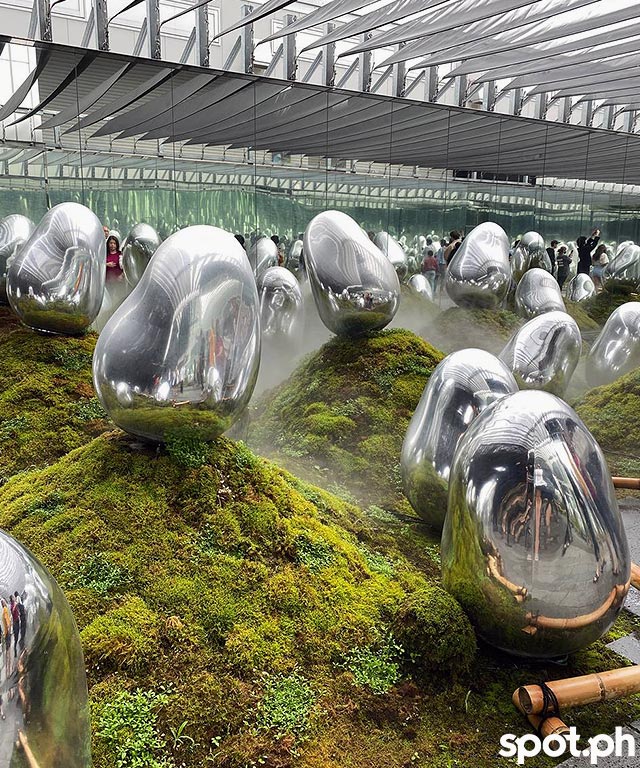
But it's a completely different experience when you visit during the sunset and golden hours. Light spreads concentrically, accompanied by an echoing sound when the eggs are touched. Eventually, all the eggs will illuminate in one color.
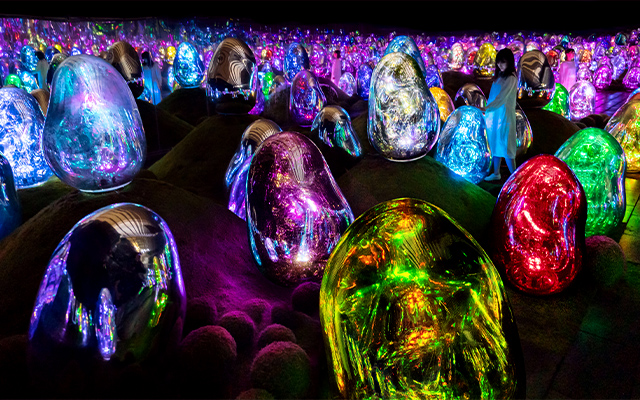
Arguably one of the simpler exhibits, it can be quite underwhelming to see this artwork in the day. So we suggest visiting this part of the exhibit later in the afternoon or closer to nightfall to have an overall better experience. If you time your visit right, you'll be able to see both versions of the artwork and compare them.
Floating Flower Garden: Flowers and I are of the Same Root, the Garden and I are One
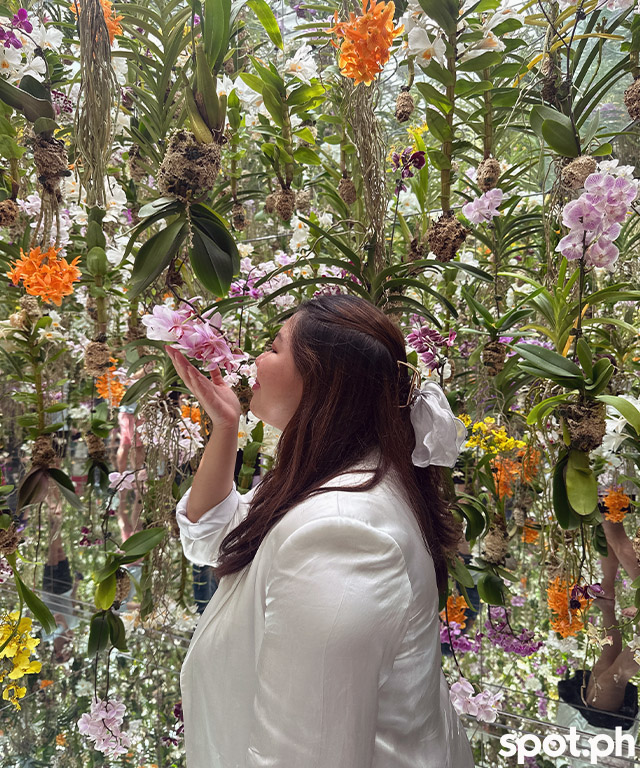
Do you have a passion for flowers, specifically orchids? If yes, you will love this last exhibit in the Garden Area. Release your inner plan-tita and experience the fusion of nature and technology. At Floating Flower Garden: Flowers and I are of the Same Root, the Garden and I are One guests are surrounded and enveloped by over 10,000 natural orchids. Here you become one with the flowers as they gradually rise as humans approach them. This creates the illusion of the flowers, creating a curtain that almost welcomes the viewer into their world.
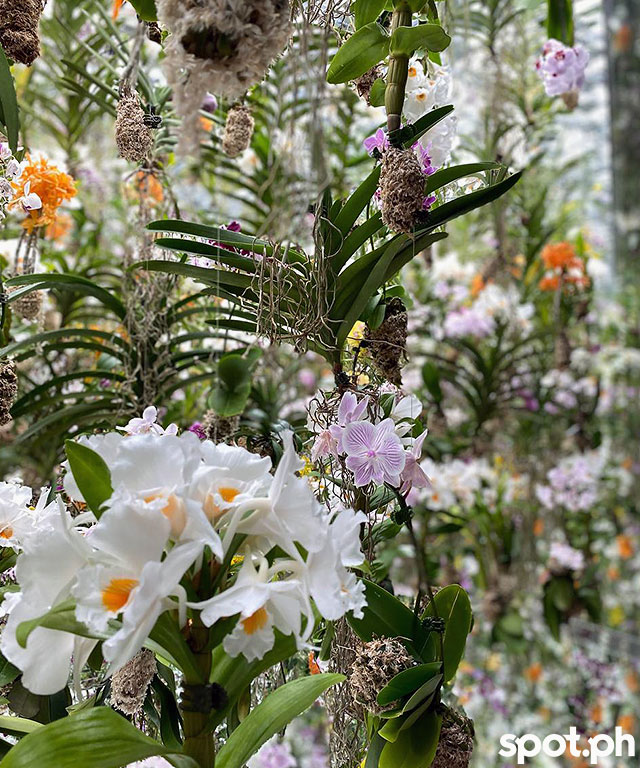
The orchids will show the guest the way, and the flowers also stop when the visitor stops moving. This, plus the reflective mirror flooring creates a flower envelope surrounding the guest. TBH, this was one of the most IG-worthy exhibits in the entire teamLab Planets Tokyo. Take lots of photos close-up and from afar. Pro tip: time your shots when there aren't too many people, that way, you get the illusion of being in your own floral world.
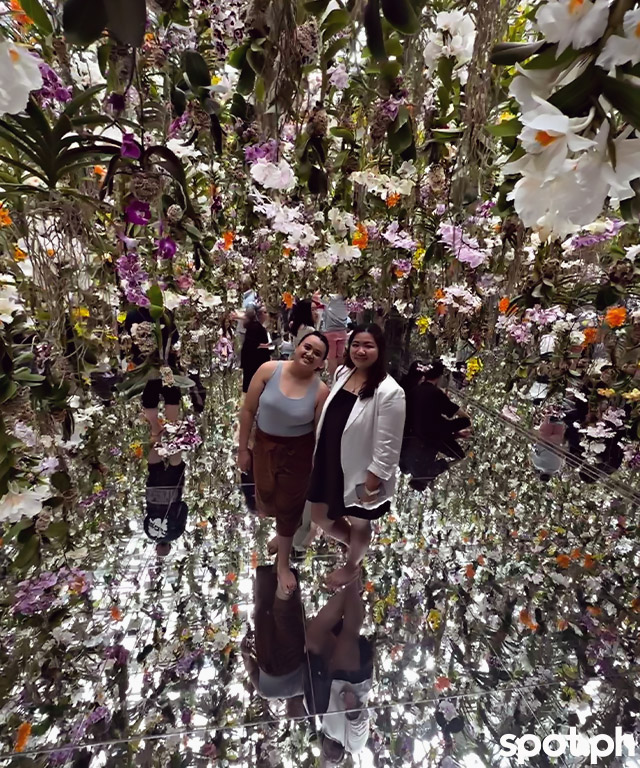
The lighting for the exhibit is heavily dependent on natural light during the day and on motion-activated sensors at night. This ensures that guests visiting at different times of the day and under different weather conditions will experience a different kind of flower exhibit.
How to make the most of your visit to teamLab Tokyo Planets:
Don't rush your visit. There's no time limit to your stay at teamLab Tokyo Planets. You can stay at artwork for as long as you want. For as long as you don't exit the paid exhibition halls, you can continuously revisit artwork, much like any museum. For us, though, we recommend setting aside about two to two and a half hours minimum to see the whole thing and get your money's worth.
teamLab Tokyo Planets is an immersive and exciting way to see how people, places, and technology interact to form our reality. That being said, we highly recommend trying out this activity at least once during your visits to Tokyo. It's a great day activity to experience with children and people of all ages.
How to get to teamLab Tokyo Planets:
teamLab Tokyo Planets is one minute away from Shin-Toyosu Station of the Tokyo Waterfront New Transit Waterfront Line, a.k.a. the Yurikamome Line.
Excited to see more of teamLab Planets Tokyo? Check out this video of the museum and its attractions:
teamLab Planets is at Toyosu 6-1-16, Koto-ku, Tokyo. You can buy tickets to teamLab Planets at Klook. For more information, visit teamLab Planets Tokyo's website.
Also read: 10 Cool Things You Can Do for Free in Tokyo
Links are updated regularly and as much as possible, but note that products can run out of stock, discounts can expire, and listed prices can change without prior notice.
Hey, Spotters! Check us out on Viber to join our Community and subscribe to our Chatbot.