
The SPOT.ph Guide to Italian Food
Here's where to get the best pasta, pizza, and more in Metro Manila.
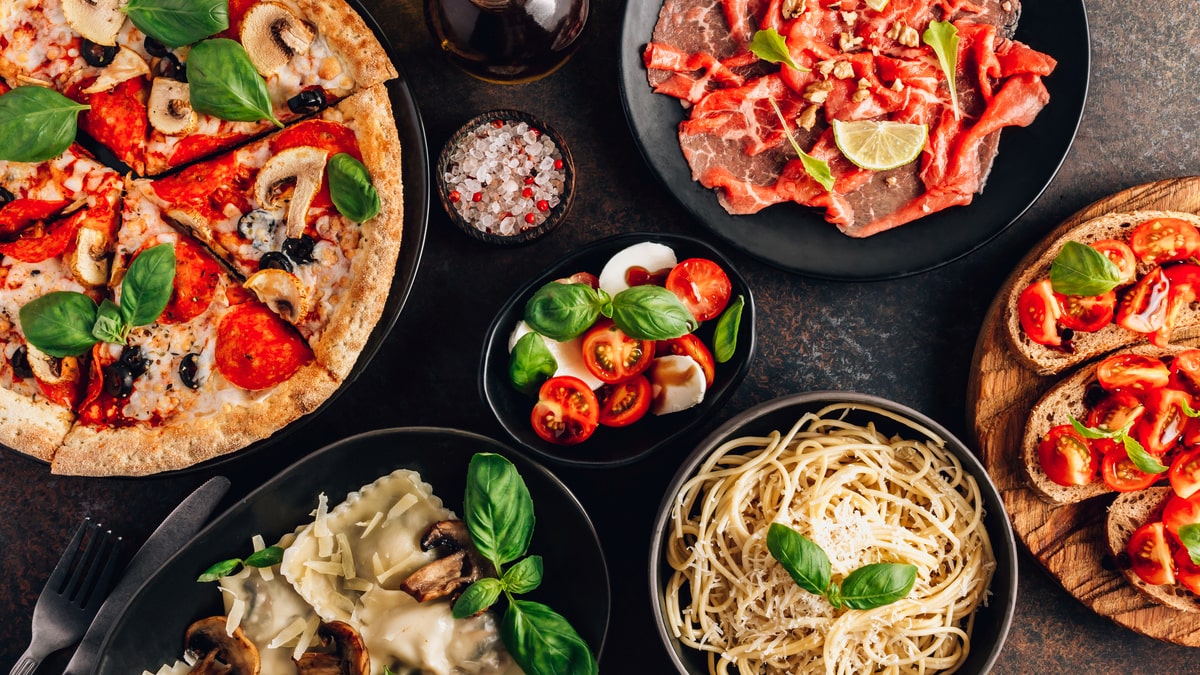
(SPOT.ph) In the local food scene, Italian cuisine occupies two extremes: It’s both the ultimate comfort food (pasta and bread on one plate? Sign us up) and the type of fare served at restaurants you’d dress to the nines for on an anniversary. Capable of being both casual and fancy, it’s the kind of food that has a little something for everyone—from your lola who likes it simple, your tita who wants to sneak in a Bellini before noon, or your picky kid cousin who doesn’t like anything but spaghetti and meatballs.
And though you’ll find that Italian cuisine has been—forgive the language—bastardized a hundred times over by chains and restaurants all over the world, the Metro is home to many spots that cook up mean dishes any Italian nonna would approve of. Check out this guide to the best Italian dishes and restaurants in Metro Manila.
The Origins of Italian Food
The beginnings of Italian cuisines as we know it can be traced thousands of years ago to the Roman Empire, which stretched across the Mediterranean to North Africa and the Middle East—meaning that it incorporated techniques, ingredients, and species from all of these lands. It was as early as this time (remember: at least 800 B.C.E.) that many staples in Italian cuisine today were things that the Ancient Romans considered common fare: wine, olive oil, bread, vegetables, tomatoes, legumes, and cheese.
All of these staples were ingredients that were easy to grow and make with what they already had, so it’s no wonder that Italian cuisine is deeply rooted in its simplicity and freshness. Many of Italy’s most famous dishes, from Pasta Carbonara to Pizza Margherita, consist of five main ingredients or less—most, if not all, depend on fresh herbs, spices, and vegetables. And because of this importance in freshness, it has led to distinct regional cuisines: the rustic and hearty flavors of Bologna, for example, are a world away from the vibrant, seafood-heavy Mediterranean fare from Sicily.
With its long history and heavy use of local ingredients, Italian food is also one that takes a lot of pride in tradition. To many people, the way your grandparents or great-great-grandparents made a dish is the best and only way to do it.
Italian Food In Pop Culture
Growing up, many of us first became aware of Italian food because of the iconic scene in the animated Disney film Lady and the Tramp—where said lady and tramp adorably share a plate of spaghetti as the definitely-Italian staff serenades them with “Bella Notte.”
If this is a fond childhood memory for you, there’s also a chance you spent hours drooling over whatever Mario Batali and Giada De Laurentiis were cooking up on the Food Network. Today, our fascination for Italian food hasn’t ended, with many of us following actor Stanley Tucci’s adventures as he travels across Italy to discover regional cuisine. (Or if you just can’t commit to a series: contributing to the millions of views on videos of an Italian tito roasting YouTubers attempting to make carbonara.)
But beyond lifestyle television, Italian cuisine has played roles even in the world of cinema. In classic film The Godfather, for example, it’s not just a set piece that happens to be there as Michael Corleone descends into a world of crime. It’s woven into dialogue and scenes, from start to finish—from a character teaching us how to make sauce to that iconic assassination scene taking place in an Italian restaurant.
Italian Food Traditions and Etiquette
If you’re headed out for Italian eats in Metro Manila, there’s a good chance you won’t be following the norms of Italy itself—one tradition that many restaurants do follow is dividing up its menu into the courses of a typical Italian meal: antipasto (start), primo (meaning pasta, risotto, or polenta), secondo (meat or fish), contorno (cooked vegetables or salad), and dolce (dessert).
If you want to do small things and dine the way the Italians would, you can keep it simple. Not switching your knife and fork at any point during the meal is one, and another is ordering a glass of Italian wine to pair with your food—something you’ll see often, having dinner in Italy. Instead of putting butter, oil, or balsamic vinegar on your bread, try using it to soak up your pasta sauce instead. And if you just want to get into the spirit, you can tell your dining companion buon appetito! (“good eating”) before tucking in!
Popular Italian Dishes
Antipasti
Literally meaning “before the meal,” the antipasto is essentially a starter meant to get your appetite going for the courses ahead. Typically, these try to engage multiple senses of taste—sweet, salty, sour, bitter, and umami—but are light enough that you won’t be full before you get started. They’re also typically enjoyed with a cocktail or a glass of wine!
Caprese Salad
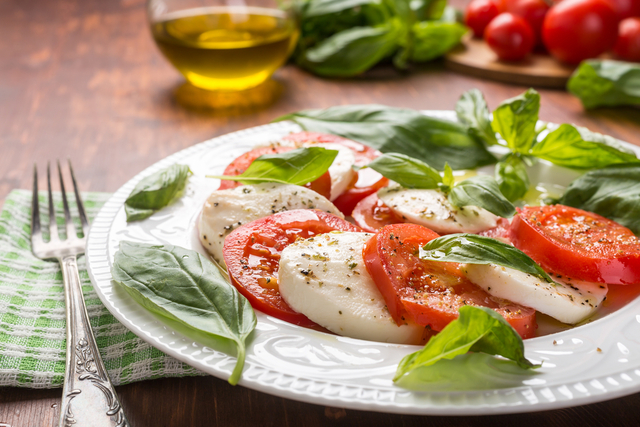
Made of sliced fresh mozzarella, tomatoes, and sweet basil seasoned with salt and olive oil, a Caprese Salad is a simple Italian salad that puts freshness at the forefront. But don’t expect a jumble of ingredients: at restaurants, these are typically arranged so you can see each slice.
Salumi
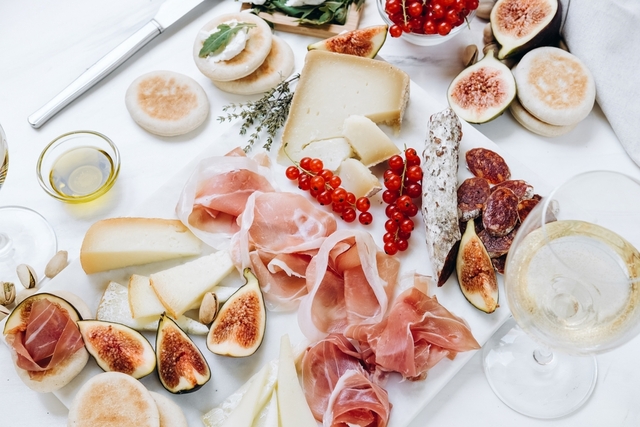
Not to be mistaken with salami, Salumi generally refers to cured and crafted meats made of pork—the French equivalent you’re more likely to be familiar with is “charcuterie.” For this, think delicacies like Pancetta, Prosciutto, Coppa, and Sopressata—all guaranteed to make your taste buds happy without making you feel full!
Fritto Misto
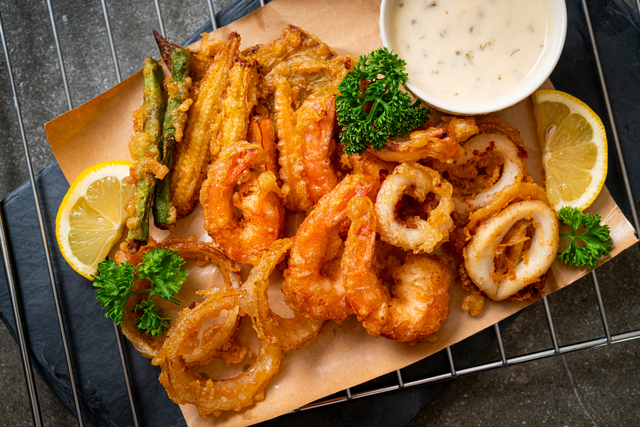
Every country in the world knows the joy of fried food, and Fritto Misto is how the Italians do it. The requirement: ultra fresh ingredients (typically vegetables and fish) cut into bite-sized pieces, put into a very light batter, and then deep-fried.
Carpaccio
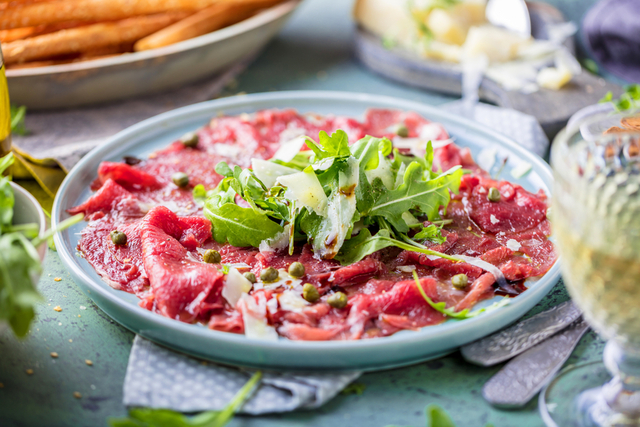
Said to have been inspired by the characteristic reds and yellows used in the paintings of the Italian painter of the same named, a Carpaccio is simply thin slices of raw meat dress in various ways. The seasoning can be very simple—like oil, lemon, salt, and pepper—or be as elaborate as mustard sauce and Parmigiano cheese!
Primi Piatto
From the antipasti, we move to the Primi Piatto or the “first plate.” These are dishes that are slightly heavier, but still won’t fill you up. Risotto, polenta, pasta, and pizza are the most popular dishes in this category.
Pasta
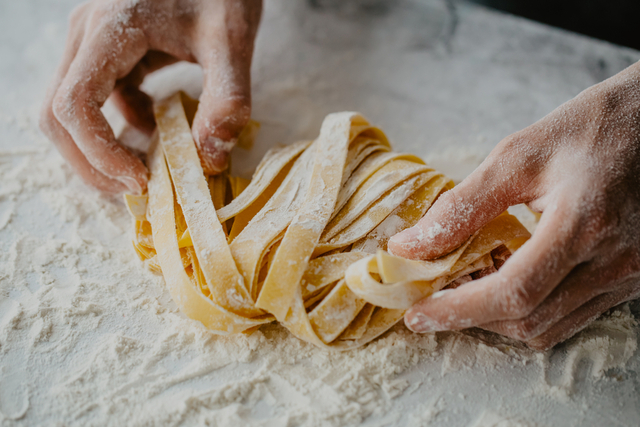
Easily the most popular foodstuff to ever come out of Italy, pasta is a blank canvas of fine flour, water, and sometimes egg made into a dough and then cut into strips, ribbons, or tubes before being covered in a dreamy sauce. Said sauce is usually oil-based (Aglio e Olio), tomato-based (Pomodoro, Arrabiata), meat-based (Bolognese), herb-based (Pesto), or cheese-based (Cacio e Pepe, Carbonara).
Pizza
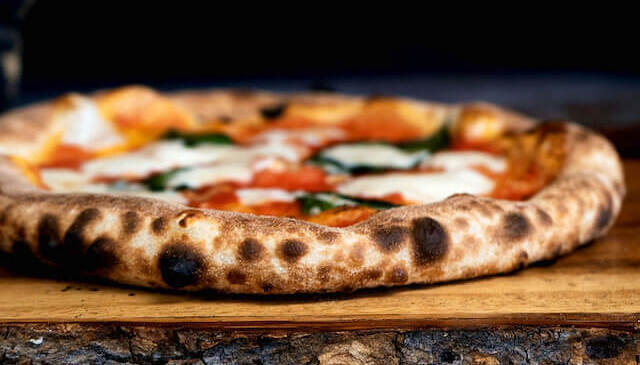
Like pasta, pizza is a blank slate of thin but fluffy dough, with the sauce and toppings bringing in the real magic. But don’t look for ham, pepperoni, and pineapple slices at an Italian restaurant. Instead, expect simple yet classic combinations like you’d see in a a Margherita (mozzarella, tomato, basil, and oil), Quattro Formaggi (four types of cheese, usually including parmigiano, mozzarella, and gorgonzola), and Prosciutto e Funghi (prosciutto, mozzarella, and mushrooms).
Risotto
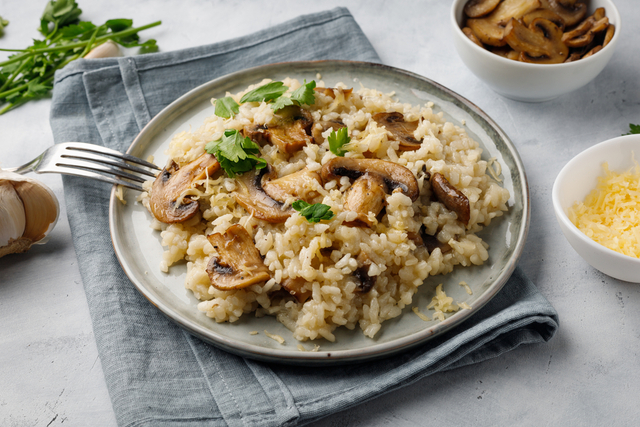
Infamous for ruining the lives of many reality cooking show contestants, risotto is a simple dish made with a high-starch, short-grain rice called Arborio, which slowly absorbs cups and cups of broth to create a powerhouse of flavor and a creamy consistency—especially when it’s finally topped with parmigiano cheese. If you’re new to the dish, try going for simple takes like mushroom or pumpkin risottos— you’re welcome.
Gnocchi
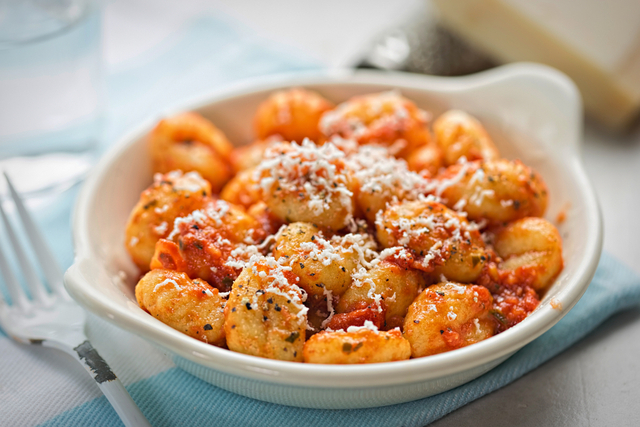
Treated very similarly to pasta, Gnocchi is essentially a dish of dumplings made from potato and flour, usually served with a sauce. Simplicity is key to enjoying its soft, chewy texture: you won’t go wrong trying it in a pesto sauce or in gorgonzola!
Secondi Piatto
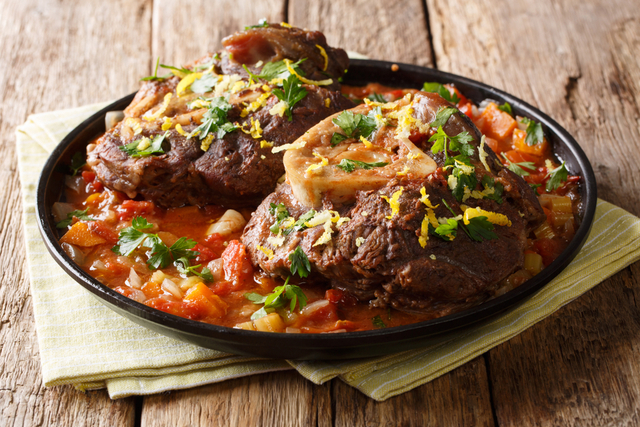
The heartiest of all Italian courses, the “second plate” is a heavier viand such as fish, pork, or beef. Rather than being a family of specific dishes, the secondi usually features a protein that is simply cooked—think grilled, fried, baked, or stewed. Favorites like Ossobuco or Bistecca alla Florentina usually fall under this, but on a menu it could be something as nondescript as “Braised Veal Shanks” or “Baked Sea Bream.” Such is the beauty of simplicity.
Popular Food Places in Metro Manila
Cibo
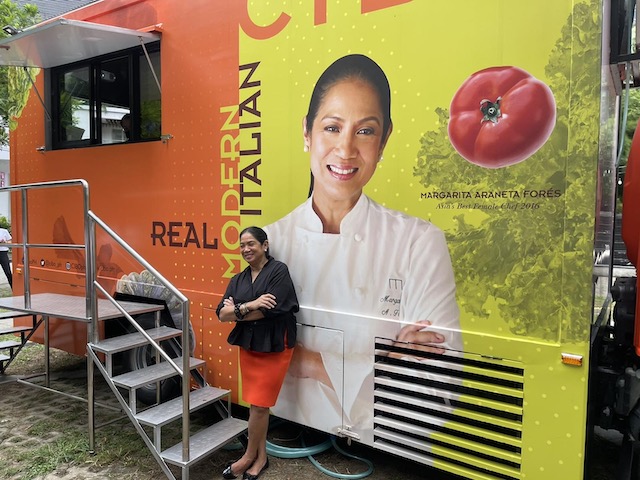
Let’s be real: when it opened in Makati in 1997, Chef Margarita Fores’ modern cafe-paninoteca concept Cibo made casual Italian dining cool. Boasting fresh ingredients sourced locally or straight from Europe, Cibo serves real-deal Italian eats from appetizers and desserts—and has a loyal following to show for it. Its glorious Spinaci Zola (P365/Solo, P585/La Famiglia, P1,445/Festa) and Penne Al Telefono (P479/Solo, P839/La Famigla, P2,169/Festa) alone may be responsible for a whole third of its fans.
See a list of Cibo branches. For more information, check out Cibo’s website.
a mano
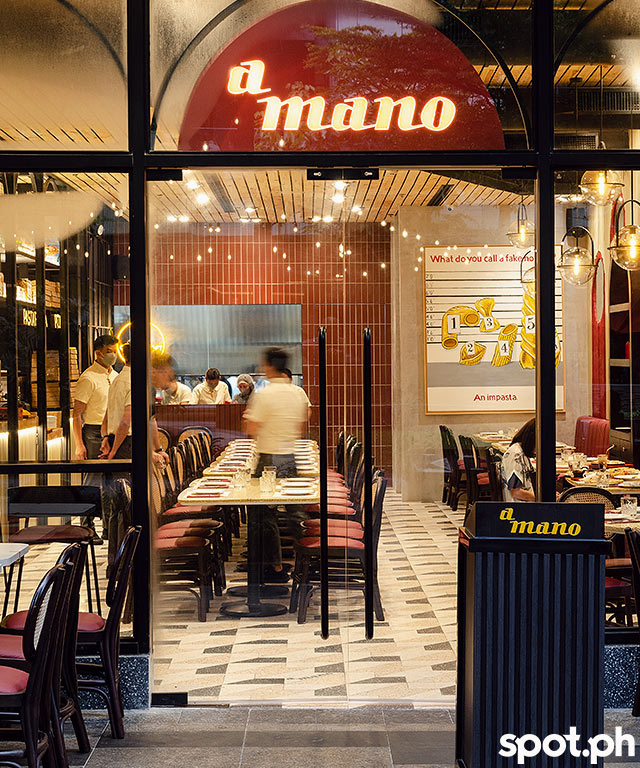
Pizza and pasta are a dime a dozen in Metro Manila. So it’s saying something that a mano’s hearty takes earned it a place among online publication 50 Top Pizza’s best pizzerias in the Asia-Pacific. Standing out for its use of traditional Italian methods (have you seen their red Valoriani oven?) and its quality dough and toppings, a mano lives up to the hype with its creamy Straciatella Pizza (P880) and its date-perfect Tagliatelle al Nero con Frutti Di Mare (P690). Don’t forget to leave room for their decadent Cannoli Sicilian (P410/three pieces).
a mano has branches at R1, Power Plant Mall, Rockwell, Makati and G/F One Bonifacio, Bonifacio Global City. For more information, check out a mano’s Facebook page.
La Nuova Pasteleria
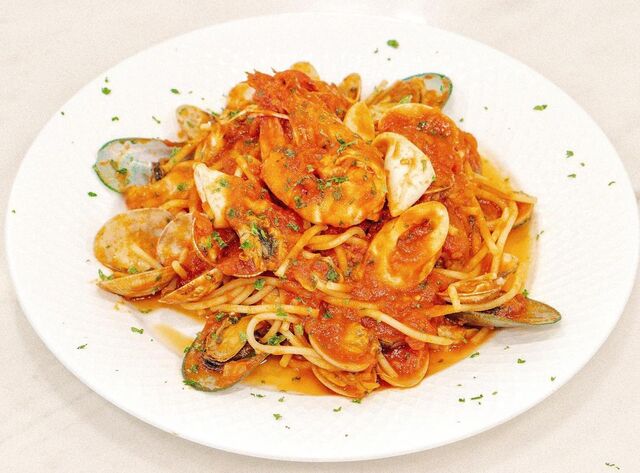
They say you know a restaurant is really good when it manages to survive five years—and that tells you something about La Nuova Pasteleria, which has been serving up some of the city’s best pasta, pizza, calzones, cakes, and desserts (the entire menu, basically) since 1978. Their signature is their Raviolo Verde (P613) stuffed with fresh spinach and ricotta, but not enough people talk about their comforting Risotto ai Porcini (P630), perfectly al dente with a beautiful nuttiness and earthiness.
La Nuova Pasteleria is at San Antonio Plaza, McKinley Road, Makati City. For more information, check out La Nuova’s Instagram page.
Va Bene Pasta Deli
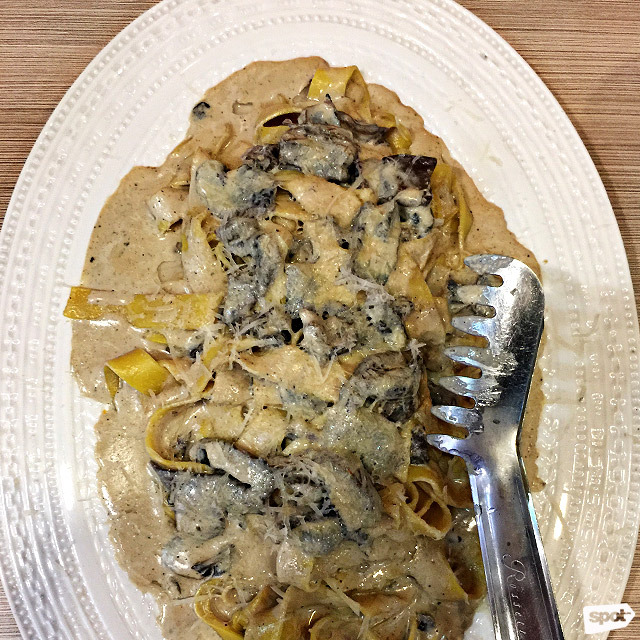
It takes serious guts to open an authentic Italian restaurant at a gas station along EDSA, but Va Bene Pasta Deli has proven that delicious, fresh, handmade pasta is worth the drive. This cozy haunt was Makati’s best-kept secret for maybe a week when it first opened in 2011. That is, before word got out about the Organic Eggs Tagliatelle with Mushroom Cream Sauce and Truffle Oil (P480)—our favorite truffle pasta in Manila, and the dish that cemented its place in the Metro’s best spots for pasta.
Va Bene Pasta Deli has branches at 2/F Petron Gas Station, EDSA Cor. Pasay Road, Makati and 3/F Central Square, Bonifacio High Street, Bonifacio Global City. For more information, check out Va Bene’s website.
Finestra Italian Steakhouse
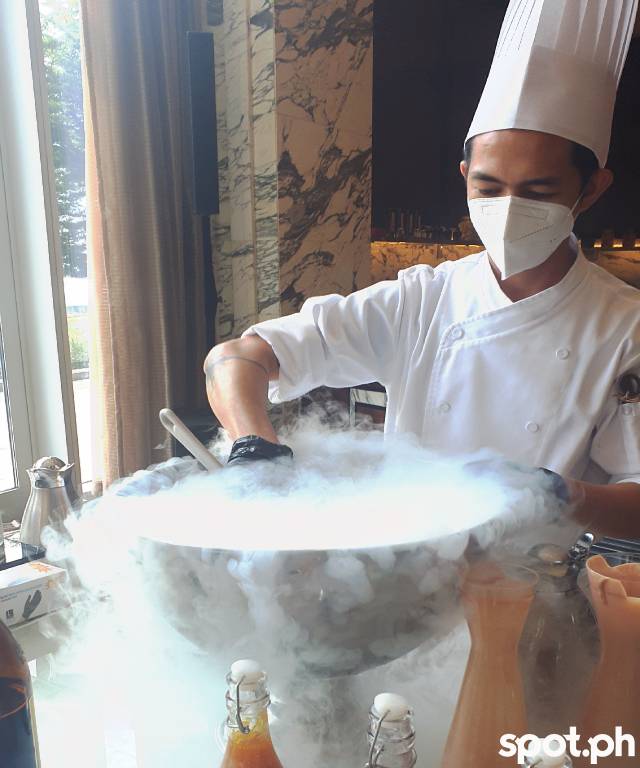
High ceilings, chandeliers, jewel-accented walls: it can be easy to get overwhelmed by how loudly Solaire’s Finestra Italian Steakhouse screams “fancy!” (It’s one heck of a romantic spot.) But you’ll be distracted enough when your steak—be it your usual USDA Angus beef or Japanese Omi Wagyu—touches down at your table. Pro tip, though: If you want to go all out, try swinging by for their indulgent Sunday Brunch Buffet (P5,555 per person) and ordering the Seafood Tower laden with oysters, prawns, crab, and mussels!
Finestra is at Solaire Resort & Casino, Aseana Avenue, Entertainment City, Parañaque City. For more information, check out the Solaire Resort & Casino website.
Francesco’s Kitchen
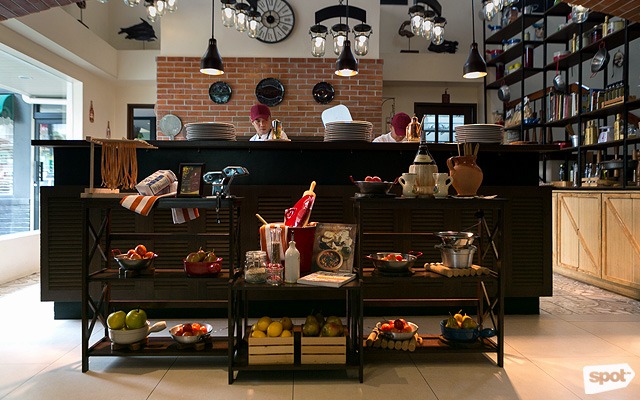
If homey, old-school Italian fare is what you’re looking for, then you need not look further than the quiet neighborhood of Addition Hills in San Juan—where inside a cozy, intimate two-story house (perfect for dates, we’ll add) is Francesco’s Kitchen. Here, Chef Francesco Rizzo serves up authentic brick-oven pizza and freshly-made pasta from his hometown of Puglia. Try the Francesco (P680), with its beautiful combination of fresh tomatoes, stretchy mozzarella, hearty sausage, earthy mushrooms, roasted bell peppers and sharp gorgonzola. You’re welcome.
Francesco’s is at 863 A. Mabini Street, Addition Hills, San Juan City. For more information, check out Francesco’s Facebook page.
Salvatore Cuomo
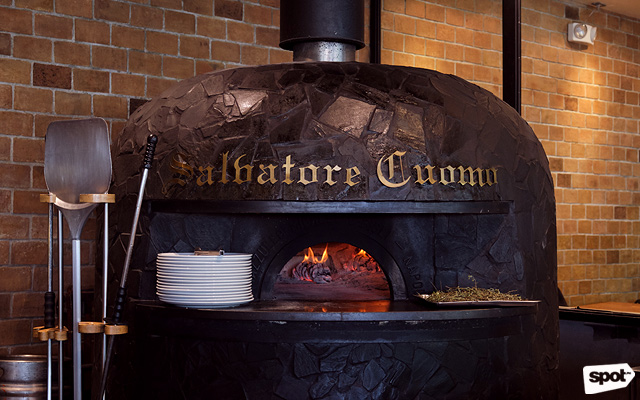
Known for being the pioneer of Neapolitan cuisine in Japan, Chef Salvatore Cuomo is widely considered as one of the world’s best pizza makers—in fact, he has an actual certification (yes, it’s a thing) vouching his fresh Italian-sourced ingredients and the custom-made oven shipped from Naples. But don’t let the sleek interiors and acclaim intimidate you into ordering the fanciest thing on the menu: the lovely blend of cheeses on the Pizza Quattro Formaggi (P770) or the simple, classic Pizza Margherita (P680) with just Mozzarella, basil, and marinara, is enough to blow anyone away.
Salvatore Cuomo is at G/F Uptown Parade, 9th Avenue corner 38th Street, Uptown Bonifacio. For more information, check out Salvatore Cuomo PH’s website.
Gino’s Brick Oven Pizza
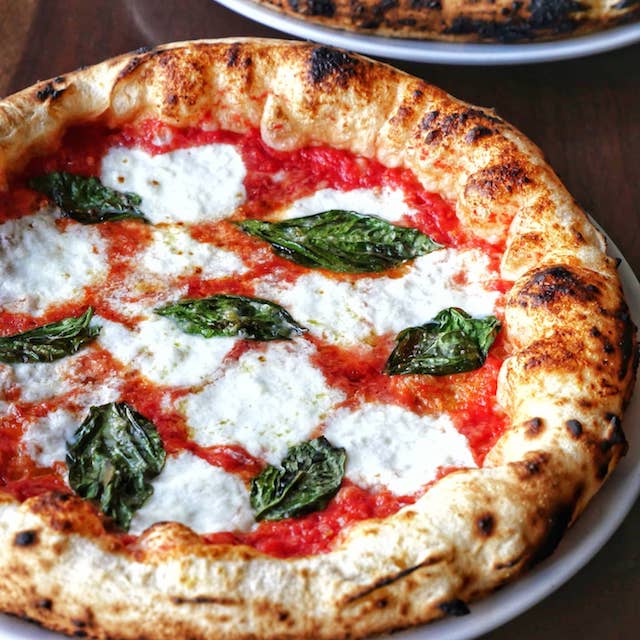
Many of the chefs behind the restaurants on this list are professionally-trained or Italian themselves—making Filipino entrepreneurs Jutes and Cello Templo (of Cello’s Doughnuts fame) the combo breaker here, with cult favorite Gino’s Brick Oven Pizza bagging a spot on Big 7 Travel’s 50 Best Pizzas In the World and ranking Second Best in Asia. The clincher was likely the perfect charr on its airy pizza crusts, and the simple but stellar toppings. Case in point: The flavor explosion they call the BOMB Pizza (P455), topped with Balsamic Onions, Mushrooms, Mozzarella, and Blue Cheese.
For more information and a list of branches, check out Gino’s Facebook page.
L’Opera Ristorante Italiano
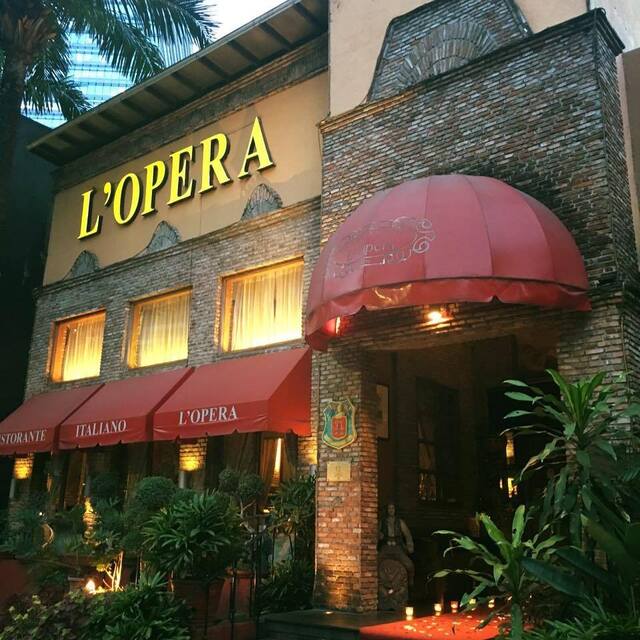
Taking a step into L’Opera is like stepping back in time—not because it’s in the Fort Strip or that the restaurant first opened in 1994, but because its brick walls, plush interiors, and softly-lit chandeliers take you back to the Renaissance. The food does much the same, taking you straight to Old World Tuscany with the gorgeous Raviolo Tricolori All’Aragosta (P570), made of handmade raviolo stuffed with fresh lobster, or the elegant Spaghetti Bottarga Aglio Olio (P500), which sneaks in cured fish roe among the garlic and pepperoncini.
L'Opera is at The Fort Strip, 28th Street, Bonifacio Global City. For more information, check out L’Opera’s website.
Caruso Ristorante Italiano
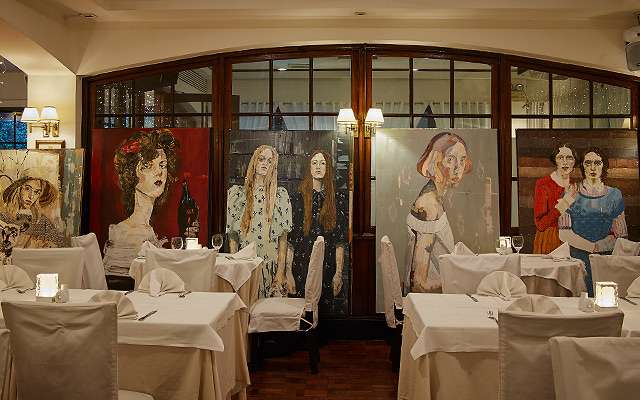
Having just celebrated its 20th anniversary, Caruso is a household name in Makati—and it’s definitely seen its fair share of romantic proposals and anniversaries in its classic, elegant space complete with warm wooden interiors and crisp white tablecloths. Order yourself a glass of wine to go with their signature Bucatini Alla Amatriciana (P620), which will blow your mind with just four ingredients: bacon, hearty tomato sauce, fresh pecorino cheese, and handmade bucatini pasta.
Caruso Ristorante Italiano is at LRI Design Plaza, 210 Nicanor Garcia Street, Bel-Air, Makati. For more information, check out Caruso’s Facebook page.
Also read:
The SPOT.ph Guide to Chinese Food
The SPOT.ph Guide to Pizza
Hey, Spotters! Check us out on Viber to join our Community and subscribe to our Chatbot.