

(SPOT.ph) When it comes to long-running drama series, audiences notably have the tendency to head into the final season with emotional walls up and expectations tempered. On one hand, sure, the occasional show can come out with a finale that provides both an entertaining hour of television and satisfactory answers to all loose ends. Oftentimes, however, finales have the tendency of pulling a huge swing out of left field to provide one last shocking zinger for an audience that the series no longer has an obligation to keep happy—yes, we know you’re thinking about that series.
It’s here we come to AMC and Netflix’s Breaking Bad prequel series, Better Call Saul. The finale of the series’ sixth and final season, “Saul Gone,” doesn’t bend over backwards to provide satisfying resolutions nor does it actively betray its audience with sudden heel turns or underdeveloped ideas. It simply allows its conclusion to the character study of Jimmy McGill, a.k.a. Saul Goodman, a.k.a Gene Takovic to speak for itself.
Also read: Stranger Things Creators Confirm They Almost Killed Off That Character in the Season Finale
Here’s how Better Call Saul created the perfect finale to the Breaking Bad universe:
Conceptually, Better Call Saul is a rather interesting prequel series, in that it takes a relatively one-dimensional, comic relief character from Breaking Bad—the sleazy criminal lawyer known as Saul Goodman (Bob Odenkirk)—and investigates whether the fan-favorite character had always been that way or if there was a whole series of events that led to him taking on the persona. This throughline of nature versus nurture is present throughout the whole series, and is even stated out loud by Breaking Bad’s main character Walter White (Bryan Cranston) in “Saul Gone,” as an irritated Walter asks Saul, “So you were always this way?”
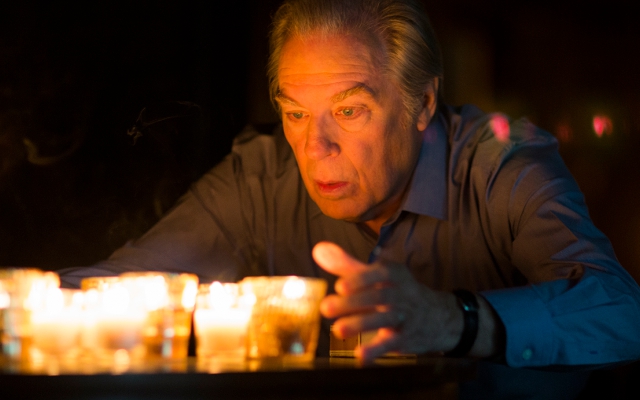
Fans of the series will likely remember Chuck McGill’s (Michael McKean) monologue from the third season’s fifth episode, entitled “Chicanery,” in which Chuck all but admits in an outburst in the middle of a court hearing that he has been attempting to prevent his brother from becoming a lawyer from day one.
“He’ll never change. He’ll never change! Ever since he was nine, always the same. Couldn’t keep his hands out of the cash drawer. ‘But not our Jimmy! Couldn’t be precious Jimmy!’ Stealing them blind… and he gets to be a lawyer? What a sick joke! I should’ve stopped him when I had the chance.”
The brother versus brother conflict is the primary lens the investigation of Jimmy’s nature is viewed through in the first three seasons. On one hand, Jimmy does have a past of being a petty crook and con man, yet decides to reform and pursue honest law after being rescued by his big-time lawyer of a brother. On the other, Chuck’s narcissism and envy couldn’t stand for his delinquent brother even potentially reaching the same position he worked hard to attain, which causes him to block Jimmy’s attempts at every turn, which in turn forces Jimmy to “cut corners” and ultimately prove Chuck right.
Also read: Neil Gaiman Tells Us Why That Slow-Burn Relationship in The Sandman Hits So Good
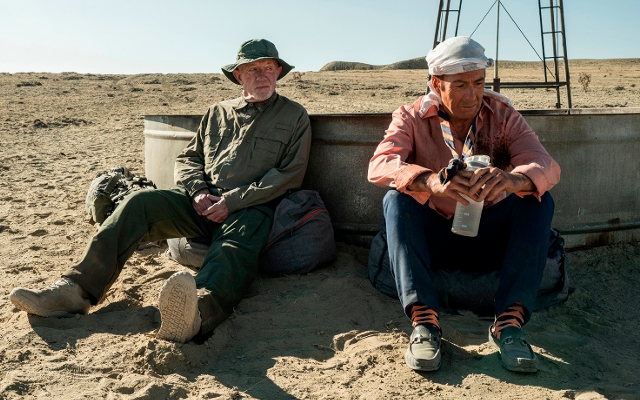
The series continues this investigation even after Chuck’s demise at the end of the third season and Jimmy distancing himself from the name McGill at the end of the fourth season. Jimmy’s inclination to take up shady clients eventually lands him as the lawyer of cartel head Lalo Salamanca (Tony Dalton) and caught in the middle of a shootout in the middle of the desert. In need of someone to process the traumatic events with, Jimmy receives the “Bad Choice Road” speech from honorable hitman Mike Ehrmantraut (Jonathan Banks).
“We all make our choices, and those choices put us on a road. Sometimes, those choices seem small, but they put you on the road. You think about getting off, but eventually, you’re back on it. And the road we’re on led us out into that desert and everything that happened there and straight back to where we are right now, and nothing can be done about that.”
It’s here we get a definitive answer in the nature versus nurture exploration: it is neither. No one is either intrinsically good or out to hurt others. Neither is anyone just a product of circumstance or outside forces. The series states that Jimmy’s road to becoming Saul Goodman is made out of the character’s own choices, small or not.
Yet, a bit of the “Bad Choice Road” speech that always stuck out was how Mike states there is no getting off the road, once you’ve gone down it. To Mike, the elderly fixer who does hit jobs for money to provide for his granddaughter, this may seem the case, as he’s only delved deeper and deeper into the drug cartel world after taking his first bribe as a police officer decades prior.
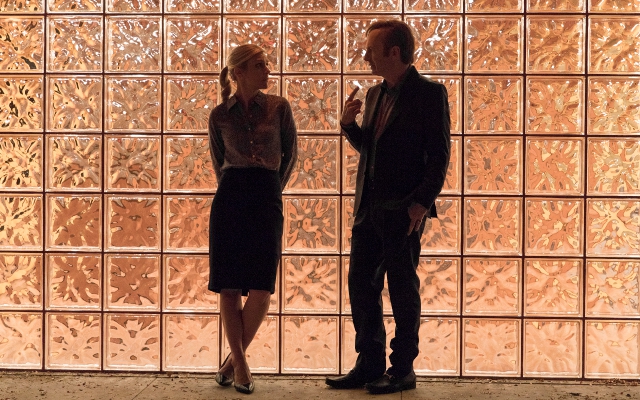
However, for Jimmy, it’s perhaps not the advice he needs to hear, as proven in the final season when he more or less echoes Mike’s words to Kim (Rhea Seehorn), after they indirectly cause and witness Howard Hamlin’s (Patrick Fabian) execution by the cartel. Jimmy repeats the advice to his wife Kim as a way of minimizing the situation, so as not to draw any more unwanted targets on their back. However, by the end of the episode, a traumatized Kim decides to leave Jimmy entirely and start a new life in Florida, while Jimmy decides to keep rolling with the cartel, making his transformation into Breaking Bad’s Saul Goodman complete.
Also read: Don't Worry, K-Drama Fans: Extraordinary Attorney Woo Is Getting a Second Season
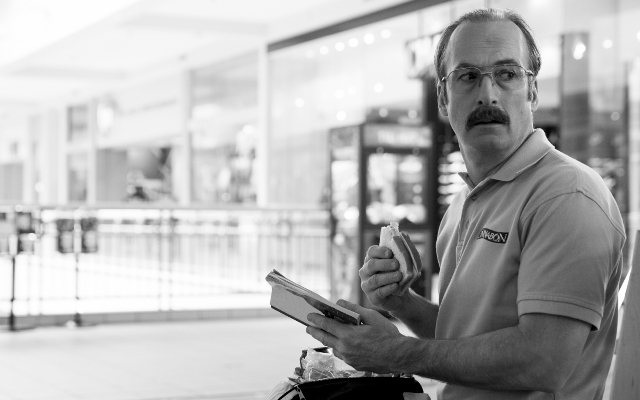
This brings us to the final episode, where Saul, now going by Gene Takovic after the events of Breaking Bad, has been arrested by the police for the crimes he committed in that series. As Gene returns to his Saul Goodman persona for one last court hearing to reduce his multiple life sentences down to eight years, the episode treats us to three flashbacks a la A Christmas Carol’s Ghosts of Christmas Past, Present, and Future, but instead with Mike, Walter, and Chuck.
The first two flashbacks center on Jimmy asking Mike and Walter what they would do if they had a time machine. Mike initially tells Jimmy he’d go back to the date his son was killed by his fellow dirty cops, but then changes his answer to the day he took his first bribe. This is, of course, Mike reckoning with the decision that put his life on the perpetual bad-choice road. Meanwhile, the second flashback has Walter give a similar answer. He speaks about his regret over leaving the company he founded before it skyrocketed in earnings, a decision that eventually led to him resorting to cooking meth and becoming a drug lord in Breaking Bad.
Before the third flashback rounds out the episode, we get the scene of Gene, now dressed up in a flashy, Saul Goodman suit, defending himself in court. However, as his final con and switcharoo, he tricks Kim into coming out from hiding and attending the court sentencing, in order for her to hear his admission of guilt in everything from Walter White’s meth empire all the way back to Howard’s murder—and, even tangentially, getting Chuck’s malpractice insurance revoked.
By doing so, Saul stops running from the guilt he feels over his brother’s death and proclaims that his name is James McGill. It’s here we see Jimmy use a time machine, in the figurative sense, to take himself off the bad choice road that would’ve continued had Saul gotten his way and reduced his life sentence down to just a few years in prison. As a result, Jimmy receives the sentence of over 80 years in prison.
The third flashback that immediately follows this scene contextualizes the admission of guilt, as it features an interaction between Chuck and Jimmy, not long before the events of Better Call Saul’s first episode. In the scene, the brothers aren’t fighting yet and Jimmy is helping Chuck deal with his allergy to electricity (yes, you read that right). Chuck even expresses interest in Jimmy’s starting law practice, which Jimmy modestly declines to share, not long before the camera pans over to a copy of H. G. Wells’ The Time Machine sitting on Chuck’s table.
What this climactic scene, and the finale as a whole, paints is a picture of redemption, but not in the “I must do this, for [x] reason” sort of way that most Hollywood narratives would like to depict redemption. Jimmy isn’t sacrificing his own life for a grander purpose; to save Kim’s or serve anyone else’s. He chooses to do good simply because it’s the right thing to do.
Also read: What Predator Prequel Prey Gets Right About Cinematic Universes
Breaking Bad vs. Better Caul Saul: Who had the better finale?
This, in turn, is a development from Breaking Bad’s own finale, which saw Walter White fall from grace and finally reckon with the fact that it was purely his ego that was driving him the entire series. He could’ve taken money for his cancer treatment from elsewhere, yet he decided to pursue being the kingpin of the New Mexico drug trade, simply because he enjoyed being good at it. Breaking Bad’s finale in 2013, “Felina,” has Walt admit this to his wife Skyler (Anna Gunn), set up a way for his remaining money to reach his son who hates him, and ultimately sacrifice his own life to save his partner Jesse (Aaron Paul) from being held captive by Neo Nazi’s, a scheme that was helped by Walt’s own actions in the first place.
Yet, Walt’s self-sacrificial final act of “redemption” is triggered primarily by his ego yet again, as he watches his former multi-billionaire partners smear his name all over the news in the episode prior to the finale. Another choice on the self-serving road, albeit a choice made with limited options.
Also read: Spot Hot Takes: Old Is One of the Best Modern Horror Films
Fans’ perspective on the Walter White character has changed in the years since the finale, as most audiences would have seen the character as empathetic while the series was ongoing. However, a decade since “Felina” and after the recontextualization provided by the prequel series, the predominant stance on the character is that he’s an egotistical maniac that deserved a more just punishment than the ending he received on the show.
It will definitely be interesting to see if the perspective towards Jimmy McGill changes over the years, especially given the deliberately cruel choices he makes in both Better Call Saul and Breaking Bad. However, given that the character chooses the hard path towards redemption by the time the final scene of Better Call Saul rolls around, it seems more likely that audience could grow even more empathetic towards his journey.
What “Saul Gone” provides is a nuanced take on regrets, the choices we make, and what redemption ultimately entails. If there’s any better way to wrap up a series with a morally ambiguous main character, you’d be hard pressed to find it.
Also read: It's Finally Ending: A Look Back at the 10 Weirdest Storylines From Riverdale
Hey, Spotters! Check us out on Viber to join our Community and subscribe to our Chatbot.
this strange new world.